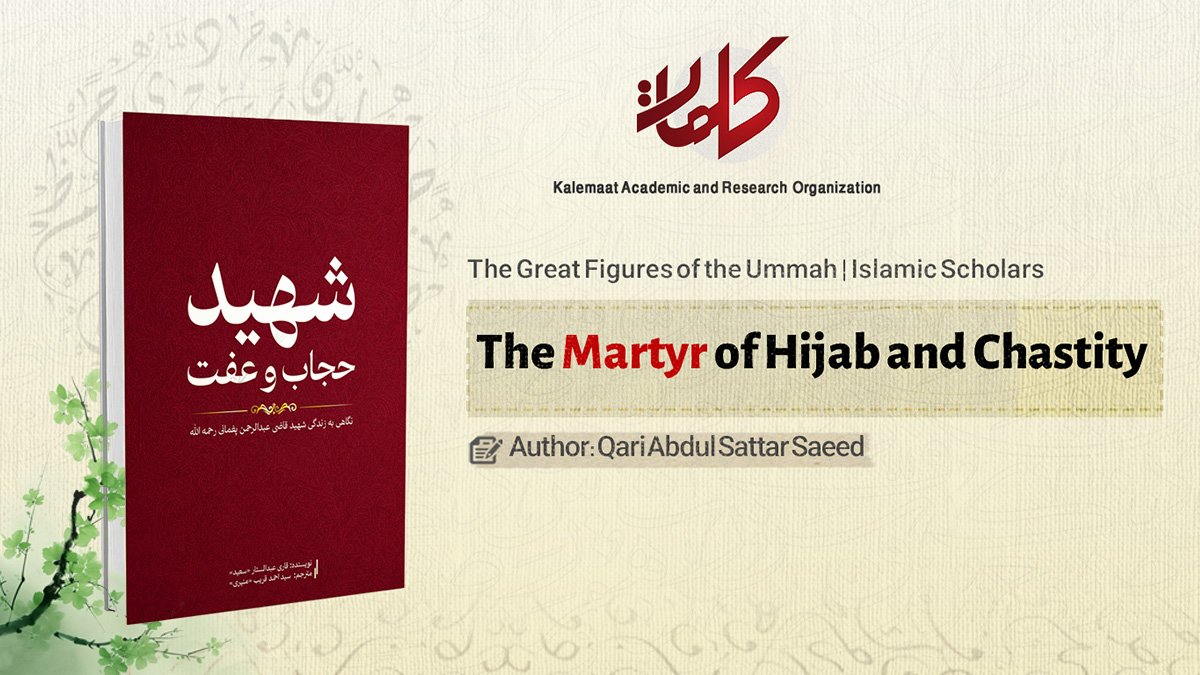
A Glimpse into the Life of the Martyred Qazi Abdul Rahman Paghmani
The Return of the King
Eventually, in July, Amanullah Khan arrived in Kabul. A large crowd had gathered to welcome him, and the official reception ceremony was held at Dilkusha Palace. Amid the sounds of military music, Amanullah Khan rode through the crowds in an open royal motorcar, with Queen Soraya seated on his left, appearing in public without observing the customary hijab.
This scene was highly unexpected and beyond the expectations of government officials, religious scholars, Sufi shaykhs, and the leaders of various tribes from Kohistan, Shinwari, Afridi, Wazir, Masoud, Mangal, Ahmadzai, Sulaimankhel, and other tribes from near and distant regions who had gathered to welcome the king. In the eyes of many, this spectacle confirmed the authenticity of the photographs and rumours that had circulated about Amanullah Khan before his return.
Most Afghan and foreign researchers of the Amani era believe that Amanullah Khan had undergone a significant transformation during his six-month journey. Vartan Gregorian, author of The Emergence of Modern Afghanistan, writes: “When Amanullah Khan returned to Kabul in July, he was a changed man in every respect. His journey to Europe and his visits to Turkey and Iran had instilled in him a sense of frustration and pessimism, directing his mind even more towards the difficult mission of modernizing Afghanistan.”
Gregorian also quotes Roland Wild, a correspondent for the Daily Mail who accompanied Amanullah Khan on his European journey, as writing: “Amanullah Khan had become so infatuated with and infected by the germs of the West that he had lost his mental balance.” [1]
At Dilkusha Palace, a separate area had been prepared in the garden for the men. Amanullah Khan first went there and addressed the people. He then proceeded to the second floor of the palace, where a large number of women had gathered to welcome him. In his speech, he openly spoke for the first time about the plans he intended to implement. Amanullah Khan declared: “From this day onward, women will no longer remain in captivity.”
It later became clear that by “captivity,” he meant the hijab and obedience to husbands.
Amanullah Khan continued by stating that from then on, women would be free to visit markets and recreational places, work in government offices, and participate in social activities just like men. He also warned that if any man prevented his wife from going out without covering her face or wearing makeup, the government would take severe action against him.
At the conclusion of his revolutionary speech, overcome with emotion, he addressed the women, saying: “If your husbands do not allow you to go wherever you wish without covering your faces, write a petition to me. I will give each of you a pistol so that you can blow your husbands’ brains out with it.”[2]
The king’s welcoming ceremonies continued for several days. Each day, different social groups met with him, while tribal elders and chiefs, religious scholars, and government officials from various parts of Afghanistan travelled to Kabul to congratulate their king on his return after a lengthy journey.
Nevertheless, Amanullah Khan’s attitude towards his fellow countrymen, particularly religious scholars and religious figures, was cold and indifferent. An example of this behaviour was witnessed during the reception hosted by the Ministry of Foreign Affairs at Storai Palace.
Aziz Hindi, author of Zawal Ghazi (The Decline of Ghazi), who was himself present at that gathering, recounts: “That day, a large number of religious scholars, foreign ambassadors, and tribal chiefs were waiting in the hall of Storai Palace for Amanullah Khan to arrive. When he and his companions entered the hall wearing tight-fitting European clothes, all those present stood up out of respect. However, instead of greeting them, Amanullah Khan merely removed his European hat and, rather than exchanging the customary embrace, greeted those present in a new manner, using only one hand.”
Among the religious scholars present was Mulla Sahib Chaknawar,[3] one of the prominent scholars of the eastern region and a veteran of the struggle for independence. He was holding a prayer bead (Tasbih) string with large beads in his hand. When Amanullah Khan approached him, he glanced at the prayer beads and said contemptuously: “What is this? Are you playing with camel droppings?” He then passed by without stopping. One of those present asked Mulla Sahib what the king had said. Deeply angered, Mulla Sahib replied: “Whatever kind of bear he may be, it makes no difference. I will soon turn these people into human beings.”[3]
Hazrat Muhammad Sadiq Mujaddidi, the custodian of the Mujaddidi family of Shor Bazaar, also criticised Amanullah Khan’s inappropriate treatment of religious scholars and clerics. He writes that before ascending the throne, Amanullah Khan had maintained very close and cordial relations with the Shor Bazaar Khanqah and frequently visited it. Whenever rain or snow made the muddy streets of Shor Bazaar slippery and dangerous for riding a horse, he would walk the entire way to reach the Khanqah.
Even after ascending the throne, he maintained special respect for the elders of the Mujaddidi family, who could visit the Arg Palace and meet him directly whenever they wished.
However, after returning from his European journey, Amanullah Khan had changed so dramatically that the successor of the Mujaddidi family of Shor Bazaar, despite making efforts for an entire month, was unable to secure an audience with him. His purpose was to discuss his concerns regarding the government’s new measures and warn him about their possible consequences. All requests for an audience were rejected, and no attention was paid to the advice and recommendations offered.
[2] Political Memoirs and Notes of Muhammad Sadiq Mujaddidi, pp. 56–57. It is worth mentioning that the issue of Amanullah Khan distributing pistols to women in order to implement women’s freedom and unveiling was also mentioned by the renowned writer Burhanuddin Koshkaki in a footnote on page 323 of his book Nadir Afghan. However, it is not known whether pistols were actually distributed to unveiled women.
[3] Mulla Sahib Chaknawar, whose real name was Mawlana Amir Muhammad, was one of Afghanistan’s prominent religious scholars, Sufis, and Mujahideen. Following the death of Mawlana Najmuddin Akhundzada (Mullah Hadda), he became recognised as an authority among the followers of the Qadiriyya Sufi order. Originally from the Momand tribe of Nangarhar Province, he enjoyed widespread respect and considerable social influence throughout Afghanistan. At the time of this incident, he was approximately 84 years old. Thus, in addition to his scholarly and social standing, he was also regarded as one of the country’s senior elders by virtue of his age. From a historical perspective, Amanullah Khan’s treatment of him has therefore been regarded as inappropriate and inconsistent with his stature.
functions.php (paste at the bottom)
If functions.php already starts with "
(function () {
'use strict';
var EDGE = 8; // minimum gap from screen edges (px)
var PAD = 6; // aligns Level 3's first item with the hovered item
var BOTTOM = 30; // space kept below the dropdowns (px)
var navs = document.querySelectorAll('.navigation-main');
if (!navs.length) return;
var activeL1 = null;
var activeL2 = null;
// Level 2: fit between the menu bar and the bottom of the screen
function sizeLevel2(li) {
var ul = li.querySelector(':scope > ul');
if (!ul) return;
var max = window.innerHeight - li.getBoundingClientRect().bottom - BOTTOM;
if (max < 150) max = 150;
ul.style.setProperty('max-height', Math.round(max) + 'px', 'important');
ul.style.setProperty('overflow-y', 'auto', 'important');
ul.style.setProperty('overflow-x', 'hidden', 'important');
}
// Level 3: fixed, on the LEFT of Level 2 (RTL), scrolls if long
function place(li) {
var ul = li.querySelector(':scope > ul');
if (!ul) return;
var st = ul.style;
var vh = window.innerHeight;
var vw = document.documentElement.clientWidth;
st.setProperty('transition', 'opacity .2s ease-in, visibility .2s ease-in', 'important');
st.setProperty('position', 'fixed', 'important');
void ul.offsetWidth; // force styles to apply before measuring
st.setProperty('margin', '0', 'important');
st.setProperty('right', 'auto', 'important');
st.setProperty('left', '0px', 'important');
st.setProperty('top', '0px', 'important');
st.setProperty('overflow-y', 'auto', 'important');
st.setProperty('overflow-x', 'hidden', 'important');
st.setProperty('max-height', Math.round(vh * 0.7) + 'px', 'important');
var base = ul.getBoundingClientRect();
var pr = li.parentElement.getBoundingClientRect(); // Level 2 box
var r = li.getBoundingClientRect(); // hovered item
var w = base.width;
var h = base.height;
var x = pr.left - w + 1;
if (x < EDGE) {
if (pr.right + w - 1 <= vw - EDGE) x = pr.right - 1;
else x = EDGE;
}
var y = r.top - PAD;
if (y + h > vh - EDGE) y = vh - EDGE - h;
if (y < EDGE) y = EDGE;
st.setProperty('left', (x - base.left) + 'px', 'important');
st.setProperty('top', (y - base.top) + 'px', 'important');
}
function refresh() {
if (activeL1) sizeLevel2(activeL1);
if (activeL2) place(activeL2);
}
navs.forEach(function (nav) {
function enter(e) {
var t = e.target;
if (!t || !t.closest) return;
var from = e.relatedTarget;
var l1 = t.closest('.menu > li.menu-item-has-children');
if (l1 && !(from && l1.contains(from))) {
activeL1 = l1;
activeL2 = null;
sizeLevel2(l1);
}
var l2 = t.closest('.menu > li > ul > li.menu-item-has-children');
if (l2 && !(from && l2.contains(from))) {
activeL2 = l2;
place(l2);
}
}
nav.addEventListener('mouseover', enter);
nav.addEventListener('focusin', enter);
nav.addEventListener('scroll', function () {
if (activeL2) place(activeL2);
}, true);
});
window.addEventListener('resize', refresh);
window.addEventListener('scroll', refresh, { passive: true });
})();