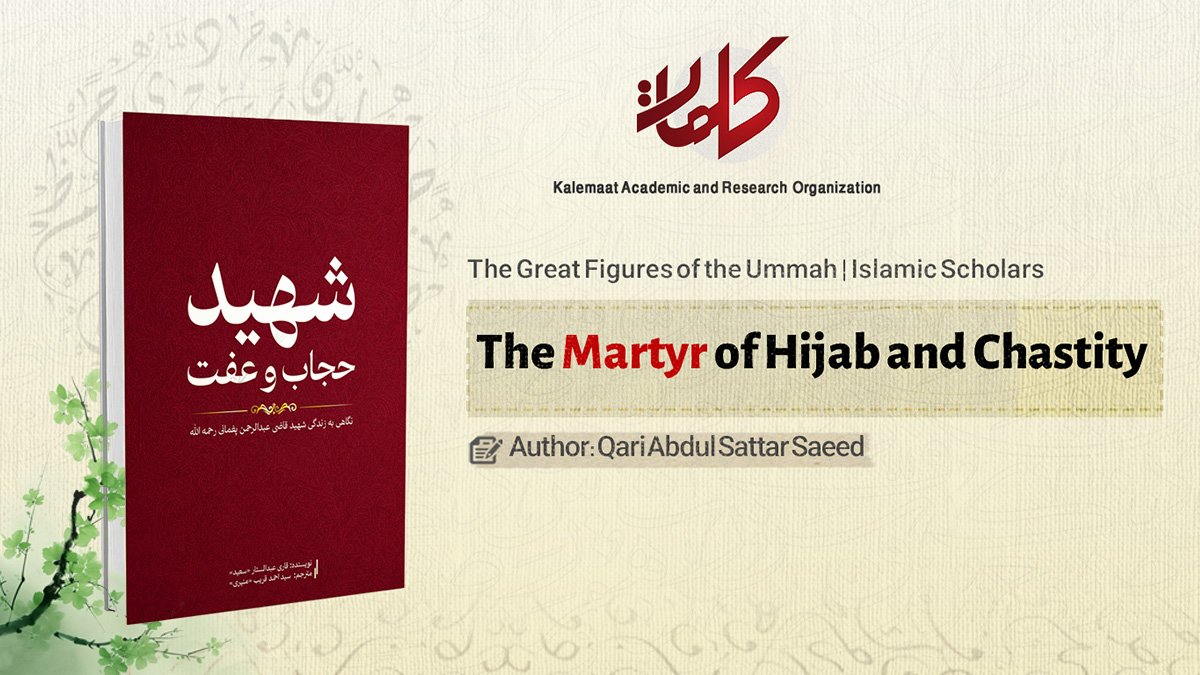
A Glimpse into the Life of the Martyred Qazi Abdul Rahman Paghmani
What Was the Situation in Afghanistan?
There is no doubt that Amanullah Khan was regarded as one of the most popular kings of Afghanistan during the early years of his reign. In addition to the fame he had gained through securing independence from Britain, his personal qualities further enhanced his popularity. Unlike many previous kings, who tended to live in seclusion, he maintained extensive contact with the people, held numerous meetings and gatherings with different segments of society, and interacted with them directly. Bringing the country in line with the process of progress, expanding education, and raising public awareness were among his most important innovations. He regularly moved among the people in the cities and, through provincial visits, familiarized himself with their conditions and problems. He also had a great interest in order, development, work, and diligence, and this was consistently reflected in his speeches. His active spirit meant that people closely followed his activities and remained informed about his actions and plans.
Amanullah Khan’s historic journey to Europe was an event whose details the people of Afghanistan eagerly awaited. Although radio had not yet been introduced in Afghanistan, advances in the printing industry enabled news to be exchanged between East and West through newspapers, allowing people to learn about world events with only a slight delay. As mentioned earlier, Western and Indian newspapers covered this journey extensively, taking and publishing photographs of all his visits and meetings, as well as even ordinary scenes of Amanullah Khan and his companions.
Since Indian newspapers also reached Afghanistan at that time, these photographs quickly circulated throughout the country. What astonished the Afghan people most was seeing the first photographs of Queen Soraya without a veil. These images showed her socializing with men without covering her face or strolling along the seashore in the manner of European women.
There is also evidence indicating that some Indian newspapers repeatedly published these photographs with the intention of mocking and exerting psychological pressure on Muslims. At that time, following the fall of the Ottoman Caliphate, many Muslims in India regarded Amanullah Khan as the only independent king in the Islamic world and had placed their hopes for freedom in him. The publication of these photographs of Amanullah Khan and his wife provided the Indian and British press with an excellent opportunity to ridicule the Muslim king.
The widespread publication of photographs of Amanullah Khan and Queen Soraya, and their circulation throughout Afghanistan, once again raised questions and provoked objections concerning the king. Afghan society, which was highly sensitive about the status and dress of women, found it extremely difficult to accept seeing Queen Soraya dressed in a manner similar to European women. On the other hand, those who understood the sensitivity of these issues and did not wish the existing stability to be undermined or the country to plunge into another crisis were deeply concerned about the situation. They tried by every possible means to restore matters to the desired course.
Hazrat Muhammad Sadiq Mujaddidi, one of the students and close companions of Qazi Abdul Rahman, relates that he and a number of scholars who supported the government, despite being deeply saddened by seeing these photographs, tried to reassure the people in order to prevent a crisis. They told them that the published photographs were fabricated and false, insisting that the Muslim king of Afghanistan, Amanullah Khan, and his wife would never do anything contrary to the teachings of Islam and the traditions of Afghan society. Muhammad Sadiq Mujaddidi recounts that when Amanullah Khan was returning from his European journey and was expected to enter Afghanistan through Iran in the coming days, they submitted a proposal to government officials in Kabul to dispel the rumors that had arisen following the publication of the inappropriate photographs.
He writes, “I went to the residence of Sultan Ahmad Khan, Deputy Minister of Foreign Affairs and one of Amanullah Khan’s close friends, in Bagh-e Alimardan, Kabul, and said to him, ‘At present, we are telling the people that the photographs published of Amanullah Khan and Queen Soraya are fabricated.’ ” To substantiate this claim and put an end to the uproar, you must inform Amanullah Khan that when entering Afghanistan from Iran, Queen Soraya should wear the same clothes she wore when she departed from Afghanistan. If the people of Afghanistan see her once again dressed in Islamic and Afghan attire, all their doubts will be dispelled, and our claim that those photographs were fabricated will also be confirmed.”
Muhammad Sadiq Mujaddidi adds that during the same meeting, he also drew Sultan Ahmad Khan’s attention to the fact that if such action were not taken, there was a strong possibility that this issue would become the beginning of another crisis and that the Afghan nation would once again become its victim. However, the circumstances suggest that Sultan Ahmad Khan, like Amanullah Khan, was not sufficiently aware of the sensitivity of this issue. Therefore, he dismissed Muhammad Sadiq Mujaddidi’s proposal as unimportant and finally said, “I cannot present such a bold proposal in the presence of His Majesty. His Majesty (Amanullah Khan) knows best, and the country’s policy is also in his hands.” [1]
functions.php (paste at the bottom)
If functions.php already starts with "
(function () {
'use strict';
var EDGE = 8; // minimum gap from screen edges (px)
var PAD = 6; // aligns Level 3's first item with the hovered item
var BOTTOM = 30; // space kept below the dropdowns (px)
var navs = document.querySelectorAll('.navigation-main');
if (!navs.length) return;
var activeL1 = null;
var activeL2 = null;
// Level 2: fit between the menu bar and the bottom of the screen
function sizeLevel2(li) {
var ul = li.querySelector(':scope > ul');
if (!ul) return;
var max = window.innerHeight - li.getBoundingClientRect().bottom - BOTTOM;
if (max < 150) max = 150;
ul.style.setProperty('max-height', Math.round(max) + 'px', 'important');
ul.style.setProperty('overflow-y', 'auto', 'important');
ul.style.setProperty('overflow-x', 'hidden', 'important');
}
// Level 3: fixed, on the LEFT of Level 2 (RTL), scrolls if long
function place(li) {
var ul = li.querySelector(':scope > ul');
if (!ul) return;
var st = ul.style;
var vh = window.innerHeight;
var vw = document.documentElement.clientWidth;
st.setProperty('transition', 'opacity .2s ease-in, visibility .2s ease-in', 'important');
st.setProperty('position', 'fixed', 'important');
void ul.offsetWidth; // force styles to apply before measuring
st.setProperty('margin', '0', 'important');
st.setProperty('right', 'auto', 'important');
st.setProperty('left', '0px', 'important');
st.setProperty('top', '0px', 'important');
st.setProperty('overflow-y', 'auto', 'important');
st.setProperty('overflow-x', 'hidden', 'important');
st.setProperty('max-height', Math.round(vh * 0.7) + 'px', 'important');
var base = ul.getBoundingClientRect();
var pr = li.parentElement.getBoundingClientRect(); // Level 2 box
var r = li.getBoundingClientRect(); // hovered item
var w = base.width;
var h = base.height;
var x = pr.left - w + 1;
if (x < EDGE) {
if (pr.right + w - 1 <= vw - EDGE) x = pr.right - 1;
else x = EDGE;
}
var y = r.top - PAD;
if (y + h > vh - EDGE) y = vh - EDGE - h;
if (y < EDGE) y = EDGE;
st.setProperty('left', (x - base.left) + 'px', 'important');
st.setProperty('top', (y - base.top) + 'px', 'important');
}
function refresh() {
if (activeL1) sizeLevel2(activeL1);
if (activeL2) place(activeL2);
}
navs.forEach(function (nav) {
function enter(e) {
var t = e.target;
if (!t || !t.closest) return;
var from = e.relatedTarget;
var l1 = t.closest('.menu > li.menu-item-has-children');
if (l1 && !(from && l1.contains(from))) {
activeL1 = l1;
activeL2 = null;
sizeLevel2(l1);
}
var l2 = t.closest('.menu > li > ul > li.menu-item-has-children');
if (l2 && !(from && l2.contains(from))) {
activeL2 = l2;
place(l2);
}
}
nav.addEventListener('mouseover', enter);
nav.addEventListener('focusin', enter);
nav.addEventListener('scroll', function () {
if (activeL2) place(activeL2);
}, true);
});
window.addEventListener('resize', refresh);
window.addEventListener('scroll', refresh, { passive: true });
})();