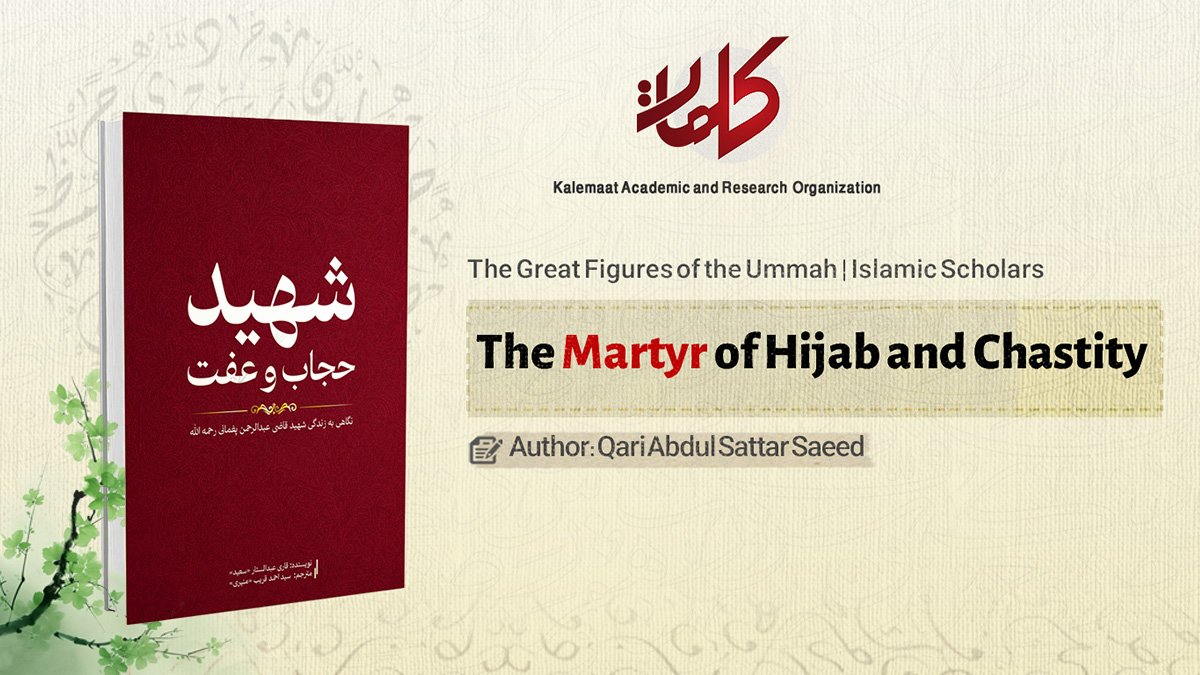
A Glimpse into the Life of the Martyred Qazi Abdul Rahman Paghmani
The Meeting That Transformed Amanullah Khan
Among all the meetings during this journey, Amanullah Khan’s encounter with Mustafa Kamal Ataturk, the leader of Turkey, had the greatest impact on him. Amanullah Khan and Ataturk had almost similar life stories. In 1919, when Amanullah Khan launched Afghanistan’s War of Independence against Britain, Ataturk was also engaged in a struggle to liberate the Turkish territories occupied by the victorious powers of the First World War. After achieving independence, both leaders launched programs under the banner of “reform,” aimed at bringing fundamental changes to their Muslim societies and bringing them closer to the models of Western civilization.
After three years of the Turkish War of Independence, Ataturk abolished the monarchy in 1923 and declared Turkey a republic. He then gradually began the process of secularization (irreligion). A year later, he took another step forward by officially declaring secularism and stating that religion should be separated from politics. He abolished the Ministry of Religious Endowments and the Sharia courts, replaced the Arabic script with the Latin alphabet, and declared that the Turkish translation of the Qur’an should be recited instead of its Arabic text. He also imposed restrictions on the construction of mosques, abolished government privileges granted to imams and preachers, and converted the historic mosques of Hagia Sophia and Fatih into museums. Ataturk openly declared that “the nature of Islam is incompatible with civilization and progress” (God forbid!). He believed that European civilization was the only existing civilization and that the nations of the world had no alternative but to adopt its model if they wished to achieve progress.
In 1925, the first uprising against Ataturk’s secular policies began under the leadership of Sheikh Said Piran, a Naqshbandi spiritual leader. The uprising continued for approximately nine months. The government suppressed it with extreme force. Sheikh Said and 46 of his close associates were executed in Diyarbakir, while hundreds of others were either imprisoned or exiled in various regions. Ataturk married Latife Hanim, the daughter of a wealthy Jewish businessman from Izmir. In an effort to promote the removal of the hijab, he appeared alongside his wife in various cities. He also promoted the use of European-style hats in place of the traditional fez. Furthermore, in an attempt to diminish the historical standing of Istanbul, the former center of the Ottoman Caliphate, he transferred the capital to Ankara. Ataturk pursued secularization with determination, accusing opponents of his policies of national treason and sentencing them to death. In 1928, he also formalized secularism through the adoption of a new constitution and established six principles as the foundations of the state. These were represented by six symbolic arrows on the official emblem of the Turkish state. The six principles were nationalism, republicanism, populism, secularism, reformism, and statism.
A look at the situation in Afghanistan reveals that Amanullah Khan, like Ataturk, had begun promoting Western laws and culture after consolidating his power. The main difference was that Amanullah Khan’s reforms encountered the uprising led by Mullah Abdullah, forcing him to retreat from many of his reform programs. Now that Amanullah Khan had the opportunity to meet Ataturk in person, it seems natural that he had many questions on his mind and wished to learn how Ataturk had succeeded in implementing his reforms and overcoming the obstacles posed by opposition from religious scholars.
Aziz Hindi has recounted the details of this meeting extensively in his book, Zawal-e Ghazi, on pages 35–39. According to his account, it appears that at the beginning of the meeting, Amanullah Khan shared his difficulties and concerns with Ataturk and then asked him to share the experiences and necessary guidance that could help him successfully implement reforms in Afghanistan. Ataturk, in turn, sought to understand the conditions in Afghanistan by asking various questions and then offered his recommendations accordingly. The conversation between these two like-minded leaders is reported as follows:
Ataturk: “If you intend to implement reforms similar to those in Turkey in your own country, Afghanistan, it would be advisable for you, our brother, to first make certain that several fundamental conditions are in place.
Amanullah Khan: “Undoubtedly, this is the fundamental issue, and that is precisely why I have come to consult my dear brother, the President of Turkey, before embarking on these reforms.
Ataturk: “I hope you understand the sensitivity of this matter, because if the reforms fail due to widespread public dissatisfaction, they may lead to unrest, uprisings, and general discontent. My first question is: Are you sufficiently popular among your people to ensure that they will not rise up in rebellion, even if they become dissatisfied with your reforms?”
Amanullah Khan: “The only group capable of inciting the people against the government is the religious clergy. However, a few years ago, during the Mangal uprising (the uprising led by Mullah Abdullah), I crushed their power, and they are no longer capable of rising against the government.”
Ataturk: “But supposing they rise against the government again, do you possess sufficient military strength to suppress them?”
Amanullah Khan: “Absolutely; with the support of our military forces, we can easily suppress them.”
Ataturk: “How popular are you among the military forces? Are you certain that the army will maintain its military discipline under all circumstances and remain loyal to the government?”
Amanullah Khan: “Absolutely; I enjoy immense popularity among the military forces, and I have complete confidence in the loyalty of the army.”
Ataturk then continued asking questions in order to gain a clearer understanding of the actual conditions in Afghanistan and the Amanullah government. For example, he asked that if an uprising occurred and certain regions fell outside government control, this would directly affect government revenues, since taxes from areas no longer under government control would cease to reach the state treasury. Moreover, an uprising could lead to the closure of certain communication and transportation routes, thereby damaging trade and government revenues. He therefore asked whether the government had sufficient reserves in its treasury to compensate for such losses in an emergency.
Ataturk subsequently asked questions about Afghanistan’s neighboring countries and the Amanullah government’s relations with them. Specifically, he wanted to know whether Afghanistan had any neighboring country that might support the opponents of the Amanullah government. Amanullah Khan answered all of Ataturk’s questions with complete confidence, dismissing every potential danger that was raised. His responses suggest that he did not consider any serious reaction to his new reforms likely and therefore portrayed the situation in Afghanistan to Ataturk as entirely stable and favorable.
Finally, Ataturk raised another question: if an uprising broke out and continued for a prolonged period, the government would naturally face shortages of weapons, ammunition, and other military supplies. Under such circumstances, did the Amanullah government have anyone from whom it could request assistance? Amanullah Khan replied that, firstly, matters would never reach such a stage, and secondly, if the need arose, he would probably seek assistance from the Turkish government.
At this point, Ataturk said, “If conditions are favorable and suitable in every respect, my recommendation is that you begin implementing the reforms as soon as possible.”
He concluded his remarks by saying, “In Turkey, too, no one welcomed the reforms, and the people did not want them. Nevertheless, we imposed them at the point of the bayonet. No nation voluntarily abandons its longstanding beliefs, ideas, traditions, and customs unless the government imposes such changes upon it through power and coercion.”
The meeting with Mustafa Kamal Ataturk had such a profound impact on Amanullah Khan that, after returning to Kabul, he repeatedly referred to it in his speeches. He regarded Ataturk’s advice and recommendations as a tried-and-tested formula for implementing reforms and followed them in practice. After this meeting in Ankara, Amanullah Khan travelled to Istanbul and then proceeded to Iran, which was the final destination of his six-month foreign tour.
Some historians have written that although Reza Shah Pahlavi, the King of Iran, like Mustafa Kamal Ataturk in Turkey and Saad Zaghloul in Egypt, sought to implement Western-oriented policies and modernize his society, he was nevertheless astonished that Amanullah Khan’s wife appeared at official meetings with her face uncovered and shook hands with men. This situation prompted several Iranian religious scholars to write a letter to Amanullah Khan, asking him to ensure that his wife observed the hijab, since women’s hijab had not yet been abandoned in Iran at that time. However, Amanullah Khan paid no attention to this request. Even in the religious city of Mashhad, regarded as one of the major religious centers of the Shiites, Queen Soraya visited religious sites without covering her face.
functions.php (paste at the bottom)
If functions.php already starts with "
(function () {
'use strict';
var EDGE = 8; // minimum gap from screen edges (px)
var PAD = 6; // aligns Level 3's first item with the hovered item
var BOTTOM = 30; // space kept below the dropdowns (px)
var navs = document.querySelectorAll('.navigation-main');
if (!navs.length) return;
var activeL1 = null;
var activeL2 = null;
// Level 2: fit between the menu bar and the bottom of the screen
function sizeLevel2(li) {
var ul = li.querySelector(':scope > ul');
if (!ul) return;
var max = window.innerHeight - li.getBoundingClientRect().bottom - BOTTOM;
if (max < 150) max = 150;
ul.style.setProperty('max-height', Math.round(max) + 'px', 'important');
ul.style.setProperty('overflow-y', 'auto', 'important');
ul.style.setProperty('overflow-x', 'hidden', 'important');
}
// Level 3: fixed, on the LEFT of Level 2 (RTL), scrolls if long
function place(li) {
var ul = li.querySelector(':scope > ul');
if (!ul) return;
var st = ul.style;
var vh = window.innerHeight;
var vw = document.documentElement.clientWidth;
st.setProperty('transition', 'opacity .2s ease-in, visibility .2s ease-in', 'important');
st.setProperty('position', 'fixed', 'important');
void ul.offsetWidth; // force styles to apply before measuring
st.setProperty('margin', '0', 'important');
st.setProperty('right', 'auto', 'important');
st.setProperty('left', '0px', 'important');
st.setProperty('top', '0px', 'important');
st.setProperty('overflow-y', 'auto', 'important');
st.setProperty('overflow-x', 'hidden', 'important');
st.setProperty('max-height', Math.round(vh * 0.7) + 'px', 'important');
var base = ul.getBoundingClientRect();
var pr = li.parentElement.getBoundingClientRect(); // Level 2 box
var r = li.getBoundingClientRect(); // hovered item
var w = base.width;
var h = base.height;
var x = pr.left - w + 1;
if (x < EDGE) {
if (pr.right + w - 1 <= vw - EDGE) x = pr.right - 1;
else x = EDGE;
}
var y = r.top - PAD;
if (y + h > vh - EDGE) y = vh - EDGE - h;
if (y < EDGE) y = EDGE;
st.setProperty('left', (x - base.left) + 'px', 'important');
st.setProperty('top', (y - base.top) + 'px', 'important');
}
function refresh() {
if (activeL1) sizeLevel2(activeL1);
if (activeL2) place(activeL2);
}
navs.forEach(function (nav) {
function enter(e) {
var t = e.target;
if (!t || !t.closest) return;
var from = e.relatedTarget;
var l1 = t.closest('.menu > li.menu-item-has-children');
if (l1 && !(from && l1.contains(from))) {
activeL1 = l1;
activeL2 = null;
sizeLevel2(l1);
}
var l2 = t.closest('.menu > li > ul > li.menu-item-has-children');
if (l2 && !(from && l2.contains(from))) {
activeL2 = l2;
place(l2);
}
}
nav.addEventListener('mouseover', enter);
nav.addEventListener('focusin', enter);
nav.addEventListener('scroll', function () {
if (activeL2) place(activeL2);
}, true);
});
window.addEventListener('resize', refresh);
window.addEventListener('scroll', refresh, { passive: true });
})();