


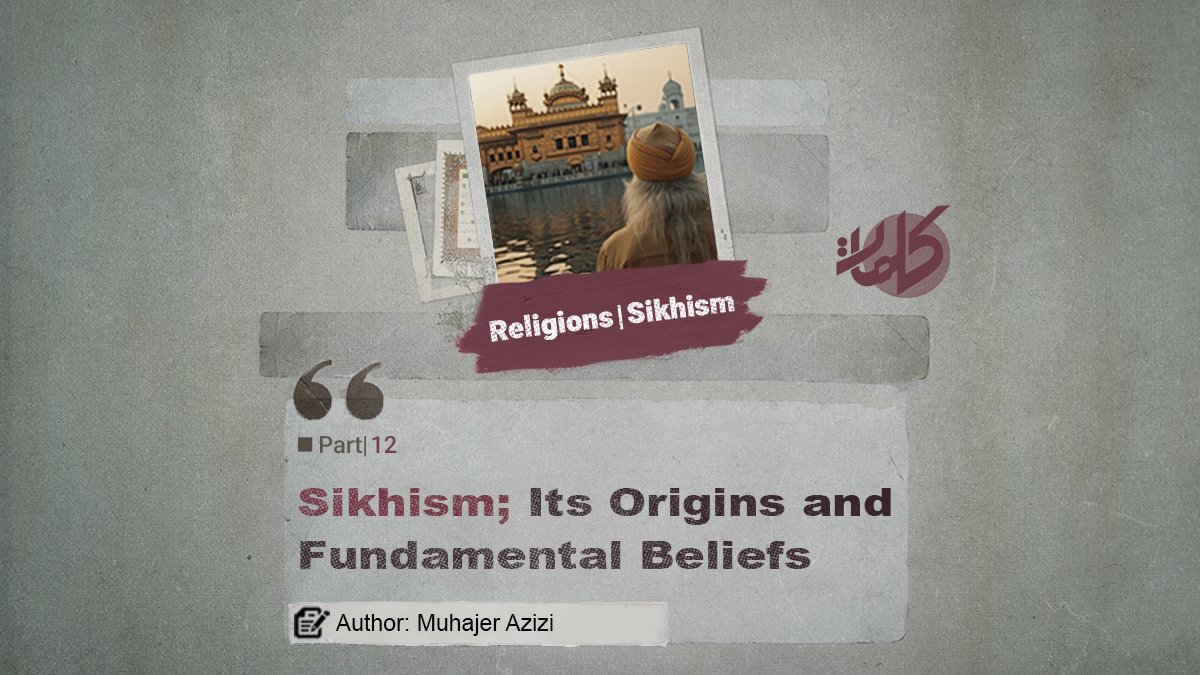
Author: Muhajer Azizi
Sikhism; Its Origins and Fundamental Beliefs (Part 12)
B. Monotheism (Tawhid) in Sikhism
Sikhism acknowledges the oneness of God, and in its sacred scripture, God is described as a unique, matchless, and peerless being. However, this concept of monotheism does not align with the monotheism as presented in Islam.
Guru Nanak, the first leader of the Sikhs, expresses in the Sikh holy book Adi Granth his belief that God is One and there is no deity besides Him. He says: “You have no partner beside You; no one is like You. Through all ages and times, you exist alone — always, everywhere, One and Unique. The misfortunes and salvations of all are by Your command, and no one has the power to interfere. He does whatever He wills; no one commands Him. He is the King — the King of all kings. Everything is under His control and will; He guides people as He pleases. He sees but is not seen. O God, whatever You will comes to be. O Great God, you are One, even though Your manifestations are many. Those who forget Your name go astray. I live within God’s name, and His name resides in my heart. He honors whomever He wills. Whatever He is pleased with — that alone comes to pass. Man is nothing in this.” [1]
It is also said regarding God: “God is indescribable and has many names. His most important name is ‘Truth.’ Other names include Allah, God (Allah), Ram, and Shiva. His most famous name is Hari, which is one of the names of Vishnu. In any case, regardless of the name or attribute by which He is called, God is One and Unique, omnipresent and manifest everywhere. The fate and destiny of all creatures are in His hands. Man is the highest of all creation, and all other creatures exist to serve humans. Therefore, humans are permitted to eat the flesh of animals, and consuming meat is lawful for them.” [2]
These ideas clearly reflect Sikhism’s belief in monotheism. In the next section, we will examine this claimed monotheism of Sikhism through the lens of Islamic teachings to determine whether it is compatible with the Islamic understanding of monotheism.
C. Monotheism (Tawhid) in Islam
Monotheism is one of the fundamental and foundational principles of Islam and has always been counted among the primary tenets of the religion. It is one of the three essential pillars of Islam, and without belief in it, neither a person’s faith nor their Islam is accepted.
The Holy Qur’an, as the primary source of Islamic teachings, repeatedly and emphatically stresses monotheism and calls humanity to the belief in the oneness of Allah Most High and to center their lives on the concept of Tawhid (oneness of God). Dozens of verses in the Qur’an, directly and indirectly, affirm monotheism and reject all forms of polytheism. Among these verses are:
“قُلْ هُوَ اللَّهُ أَحَدٌ” — “Say: He is Allah, the One.” [3]
“لَا إِلَٰهَ إِلَّا اللَّهُ” — “There is no deity except Allah.” [4]
“وَإِلَٰهُكُمْ إِلَٰهٌ وَاحِدٌ ۖ لَا إِلَٰهَ إِلَّا هُوَ” — “Your God is One God. There is no deity except Him.” [5]
“إِنَّمَا إِلَٰهُكُمُ اللَّهُ الْوَاحِدُ” — “Your God is only One God.” [6]
“لَا إِلَٰهَ إِلَّا هُوَ” — “There is no deity except Him.” [7]
These verses clearly demonstrate that monotheism is a foundational principle of Islam — a pure and uncompromising oneness, free of all forms of polytheism or multiplicity.
Scholars of Islamic theology have categorized Tawhid into three types:
-
Tawhid al-Rububiyyah (Oneness of Lordship)
-
Tawhid al-Asma wa al-Sifat (Oneness of Names and Attributes)
-
Tawhid al-Uluhiyyah (Oneness of Worship)
1. Tawhid al-Rububiyyah (Oneness of Lordship):
This means believing that Allah alone possesses ultimate power and authority, and that all others are His creations and servants. All ownership belongs to Him, and He is the sole Planner and Administrator of all affairs.
2. Tawhid al-Asma wa al-Sifat (Oneness of Names and Attributes):
This means believing that Allah has beautiful and perfect names and attributes, and that these attributes exist within Allah in such a way that they are free from any imperfection or deficiency.
For example, among Allah’s names and attributes are the All-Knowing, the All-Hearing, and the All-Seeing. Although created beings also possess knowledge, hearing, and sight, in the case of Allah (Glorious is He), these attributes are complete and without flaw. Allah knows everything — His knowledge encompasses all. He sees all things, and He hears all things. This is a summary of Tawhid in names and attributes.
3. Tawhid al-Uluhiyyah (Oneness of Worship):
While the first two forms of Tawhid pertain to Allah’s actions and attributes (such as creating, providing sustenance, etc.), Tawhid al-uluhiyyah refers to the actions of the servants. It means acknowledging Allah as the only One worthy of worship in all acts of devotion. This means we must perform all our acts of worship solely for Allah, ask only Him, sacrifice only for Him, fear only Him, rely only upon Him, and place our hope solely in Him.
Continues…
Previous Part/ Next Part
References:
[1] Living Religions of the World, pp. 142–145
[2] Religions of India, p. 461
[3] Surah Al-Ikhlas, 1
[4] Surah As-Saffat, 35; Surah Muhammad, 19
[5] Surah Al-Baqarah, 163
[6] Surah Al-Anbiya, 108; Surah Fussilat, 6; Surah Yusuf, 39
[7] Surah Sad, 65
