


Author: Abu Raef
Freemasonry (part 30)
Symbols of Inanimate Objects with Specific Connotations (continued)
-
The Symbol of the Drawn or Flaming Sword
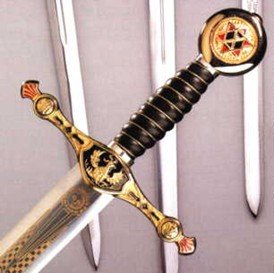
This symbol signifies the defense of a Mason as long as he remains committed to the Masonic covenant, and his punishment if he betrays the Masonic oath. In other words, disobedience, error, crime, and corruption must be expelled from Masonic lodges.
It also symbolizes the constant vigilance of Masonic members and a call to struggle in the path of truth, justice, and freedom. This symbol appears to encourage individuals and members of Masonry to adhere to its principles and motivates them to remain steadfast on this path. [1]
-
The Symbol of the Blooming Lotus Flower

Although the lotus flower in ancient Egyptian civilization symbolized purity and cleanliness (due to its growth in marshes and its resemblance to the Nile River—its leaves symbolizing the branches of the Nile and its stem symbolizing the riverbed), in Masonic thought, this flower represents success in achieving the new life and order that Masonic plans have outlined. [2]
-
The Symbol of “12 o’clock”
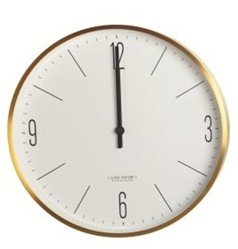
In Masonic thought, this symbol represents the breaking of a new dawn and the true beginning of the new Masonic world order. It appears to reveal one of the major hidden objectives of this secret movement: planning to control the world and present a new order for it. [3]
Conclusion
Based on what has been mentioned, it can be understood that the symbols of inanimate objects in Masonic thought form an important collection of specific Masonic meanings and connotations, equal in importance to other symbols.
The symbol of light refers to the light that manifested to Prophet Musa (PBUH) on the mountain and represents an attempt to prove the antiquity and sanctity of Jewish Masonry. The symbol of the fire of the torch of liberty expresses the destruction of the old-world order and the establishment of a new world order by global Judaism. The inverted cross is considered a symbol of Masonic Satanists and opposition to traditional Christian Church beliefs. The broken cross expresses global Masonry’s admiration for Nazi aggressive ideas. The drawn sword symbolizes the defense of the loyal Mason and the punishment of the one who betrays the Masonic oath. The blooming lotus flower indicates the success of Masonic plans in establishing the new order. The symbol of 12 o’clock signifies the rising of a new dawn and the real beginning of the new Masonic world order. [4]
The Connotations of Sacred Numbers in Masonic Thought
In this section, we examine numbers that, according to this movement, possess sanctity and special messages.
Some numbers in Masonic thought carry important meanings and connotations that may have religious, political, or social aspects. However, their religious connotations hold a special status, as they reflect particular secrets among adherents of global Zionist Masonry, secrets through which they understand the method of establishing the government of the new world order and controlling international institutions.
Here we mention the connotations of some of these numbers:
The Connotations of the Number 3
From a religious perspective, this number symbolizes the Holy Trinity in many ancient religions as well as in Christianity.
In the Brahmanic religion of India, the holy trinity consists of: Brahma, Vishnu, and Shiva.
In Zoroastrianism (Magianism), the trinity consists of: Ahura Mazda, Mithra, and Ahriman.
In Christianity, the trinity consists of: the Father, the Son, and the Holy Spirit, and it also refers to the three days of Christ’s death.
However, in Masonic thought, the number three symbolizes the three Masonic degrees: Entered Apprentice, Fellow Craft, and Master.
It also represents the global Masonic motto: Liberty, Equality, and Fraternity.
It is also the symbol of the Masonic triangle (or the three-branched candlestick), which represents balance between instructing power, adorning beauty, and harmonizing wisdom.
This number also refers to the stages of youth, middle age, and old age;
And to the three precious jewels that the Grand Master grants to the candidate for Masonic membership: a listening ear to receive commands, a pure and wise tongue to convey them, and a trustworthy breast to preserve Masonic secrets.
The number three also symbolizes the great Masonic teachings: brotherly love, relief and compassion, and truth;
And it also refers to the three great lights in Masonry: The Volume of the Sacred Law (as the constitution of the Masons), the square, and the compass. [5]
To be continued…
Previous Part | Next Part
References:
- Freemasonry: That Unknown World, p. 144.
- Symbols in Art, Religions, and Life, p. 305.
- Symbols, Signs, and Myths, p. 70.
- The Connotations of Sacred Symbols and Numbers in Masonic Thought, p. 233.
- The Connotations of Sacred Symbols and Numbers in Masonic Thought, p. 234.
