

Close Menu
    Facebook X (Twitter) Telegram WhatsApp
    • Language
      • دری
      • پښتو
      • العربیة
    • Home
    • Analysis
    • Islam
      • Prophet of Islam (PBUH)
      • Holy Quran
      • Muslim
      • Belief
      • Faith
      • Worships
      • Jurisprudence
      • Jihad
      • Islamic Perspectives
      • Islamic Economics
      • Islamic Management
      • Islamic Culture
      • Sufism
      • Crimes
      • Prohibitions
    • Religions
      • Judaism
      • Christianity
      • Buddhism
      • Hinduism
      • Zoroastrian
      • Satanism
      • Confucius
      • Sikhism
    • Theories
      • Atheism
      • Secularism
      • liberalism
      • Socialism
      • Communism
      • Democracy
      • Federalism
      • Fascism
      • Capitalism
      • Marxism
      • Feminism
      • Nationalism
      • Colonialism
      • Frankfurt School
      • Freemasonry
      • Humanism
    • Fitn
      • Mu’tazila
      • Murjea
      • Jahmiyyah Sect
      • Khawarij’s sedition
      • Rawafez sedition
      • The Fitna of Orientalism
      • Ghamdism
      • Qadiani’s sedition
      • Qadriyyah Sect
      • Karramiyyah Sect
    • Ummah
      • Sahabah (Companions of the Prophet ﷺ)
        • Hazrat Abu bakr Siddiq (RA)
        • Hazrat Umar Farooq (MGH)
        • Hazrat Usman (MGH)
        • Hazrat Ali (RA)
        • Hazrat Khaled bin Waleed (MGH)
        • Hazrat Firooz Dilami (MGH)
        • Hazrat Abdullah Ibn Zubair (MGH)
      • Mothers of the believers
      • Islamic scholars
        • Sayed Abul Hasan Nadavi (MGHM)
        • Imam al-Aʿzam Abu Hanifa (RA)
        • Imam al-Bukhari (RA)
        • Imam al-Tirmidhi (RA)
        • Imam al-Ghazali (RA)
        • Shah Waliullah al-Dehlawi (RA)
        • Sayyid Jamal al-Din Afghani
        • Mawlana Jalal al-Din Muhammad Balkhi Rumi (RA)
      • Muslim Governor’s
        • Sultan Salahuddin Ayyubi (MGHM)
        • Omar bin Abdul Aziz (MGHM)
        • Sultan Yusuf bin Tashfin (MGHM)
      • Muslim Scientists
    • Civilizations
      • Islamic Civilization
      • Eastern & Western civilizations
    • Diverse
      • Ramadan Message
    • library
    Facebook X (Twitter) Telegram WhatsApp
    kalemaat Englishkalemaat English
    You are at:Home»Theories»Freemasonry»Freemasonry (part 28)
    Freemasonry

    Freemasonry (part 28)

    By 11/02/2026Updated:12/02/2026No Comments3 Mins Read
    Share Facebook Twitter Telegram WhatsApp
    Share
    Facebook Twitter Telegram Email WhatsApp
    Author: Abu Raef
    Freemasonry (part 28)
    Symbols of the Candlestick and Royal Staffs and Their Continuations
    Another topic in recognizing Freemasonic signs and indications is the references and symbols associated with specific objects, such as the candlestick and the royal staff.
    The slogan of the “Seven-Branched Candlestick”
    1. Although this symbol, with its seven branches and alongside two olive branches (which are outwardly presented as a symbol of inclination toward peace), is considered the official emblem of the Zionist state of Israel, it also holds a special place in Freemasonic thought.
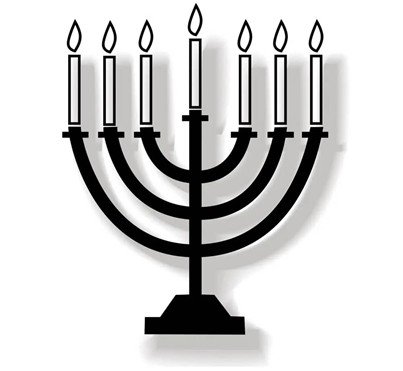
    In Masonic thinking, the seven-branched candlestick symbolizes the number of members whose presence makes a Masonic lodge session legally valid.
    However, among Royal Masons, the seven lights of this candlestick refer to the seven years during which Prophet Solaiman (PBUH) completed the construction of the “Great Temple.”
    The light of the candlestick is also a symbol of the “Light of Sakīnah,” a light beyond which there will be no other light in the Hereafter. [1]
    The candlestick is a symbol installed in the Temple of Jerusalem and in all Jewish synagogues. Its construction is attributed to the Jewish craftsman “Bezalel son of Uri,” the grandson of Hur from the tribe of Judah, whose name appears in the Book of Exodus (37:17–22): “And Bezalel son of Uri made the vessels that were on the table, dishes, pans, bowls, and pitchers used for pouring, of pure gold; and he made the candlestick of pure gold, of one piece; its base and shaft, its cups, its knobs, and its flowers were of one piece with it…” [2]
    The slogan of the “Staff with Two Serpents”
    This symbol signifies the dominance of the Masonic organization over global health and medical institutions and is used as a sign of medicine and healing, whereas its true and ancient meaning has been distorted.

    Originally, this symbol goes back to the “Staff of Asclepius,” the god of medicine and healing in Greek mythology, which consisted only of a single staff with one serpent coiled around it. Later, this meaning was altered and attributed to the staff of “Hermes,” the son of Zeus, the great god of the Greeks.
    In Greek mythology, Hermes is the provider of the gods’ food, the guide of the souls of the dead to the other world and their return to the earth, the servant of liars and deceivers, the messenger of the gods, and the guide of travelers. His staff has two wings and two serpents coiled around it in opposite directions and is a symbol of clear opposition:
    The first serpent: a symbol of foundation, construction, healing, and good;
    The second serpent: a symbol of destruction, ruin, poison, and evil. [3]
    Final conclusion
    1. The seven-branched candlestick is the official emblem of the Zionist state of Israel and the symbol installed in all Jewish temples and synagogues.
    2. The staff with two serpents is a symbol of the Masonic organization’s dominance over global health and medical institutions, and its ancient meaning (which went back to the Staff of Asclepius, the god of medicine and healing in ancient Greece) has been distorted and fabricated. [4]
    To be continued…

    Previous Part | Next Part

    References:
    • Ginzberg, Louis, The Legends of the Jews, pp. 154–156, translated by Hasan Hamdi al-Sammahi, Dar al-Kitab al-Arabi, Damascus–Cairo, first edition, 2007.
    • The Continuations of Sacred Symbols and Numbers in Masonic Thought, p. 299.
    • Cortel, Arthur, Dictionary of World Mythologies, p. 140, translated by Suha al-Turayhi, Dar Ninawa, Damascus, Syria, 1430 AH.
    • The Significations of Sacred Symbols and Numbers in Masonic Thought, p. 230.

    Related Posts

    Islam and Democracy (The 47th and Final Part)

    26/09/2026

    Islam and Democracy (Part 46)

    24/09/2026

    Islam and Democracy (Part 45)

    23/09/2026
    Leave A Reply Cancel Reply

    Follow us on the social media pages
    • Facebook
    • Twitter
    • Instagram
    • Telegram
    • WhatsApp
    Don’t miss

    The Divine Education Model in the Family of the Prophets (Part 136)

    The Divine Education Model in the Family of the Prophets (Part 135)

    The Divine Education Model in the Family of the Prophets (Part 134)

    Islam and Democracy (The 47th and Final Part)

    About Us:

    The Scientific and Research Office of Kalemaat is an independent office affiliated with Ahl al-Sunnah wa al-Jama‘ah. It works to promote the true values of Islam, achieve the noble goals of the sacred Sharia, resist Western cultural influence, uphold the Word of Allah, and awaken the Muslim community.

    This office is supported by Muslim philanthropists and businessmen, and it also invites all Muslims to fully cooperate and contribute to its mission.

    Famous publications

    The Divine Education Model in the Family of the Prophets (Part 136)

    29/09/2026

    The Divine Education Model in the Family of the Prophets (Part 135)

    28/09/2026
    Follow us on social medias
    • Facebook
    • Twitter
    • YouTube
    • Telegram
    • Instagram
    • WhatsApp
    All right reserved by (kalemaat)
    • Home
    • Analysis of the day
    • The greats of the Ummah
    • library

    Type above and press Enter to search. Press Esc to cancel.