Close Menu
    Facebook X (Twitter) Telegram WhatsApp
    • Language
      • دری
      • پښتو
      • العربیة
    • Home
    • Analysis
    • Islam
      • Prophet of Islam (PBUH)
      • Holy Quran
      • Muslim
      • Belief
      • Faith
      • Worships
      • Fiqh
      • Jihad
      • Islamic Perspectives
      • Islamic Economics
      • Islamic Management
      • Islamic Culture
      • Sufism
      • Crimes
      • Prohibitions
      • Sayings of the Scholars
      • Muhajir Tafsir
      • Hadith
    • Religions
      • Judaism
      • Christianity
      • Buddhism
      • Hinduism
      • Zoroastrianism
      • Satanism
      • Confucianism
      • Sikhism
    • Theories
      • Atheism
      • Secularism
      • liberalism
      • Socialism
      • Communism
      • Democracy
      • Federalism
      • Fascism
      • Capitalism
      • Marxism
      • Feminism
      • Nationalism
      • Colonialism
      • Frankfurt School
      • Freemasonry
      • Humanism
    • Fitan
      • Mu’tazila
      • Murji’ah
      • Jahmiyyah
      • The Fitna of the Khawarij
      • The Fitna of the Rawafid
      • The Fitna of Orientalism
      • Ghamdism
      • The Fitna of the Qadianis
      • Qadariyyah
      • Karramiyyah
    • Ummah
      • Sahabah (Companions of the Prophet ﷺ)
        • Hazrat Abu bakr Siddiq (RA)
        • Hazrat Umar al-Faruq (RA)
        • Hazrat Uthman ibn Affan (RA)
        • Hazrat Ali (RA)
        • Hazrat Khalid ibn al-Walid (RA)
        • Hazrat Fayruz al-Daylami (RA)
        • Hazrat Abdullah ibn al-Zubayr (RA)
      • Ummahat al-Mu’minin
      • Islamic scholars
        • Allamah Sayyid Abul Hasan Ali Nadwi (RH)
        • Imam al-Aʿzam Abu Hanifa (RH)
        • Imam al-Bukhari (RH)
        • Imam al-Tirmidhi (RH)
        • Imam al-Ghazali (RH)
        • Shah Waliullah al-Dehlawi (RH)
        • Sayyid Jamal al-Din Afghani
        • Mawlana Jalal al-Din Muhammad Balkhi Rumi (RH)
      • Muslim Rulers
        • Sultan Salahuddin Ayyubi (RH)
        • Umar ibn Abd al-Aziz (RH)
        • Sultan Yusuf ibn Tashfin (RH)
      • Muslim Scientists
    • Civilizations
      • Islamic Civilization
      • Eastern and Western Civilizations
      • Traces of History
    • Diverse
      • Ramadan Message
      • Reports
      • Light and Darkness
    • library
    Facebook X (Twitter) Telegram WhatsApp Instagram Pinterest YouTube
    kalemaat Englishkalemaat English
    You are at:Home»Diverse»The Relationship Between Youth and the Masjed
    Diverse

    The Relationship Between Youth and the Masjed

    By 12/11/2025No Comments4 Mins Read
    Share Facebook Twitter Telegram WhatsApp
    Share
    Facebook Twitter Telegram Email WhatsApp
    Author: Khaled Yaghi Zahi

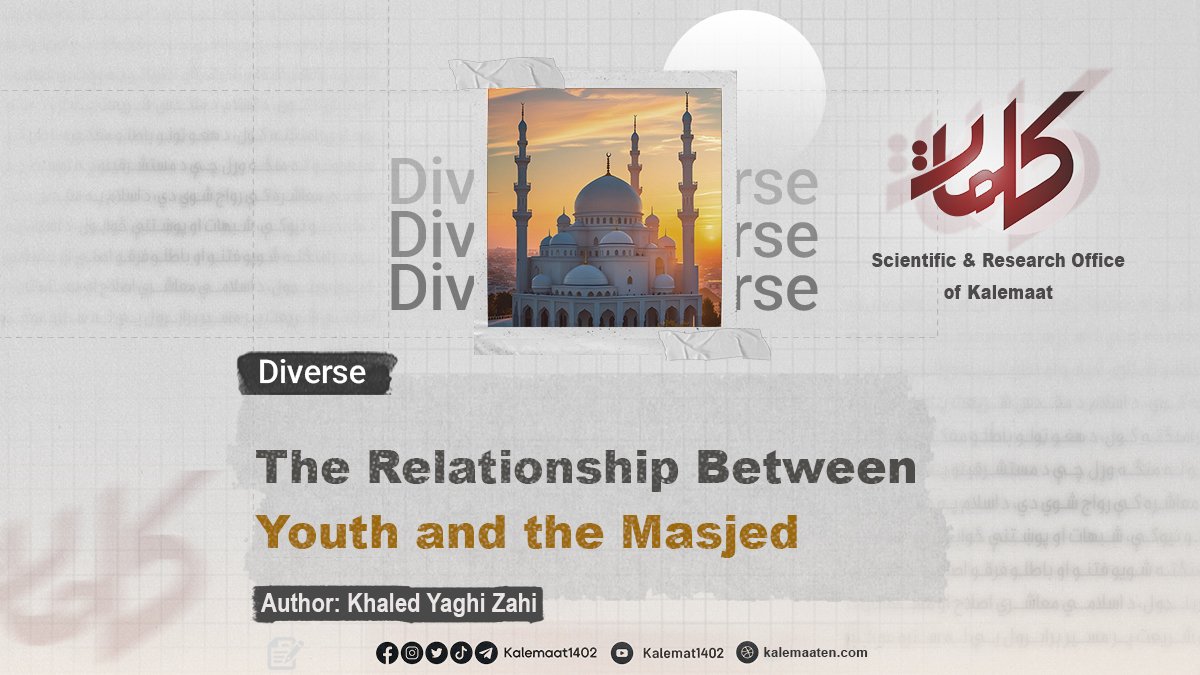
    The Relationship Between Youth and the Masjed

    The Islamic Ummah will never achieve progress and development except through the realization of these two fundamental pillars of movement and construction.
    The pious young individuals who are connected to the mosque and nurtured within it are indeed worthy of carrying the banner of Islamic revival.
    One of the greatest assets and most active capacities of society, which plays a vital role in its prosperity and advancement—and upon which the righteousness and functionality of the community depend—is the potential and capital found in the youth. However, this precious period of youth is not everlasting. Allah, after granting it, has decreed weakness and old age for humankind, for this is His divine creation and law indeed, Allah is All-Knowing and All-Powerful.
    Youth is an opportunity whose true value a person does not realize until it is lost. When we look into the lasting literary works of any language or culture, we find that writers and poets have always expressed regret and sorrow for the loss of their youthful days through their verses and literary texts. This period is, in fact, a precious blessing—so much so that Allah has adorned the people of Paradise with this very gift of perpetual youth.
    All these youth, health, wealth, leisure, and above all, life itself are valuable opportunities that must be cherished. Unfortunately, today, the youth of Islamic societies suffer from numerous problems that have led to frustration, confusion, and, God forbid, alienation from Allah and His house the Masjed..
    One of the greatest challenges facing young people today is their lack of connection with mosques. Maintaining a bond with the mosque is a fundamental principle. The role of the mosque in the rectitude or corruption, progress or decline of an individual is a decisive one. The mosque is the place that grants identity and dignity to a person.
    With the immense energy that Allah has instilled within them, young people can awaken their talents and refine their human values. Achieving this, however, requires greater acquaintance and connection with religion and divine teachings. The best foundation for realizing this goal is the mosque—a place free from logical or illogical restrictions, open to all people of every color, race, and inclination, where they can freely connect with this sacred space. In this environment, the youth can fulfill their innate and spiritual needs.
    Divine wisdom has decreed that human beings attain perfection, happiness, and tranquility in the house of their Lord—not elsewhere. Therefore, the central point of all other places and programs must be the House of Allah—the mosques. Just as the rituals of Hajj begin and end with the House of Allah, so too should the journey of spiritual growth revolve around it.
    Regrettably, this is not the case in our time. Mosques today suffer from neglect and isolation, and at best, they are not given the reception and importance they deserve. They do not hold their rightful position in our societies. Only a small percentage of mosque attendees are young people, while many others have no connection with the mosque at all. This alienation from the mosque exposes the youth to various moral and social dangers.
    Every individual and society feels the need for spirituality in life. The mosque, being both a place for spiritual elevation and a center for direct, face-to-face transmission of Islamic teachings, plays a unique and irreplaceable role in this regard.
    The significance of the mosque becomes evident when we recall that the Prophet Muhammad, (PBUH)  arriving in Madinah, immediately established a mosque—a center for gathering Muslims, making key decisions, worship, and spreading the teachings of Islam.
    In conclusion, it must be noted that youth possess a sensitive and delicate spirit. They stand at the peak of emotional intensity and conflicting behaviors. Therefore, if a young person behaves in a way that seems inappropriate within the mosque, avoid anger and harshness. Try to overlook their behavior, and if it cannot be ignored, advise them gently and privately. Remember, today’s youth are the men and women of tomorrow’s Ummah honored and dignified before Allah.

    Islam Islamic Civilization Islamic History Masjed Mosque Muslim Piety Worship

    Related Posts

    Serving One’s Parents

    15/10/2026

    Prohibited Oaths

    14/10/2026

    The Divine Education Model in the Family of the Prophets (Part 141)

    13/10/2026
    Leave A Reply Cancel Reply

    Follow us on the social media pages
    • Facebook
    • Twitter
    • Instagram
    • Telegram
    • WhatsApp
    Don’t miss

    The Status of Knowledge

    Serving One’s Parents

    Imam al-A‘zam Abu Hanifa (RA): The Role Model (part 35)

    The Worst of People

    About Us:

    The Academic and Research Organization of Kalemaat is an independent Islamic Da'wah organization affiliated with Ahl al-Sunnah wa al-Jama'ah. It is dedicated to promoting the authentic values of Islam, advancing the higher objectives of the Sharia, countering Western cultural influence, upholding the Word of Allah, and contributing to the intellectual and spiritual awakening of the Muslim Ummah.

    The Organization is supported by Muslim philanthropists and businessmen, and it welcomes the cooperation and support of Muslims worldwide in advancing its mission.

    Famous publications

    The Status of Knowledge

    15/10/2026

    Serving One’s Parents

    15/10/2026
    Follow us on social medias
    • Facebook
    • Twitter
    • YouTube
    • Telegram
    • Instagram
    • WhatsApp
    All right reserved by (kalemaat)
    • Home
    • Analysis of the day
    • The greats of the Ummah
    • library

    Type above and press Enter to search. Press Esc to cancel.
