


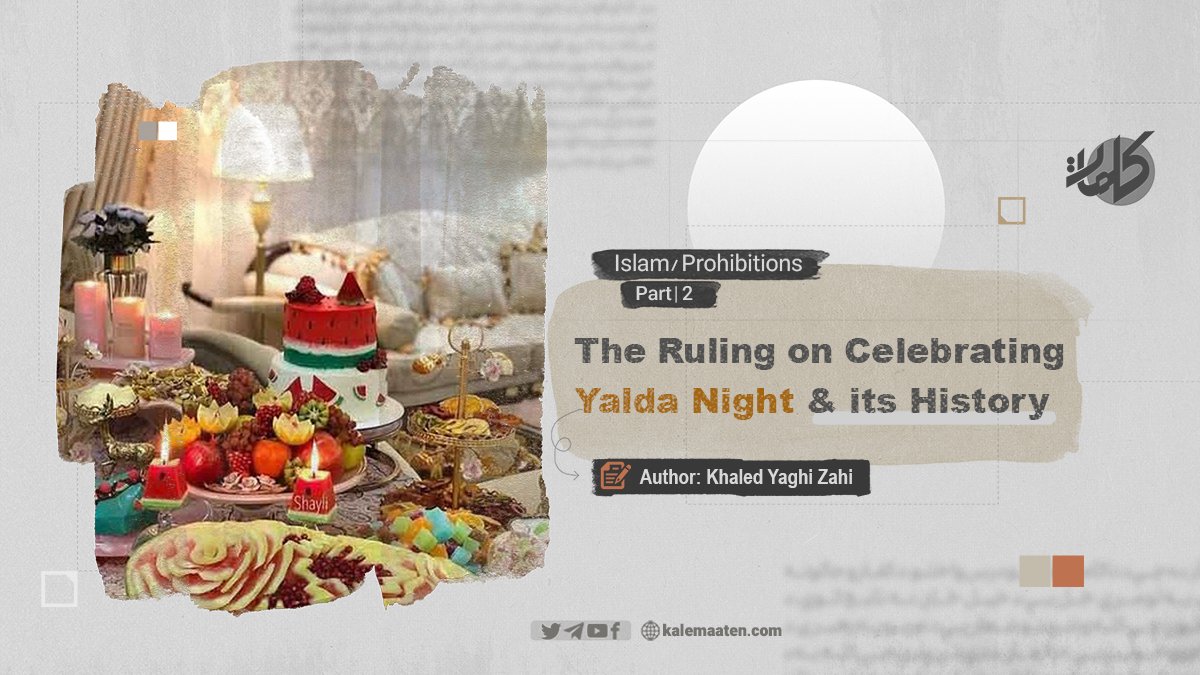
Author: Khaled Yaghi Zahi
The Ruling on Celebrating Yalda Night and its History (Part Two)
The Importance of Clinging to the Best Example and Model
Those who avoid superstitions and who are the true followers of the Messenger of Allah (PBUH) will attain success in this world and the Hereafter, because they follow the Messenger of Allah (PBUH), regard him as their best model, adhere to his religion and Sunnah, and keep away from everything that was not part of his way or that contradicts it: لَقَدْ كَانَ لَكُمْ فِي رَسُولِ اللهِ أُسْوَةٌ حَسَنَةٌ لِّمَنْ كَانَ يَرْجُو اللَّهَ وَالْيَوْمَ الْآخِرَ وَذَكَرَ اللَّهَ كَثِيراً [1] Translation: Indeed, in the Messenger of Allah (PBUH) you have an excellent example; for whoever hopes in Allah and the Last Day and remembers Allah much.
Those who truly follow the Messenger of Allah (PBUH) in every matter are loved by Allah and granted His forgiveness, for Allah the Exalted says: قُلْ إِنْ كُنْتُمْ تُحِبُّونَ اللَّهَ فَاتَّبِعُونِي يُحْبِبْكُمُ اللَّهُ وَيَغْفِرْ لَكُمْ ذُنُوبَكُمْ وَاللَّهُ غَفُورٌ رَّحِيمٌ [2] Translation: Say: If you love Allah, then follow me; Allah will love you and forgive your sins. And Allah is Forgiving, Merciful.
The Messenger of Allah (PBUH) is our model and example. We must follow his Sunnah and distance ourselves from everything that contradicts it. The Messenger of Allah (PBUH) said: مَنْ أَحْدَثَ فِى أَمْرِنَا هَذَا مَا لَيْسَ مِنْهُ فَهُوَ رَدٌّ [3] Translation: Whoever introduces into this matter of ours that which is not from it, it is rejected.
Whoever assumes that there is a need to introduce something into the religion that was not conveyed in the Sunnah has, in fact, accused the Messenger of Allah (PBUH) of betrayal, because such a person imagines that the Shariah is incomplete and in need of additional matters and ceremonies. Whereas we believe that everything required for our religion and our lives has been revealed by Allah the Exalted, and that the Messenger of Allah (PBUH) conveyed it to his Ummah fully and perfectly, without any deficiency. We will testify to this: لَقَدْ مَنَّ الله عَلَى المؤمنين إِذْ بَعَثَ فِيهِمْ رَسُولاً مِّنْ أَنْفُسِهِمْ يَتْلُواْ عَلَيْهِمْ آيَاتِهِ وَيُزَكِّيهِمْ وَيُعَلِّمُهُمُ الكِتَابَ وَالحِكمَةَ وَإِن كَانُواْ مِن قَبْلُ لَفِي ضَلالٍ مُّبِينٍ [4] Translation: Indeed, Allah conferred a great favor upon the believers when He sent among them a Messenger from themselves, reciting to them His verses, purifying them, and teaching them the Book and wisdom, although before that they were in clear misguidance.
Therefore, one must avoid all innovations and newly introduced matters. What need is there to invent things in the religion, or to attribute certain practices to it, when firstly they are not part of our religion, and secondly, our religion has already been perfected and contains no deficiency that needs to be remedied by attaching something foreign to it?
Allah (SWT) says: الْيَوْمَ أَكْمَلْتُ لَكُمْ دِينَكُمْ وَأَتْمَمْتُ عَلَيْكُمْ نِعْمَتِي وَرَضِيتُ لَكُمُ الْأِسْلامَ دِيناً [5] Translation: Today I have perfected for you your religion, completed My favor upon you, and have chosen Islam for you as your religion.
Those who, following their personal inclinations and desires, take a misguided path, performing actions, holding ceremonies, and organizing celebrations that have not been prescribed in the religion of Allah and have in fact been prohibited, fall under the statement of Allah, where He says: فَإِنْ لَمْ يَسْتَجِيبُوا لَكَ فَاعْلَمْ أَنَّمَا يَتَّبِعُونَ أَهْوَاءَهُمْ وَمَنْ أَضَلُّ مِمَّنِ اتَّبَعَ هَوَاهُ بِغَيْرِ هُدىً مِنَ اللَّهِ إِنَّ اللَّهَ لا يَهْدِي الْقَوْمَ الظَّالِمِينَ [6] Translation: But if they do not respond to you, then know that they only follow their desires. And who is more misguided than one who follows his desire without guidance from Allah? Indeed, Allah does not guide the wrongdoing people.
Now consider the condition of those who turn away from the Sunnah of the Messenger of Allah (PBUH) and from religious teachings, who are lazy in learning them, and instead act according to their whims by practicing matters that have no place in Islamic teachings or that have been prohibited by Allah and His Messenger. The Messenger of Allah (PBUH) said: مَنْ رَغِبَ عَنْ سُنَّتِي فَلَيْسَ مِنِّي [7] Translation: Whoever turns away from my Sunnah is not from me.
Whoever turns away from the Sunnah of the Messenger of Allah (PBUH) and, following personal desires, pursues innovations and newly introduced matters, distances himself from true guidance and is deprived of righteous deeds.
Imam Hasan al-Basri (May Allah be blessed with him) said: صاحب البدعة لا تقبل له صلاة ولا صيام ولا حج ولا عمرة [8] Translation: the prayer, fasting, Hajj, and ‘Umrah of the person of innovation are not accepted.
Ibn ‘Umar RA also said: كلُّ بدعة ضلالة، وإن رآها الناس حسنة [9] Every innovation is misguidance, even if people consider it good.
Yes! Every newly introduced matter that has no basis whatsoever in the religion of Allah, and which the religion of Allah has explicitly prohibited and commanded avoidance of, is an innovation and is condemned by Allah, Glorified and Exalted, and by His Messenger (PBUH), even if people consider it new, modern, good, or admirable; even if people view it as a source of joy, intimacy, and social gathering; even if people regard it as part of their culture, customs, traditions, or social identity; even if people see it as an excuse for maintaining family ties and social relations; even if people give it attractive and appealing names in order to beautify it. Despite all these false labels, such actions that have no root in the religion of Allah are innovations, misguidance, and deviation.
The Messenger of Allah (PBUH) said: إِيَّاكُمْ وَمُحْدَثَاتِ الأُمُورِ، فَإِنْ كُلَّ مُحْدَثَةٍ بِدْعَةٌ، وَكُلَّ بِدْعَةٍ ضَلَالَةٌ [10] Translation: Beware of newly invented matters, for every newly invented matter is an innovation, and every innovation is misguidance.
People who seek guidance, culture, and refinement, why do they not seek the culture and refinement of the Messenger of Allah (PBUH) and follow it, when it is the best of all cultures and etiquettes? The Prophet (PBUH) said: إِنَّ أَصْدَقَ الْحَدِيثِ كِتَابُ اللهِ، وَأَحْسَنَ الْهَدْيِ هَدْيُ مُحَمَّدٍ وَشَرَ الْأُمُورِ مُحْدَثَاتُهَا، وَكُلَّ مُحْدَثَةٍ بِدْعَةُ، وَكُلَّ بِدْعَةٍ ضَلَالَةٌ، وَكُلِّ ضَلَالَةٍ فِي النَّارِ [11] Translation: Indeed, the truest speech is the Book of Allah, and the best guidance is the guidance of Muhammad; the worst of matters are those newly introduced. Every newly introduced matter is an innovation, every innovation is misguidance, and every misguidance is in the Fire.
Therefore, in our lives and in all our affairs, we must always refer back to the ruling of the Shariah and examine how Allah SWT the Exalted and His Messenger (PBUH) have explained a matter, so that we may follow it, because the best way and method is the way of Allah, the Ever-Living, and His Messenger (PBUH).
To be continued…
Previous Part/ Next Part
References:
- Surah al-Ahzab, verse (21).
- Surah Aal-‘Imran, verse (31).
- Al-Naysaburi, Muslim ibn al-Hajjaj, Sahih Muslim, vol. (5), p. (132), Book of Judgments, Chapter on Annulment of False Rulings and Rejection of Innovations, hadith no. (4589).
- Surah Aal-‘Imran, verse (164).
- Surah al-Ma’idah, verse (3).
- Surah al-Qasas, verse (50).
- Ibn Khuzaymah, Sahih Ibn Khuzaymah, vol. (1), p. (99), Book of Wudu’.
- Al-Ajurri, Al-Shari‘ah, vol. (1), p. (148).
- Al-‘Abbad, Sharh Sunan Abi Dawud, vol. (1), p. (86).
- Abu Dawud, Sunan Abi Dawud, vol. (4), p. (329), hadith no. (4609).
-
Al-Nasa’i, Sunan al-Nasa’i al-Kubra, vol. (1), p. (550), hadith no. (1786).
