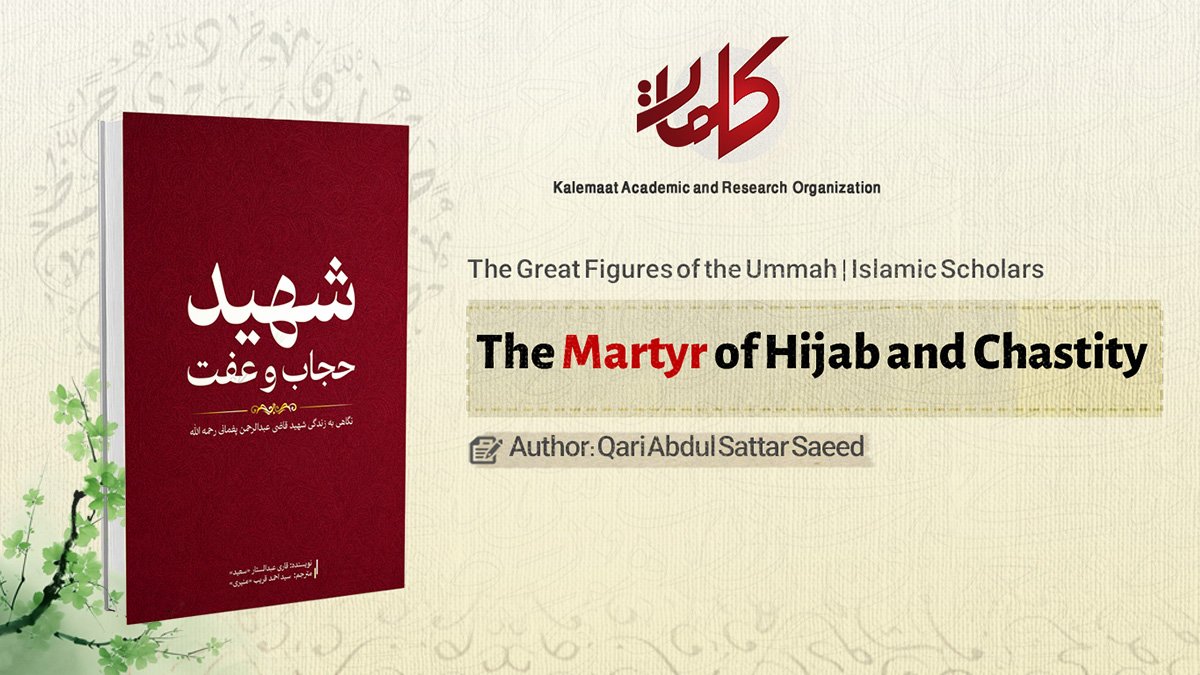
A Glimpse into the Life of the Martyred Qazi Abdul Rahman Paghmani
The Independence Celebrations and the Loya Jirga (Continued…)
Amanullah Khan had entrusted the management of the sessions to Sardar Sher Ahmad Khan, one of his trusted associates. Although the representatives appeared to propose various subjects for discussion, Sher Ahmad Khan placed on the agenda only those matters that Amanullah Khan had already planned to have approved and ratified by the assembly, and for which he had convened the jirga. Thus, during the first four days, Amanullah Khan succeeded in having most of his programs and new measures approved by the assembly under the name of reforms. There were two reasons why these decisions faced no serious opposition. First, many prominent figures who were likely to openly oppose them had not been invited to the jirga at all. Second, the atmosphere of the gathering had been managed in such a way that it was not easy for members to express open opposition.
Dr Muhammad Hasan Kakar, quoting Munshi Ali Ahmad, who was a member of the jirga, writes that on the fifth day, when Amanullah Khan raised the issue of women’s hijab, the atmosphere in the assembly became extremely tense.
Amanullah Khan intended to obtain the jirga’s approval for prohibiting hijab as well. However, several scholars present strongly opposed this proposal. They cited Qur’anic verses and the Hadiths of the Prophet (SAW) to establish the obligation of hijab. In response, Amanullah Khan said that although he was not a religious scholar, he believed that the Islamic ruling on covering (satr) required only the covering of the body from the neck down and did not include the face or head.
The scholars once again strongly rejected this view. At that moment, it seems that Amanullah Khan recalled the advice of Mustafa Kemal Atatürk, lost control of himself, and shouted: “Your kind is the source of all these problems. You mullahs (Scholars) are nothing but (devils). I will implement whatever I decide. Even if necessary, I will enforce the abandonment of hijab at the point of the bayonet, not through flattery or leniency. Know that I am a revolutionary king.” [1]
Amanullah Khan then addressed the other attendees, saying: “Representatives of my beloved nation! Convey my advice to all the people. Know that these mullahs (Scholars), through their preaching, have become instruments for spreading the conspiracies of the enemies in this country. The backwardness of our people is the result of the same illusory ideas that they spread among the people and through which they deceive them. I will deal with these mullahs myself; however, you too must enlighten the people so that they do not fall prey to their words.” [2]
These statements demonstrated that Amanullah Khan had adopted a harsh attitude towards the religious class. According to the account, this had already become apparent to figures such as Qazi Abdul Rahman, who were serving within the government structure. Therefore, they saw no alternative but to turn to the people and inform the scholars, tribal elders, and Muslims at large about the objectives and secular policies of the government. To achieve this goal, they needed to leave Kabul and go among the people. [3]
Muhammad Sadiq Mujaddidi had already extended his network of contacts to the areas of Machalgho and Zazai Aryub in Paktia and had also gained the confidence of several tribal elders in Logar and Paktia. Now that their lives were also in danger, the time had come for them to leave Kabul, both to protect themselves and to fulfil the responsibility they felt they carried. [4]
For this reason, one day before the Paghman Jirga began, Qazi Abdul Rahman, accompanied by several of his companions, secretly left Kabul. To understand their purpose, how and where they went, let us hear the account of Muhammad Sadiq Mujaddidi, who describes the events in detail in his memoirs Khaterat-e Muhammad Sadiq Mujaddidi). However, given the length of this book, I will present a summary.
The Beginning of the Journey to Paktia
On the night of the 12th of Rabi al-Awwal, 1347 AH, corresponding to the seventh of Sunbula, 1307 SH, and coinciding with the night of the birth of the Prophet of Islam (SAW), several people preparing for an uncertain journey—including Qazi Abdul Rahman, Mawlana Muhammad Sadiq Mujaddidi, Sana Masum Mujaddidi, Mawlana Sultan Jan, and a number of other companions—were making arrangements for the following day’s departure in the Qala Mir area, near Bektut in Paghman.
On the one hand, they were making hurried preparations to set out; on the other, they were uncertain about the path they had chosen. In their view, the corruption of the government and the spread of turmoil had become evident, and something had to be done in response. However, since most people in the country appeared indifferent to the prevailing situation, they too sometimes began to doubt whether their decision was right. After midnight, their travel belongings were packed, and the companions went to sleep for a short while.
In his memoirs, Muhammad Sadiq Mujaddidi writes that he had a dream that very night. In the dream, he saw his father, Hazrat Ghulam Qayyum Mujaddidi, one of the elders of the Mujaddidi family and their spiritual guide, standing with another person. Facing them stood Muhammad Sadiq Mujaddidi himself and Sana Masum Mujaddidi. Hazrat Ghulam Qayyum Mujaddidi gestured towards his son and grandson and recited the following verse from the Holy Qur’an: “فَاسْتَقِيمَا وَلَا تَتَّبِعَانِ سَبِيلَ الَّذِينَ لَا يَعْلَمُونَ” (Surah Yunus, verse 89) Translation: So remain steadfast, both of you, and do not follow the path of those who do not know.
Hazrat Sahib repeatedly gestured towards his son and grandson while repeating the word (فَاسْتَقِيمَا), and they repeated it after him. The following morning, Mawlana Muhammad Sadiq Mujaddidi awoke, first performed the Fajr prayer, and then hurried to his teacher, Qazi Abdul Rahman, to relate the dream he had seen the previous night. Qazi Sahib and the other members of the journey were delighted upon hearing the dream. Their doubts about the decision disappeared, and they interpreted it as a sign that Hazrat Sahib, the elder, had approved of their undertaking.
[3] This account is cited from page 69 of A New Perspective on the Reign of Amanullah, by the renowned historian Dr Muhammad Hasan Kakar. The author has taken this account from the notes of Munshi Ali Ahmad.