

Close Menu
    Facebook X (Twitter) Telegram WhatsApp
    • Language
      • دری
      • پښتو
    • Home
    • Analysis
    • Islam
      • Prophet of Islam (PBUH)
      • Holy Quran
      • Muslim
      • Belief
      • Faith
      • Worships
      • Jurisprudence
      • Jihad
      • Beauty of Islam
      • Islamic Economy
      • Islamic Management
      • Islamic Culture
      • Islamic Sufism
      • Crimes
      • Prohibitions
    • Religions
      • Judaism
      • Christianity
      • Buddhism
      • Hinduism
      • Zoroastrian
      • Satanism
      • Confucius
      • Sikhism
    • Ideas
      • Atheism
      • secularism
      • liberalism
      • Socialism
      • Communism
      • Democracy
      • Federalism
      • Fascism
      • Capitalism
      • Marxism
      • Feminism
      • Nationalism
      • Colonialism
      • Frankfurt School
    • Seduction
      • Mu’tazila
      • Murjea
      • Jahmiyyah Sect
      • Khawarij’s sedition
      • Rawafez sedition
      • Istishraq’s sedition
      • Ghamediyat’s sedition
      • Qadiani’s sedition
      • Qadriyyah Sect
      • Karramiyyah Sect
    • Ummah
      • Companions
        • Hazrat Abubakr Seddiq (MGH)
        • Hazrat Umar Farooq (MGH)
        • Hazrat Usman (MGH)
        • Biography of Hazrat Ali (MGH)
        • Hazrat Khaled bin Waleed (MGH)
        • Hazrat Firooz Dilami (MGH)
        • Hazrat Abdullah Ibn Zubair (MGH)
      • Mothers of the believers
      • Islamic scholars
        • Sayed Abul Hasan Nadavi (MGHM)
        • Grand Imam Abu Hanifah (MGHM)
        • Imam Bukhari (MGHM)
        • Imam Tirmidhi (MGHM)
        • Imam al-Ghazali (MGHM)
        • Shah Waliullah Dehlavi (MGHM)
        • Seyyed Jamaluddin Afghan
        • Maulana Jalaluddin Balkhi Rumi (MGHM)
      • Muslim Governor’s
        • Sultan Salahuddin Ayyubi (MGHM)
        • Omar bin Abdul Aziz (MGHM)
        • Sultan Yusuf bin Tashfin (MGHM)
      • Islamic scientists
    • Civilizations
      • Islamic civilization
      • Eastern & Western civilizations
    • Diverse
      • Ramadan Message
    • library
    Facebook X (Twitter) Telegram WhatsApp
    کلمات انگلیسیکلمات انگلیسی
    You are at:Home»Religions»Buddhism»An Analysis of the History and Beliefs of Buddhism (part 13)
    Buddhism

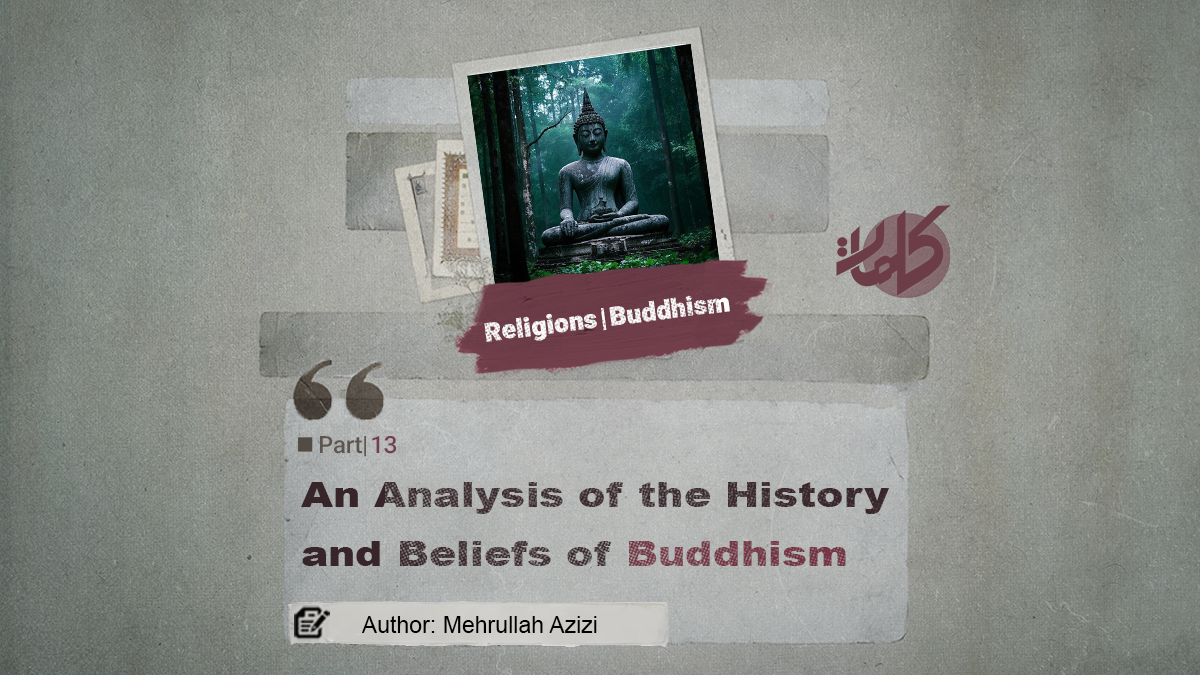
    An Analysis of the History and Beliefs of Buddhism (part 13)

    admin2By admin222/04/2026No Comments2 Mins Read
    Share Facebook Twitter Telegram WhatsApp
    Share
    Facebook Twitter Telegram Email WhatsApp

    Author: Mehrullah Azizi
    An Analysis of the History and Beliefs of Buddhism (part 13)
    Teachings of Buddhism
    1. The Tenfold Advice of the Buddha
    Among the important teachings of Buddhism is the Tenfold Advice. In Buddhist belief, these commandments form the general ethical principles of their religion. They are as follows:
    1. Do not take any life (killing is forbidden).
    2. Do not lie.
    3. Do not commit adultery.
    4. Do not take unlawful property (do not steal).
    5. Do not consume intoxicants (alcohol or drugs).
    6. Do not eat improperly prepared or unsuitable food.
    7. Do not attend gatherings of singing and dancing.
    8. Do not adorn yourself or use perfumes.
    9. Do not use luxurious or overly comfortable beds.
    10. Do not accept gold or silver from anyone. [1]
    According to Buddhist belief, anyone who adheres to these commandments will gain control over their desires and willpower.
    1. Obstacles to Attaining Nirvana
    Attaining Nirvana is considered one of the primary goals in Buddhism. According to Buddhist teachings, certain doctrines guide followers toward this state. Nirvana is a condition of complete liberation from suffering, desire, hatred, and ignorance. It is the point at which the flames of craving, hostility, and illusion are entirely and permanently extinguished.
    There are various obstacles that prevent a person from reaching Nirvana, including:
    1. The deceptive belief in the eternal existence of the self.
    2. Doubt regarding the authenticity of the Buddha’s teachings.
    3. Belief in the effectiveness of rituals and religious traditions.
    4. Lust and desire.
    5. Aversion and hatred.
    6. Self-conceit.
    7. Attachment to material existence.
    8. Pride and arrogance.
    9. Ignorance.
    10. Reliance on one’s own good deeds as sufficient. [2]
    In addition, there are ten “fetters” (binding constraints) that are gradually eliminated for one who believes in the Four Noble Truths. These fetters are removed step by step through four stages:
    1. By accepting the Four Noble Truths, the first three fetters are broken.
    2. By realizing the second truth, the next three fetters are weakened.
    3. By following the third truth, the previous fetters are completely removed.
    4. By adhering to the fourth truth and the Eightfold Path, the remaining fetters are eliminated. [3]
    To be continued…

    Previous Part

    References:

    [1]. Buddhism: Its Origin and Major Beliefs, p. 460, citing: Al-‘Attar, Religions and Beliefs, p. 127; Abu Zahra, Ancient Religions, pp. 62–63.

    [2]. Rushdi ‘Alyan et al., Religions: A Comparative Historical Study, p. 99.

    [3]. Ahmad Al-Shalabi, Major Religions of India, pp. 158–159.

    Buddhism Islam Islamic Civilization The History and Beliefs of Buddhism
    admin2

    Related Posts

    An Analysis of the History and Beliefs of Buddhism (part 12)

    21/04/2026

    An Analysis of the History and Beliefs of Buddhism (part 11)

    20/04/2026

    An Analysis of the History and Beliefs of Buddhism (part 10)

    19/04/2026
    Leave A Reply Cancel Reply

    Follow us on the social media pages
    • Facebook
    • Twitter
    • Instagram
    • Telegram
    • WhatsApp
    Don’t miss

    An Analysis of the History and Beliefs of Buddhism (part 13)

    The Evolution of Nihilism and Its Opposition to Religious Faith (part 21) 

    Freemasonry (part 47)

    An Analysis of the History and Beliefs of Buddhism (part 12)

    About Us:

    The Scientific and Research Office of Kalemaat is an independent office affiliated with Ahl al-Sunnah wa al-Jama‘ah. It works to promote the true values of Islam, achieve the noble goals of the sacred Sharia, resist Western cultural influence, uphold the Word of Allah, and awaken the Muslim community.

    This office is supported by Muslim philanthropists and businessmen, and it also invites all Muslims to fully cooperate and contribute to its mission.

    Famous publications

    An Analysis of the History and Beliefs of Buddhism (part 13)

    22/04/2026

    The Evolution of Nihilism and Its Opposition to Religious Faith (part 21) 

    21/04/2026
    Follow us on social medias
    • Facebook
    • Twitter
    • YouTube
    • Telegram
    • Instagram
    • WhatsApp
    All right reserved by (kalemaat)
    • Home
    • Analysis of the day
    • The greats of the Ummah
    • library

    Type above and press Enter to search. Press Esc to cancel.