


Author: Abu Raef
Freemasonry (part 28)
Symbols of the Candlestick and Royal Staffs and Their Continuations
Another topic in recognizing Freemasonic signs and indications is the references and symbols associated with specific objects, such as the candlestick and the royal staff.
The slogan of the “Seven-Branched Candlestick”
-
Although this symbol, with its seven branches and alongside two olive branches (which are outwardly presented as a symbol of inclination toward peace), is considered the official emblem of the Zionist state of Israel, it also holds a special place in Freemasonic thought.
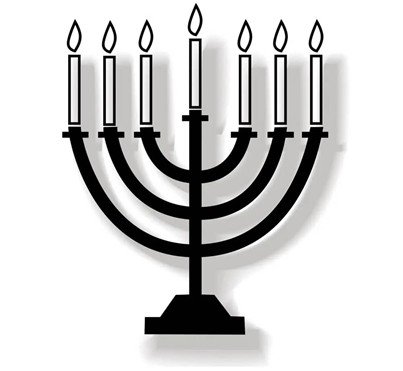
In Masonic thinking, the seven-branched candlestick symbolizes the number of members whose presence makes a Masonic lodge session legally valid.
However, among Royal Masons, the seven lights of this candlestick refer to the seven years during which Prophet Solaiman (PBUH) completed the construction of the “Great Temple.”
The light of the candlestick is also a symbol of the “Light of Sakīnah,” a light beyond which there will be no other light in the Hereafter. [1]
The candlestick is a symbol installed in the Temple of Jerusalem and in all Jewish synagogues. Its construction is attributed to the Jewish craftsman “Bezalel son of Uri,” the grandson of Hur from the tribe of Judah, whose name appears in the Book of Exodus (37:17–22): “And Bezalel son of Uri made the vessels that were on the table, dishes, pans, bowls, and pitchers used for pouring, of pure gold; and he made the candlestick of pure gold, of one piece; its base and shaft, its cups, its knobs, and its flowers were of one piece with it…” [2]
The slogan of the “Staff with Two Serpents”
This symbol signifies the dominance of the Masonic organization over global health and medical institutions and is used as a sign of medicine and healing, whereas its true and ancient meaning has been distorted.
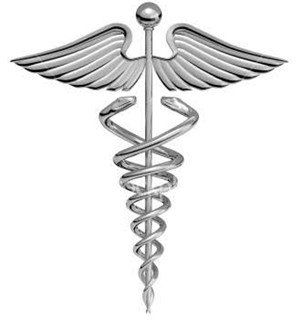
Originally, this symbol goes back to the “Staff of Asclepius,” the god of medicine and healing in Greek mythology, which consisted only of a single staff with one serpent coiled around it. Later, this meaning was altered and attributed to the staff of “Hermes,” the son of Zeus, the great god of the Greeks.
In Greek mythology, Hermes is the provider of the gods’ food, the guide of the souls of the dead to the other world and their return to the earth, the servant of liars and deceivers, the messenger of the gods, and the guide of travelers. His staff has two wings and two serpents coiled around it in opposite directions and is a symbol of clear opposition:
The first serpent: a symbol of foundation, construction, healing, and good;
The second serpent: a symbol of destruction, ruin, poison, and evil. [3]
Final conclusion
-
The seven-branched candlestick is the official emblem of the Zionist state of Israel and the symbol installed in all Jewish temples and synagogues.
-
The staff with two serpents is a symbol of the Masonic organization’s dominance over global health and medical institutions, and its ancient meaning (which went back to the Staff of Asclepius, the god of medicine and healing in ancient Greece) has been distorted and fabricated. [4]
To be continued…
Previous Part | Next Part
References:
- Ginzberg, Louis, The Legends of the Jews, pp. 154–156, translated by Hasan Hamdi al-Sammahi, Dar al-Kitab al-Arabi, Damascus–Cairo, first edition, 2007.
- The Continuations of Sacred Symbols and Numbers in Masonic Thought, p. 299.
- Cortel, Arthur, Dictionary of World Mythologies, p. 140, translated by Suha al-Turayhi, Dar Ninawa, Damascus, Syria, 1430 AH.
- The Significations of Sacred Symbols and Numbers in Masonic Thought, p. 230.
