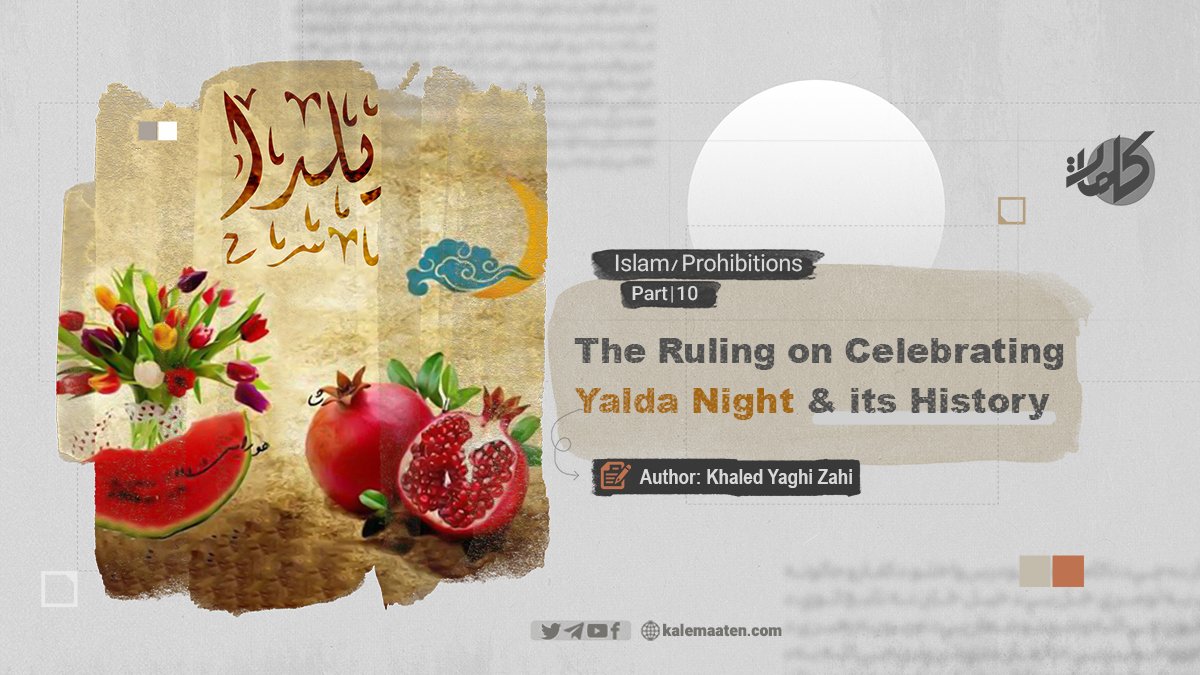
The Ruling on Celebrating Yalda Night and Its History (part 10)
A group of false and fabricated beliefs that exist regarding the night of Yalda are as follows:
Considering the night of Yalda to be inauspicious
It must be known that pessimism, superstition, and believing in bad omens are among false and ignorant practices. The Shariah has condemned them and has described them as shirk, because the Messenger of Allah (Peace be upon him) said:
«لاَ عَدْوَى وَلَا طِيَرَةَ، وَيُعْجِبُنِي الْفَأْلُ» قَالُوا: وَمَا الْفَأْلُ؟ قَالَ: «الْكَلِمَةُ الطَّيِّبَةُ » Translation: “There is no contagion and no superstition, and I like good omen.” They said: “What is a good omen?” He said: “A good word.” [1]
A group of people, based on the ignorant beliefs of their predecessors, believe that the night of Yalda is inauspicious, and that on this night the god of Mithra is captured and harmed by evil forces. Therefore, they gather together and light fires, believing that the fire burns and destroys the misfortune of that night.
Belief in the removal of evils on the morning of the first day of Jadi/Dey
Such a belief does not exist in Islam. No evidence has been mentioned that on this day evils and harms are repelled. This belief originates from Zoroastrian doctrines, and it is obligatory to stay away from their beliefs and avoid their doctrines. This avoidance is part of the foundation of every Muslim’s faith.
Lighting fire to repel evils
This belief is also among the core beliefs of the Zoroastrians, because they worshipped fire and claimed that fire is capable of repelling harm and bringing benefit. Rather, they even considered fire to be their god. Those who hold such a belief today are in reality worshipping it, because they assume that fire is capable of repelling calamities and misfortunes, whereas no one besides Allah is able to remove calamities and repel harm from His servants. Allah the Exalted says:
«أَلَّا يَسْجُدُوا لِلَّهِ الَّذِي يُخْرِجُ الْخَبْءَ فِي السَّمَاوَاتِ وَالْأَرْضِ وَيَعْلَمُ مَا تُخْفُونَ وَمَا تُعْلِنُونَ» Translation: “Why do they not prostrate to Allah, who brings forth what is hidden in the heavens and the earth, and knows what you conceal and what you reveal?” [2]
And He says: “وَإِنْ يَمْسَسْكَ اللَّهُ بِضُرٍّ فَلَا كَاشِفَ لَهُ إِلَّا هُوَ وَإِنْ يَمْسَسْكَ بِخَيْرٍ فَهُوَ عَلَىٰ كُلِّ شَيْءٍ قَدِيرٌ” Translation: “If Allah touches you with harm, none can remove it except Him; and if He touches you with good, then He is over all things All-Powerful.” [3]
And He says: “وَإِنْ يَمْسَسْكَ اللَّهُ بِضُرٍّ فَلَا كَاشِفَ لَهُ إِلَّا هُوَ وَإِنْ يُرِدْكَ بِخَيْرٍ فَلَا رَادَّ لِفَضْلِهِ يُصِيبُ بِهِ مَنْ يَشَاءُ مِنْ عِبَادِهِ وَهُوَ الْغَفُورُ الرَّحِيمُ” Translation: “And if Allah touches you with harm, none can remove it except Him; and if He intends good for you, none can repel His bounty. He bestows it upon whom He wills of His servants, and He is the All-Forgiving, the Most Merciful.” [4]
And He says: “وَلَئِنْ سَأَلْتَهُمْ مَنْ خَلَقَ السَّمَاوَاتِ وَالْأَرْضَ لَيَقُولُنَّ اللَّهُ ۚ قُلْ أَفَرَأَيْتُمْ مَا تَدْعُونَ مِنْ دُونِ اللَّهِ إِنْ أَرَادَنِيَ اللَّهُ بِضُرٍّ هَلْ هُنَّ كَاشِفَاتُ ضُرِّهِ أَوْ أَرَادَنِي بِرَحْمَةٍ هَلْ هُنَّ مُمْسِكَاتُ رَحْمَتِهِ ۚ قُلْ حَسْبِيَ اللَّهُ عَلَيْهِ يَتَوَكَّلُ الْمُتَوَكِّلُونَ” Translation: “And if you ask them who created the heavens and the earth, they will surely say: Allah. Say: Have you considered those whom you invoke besides Allah if Allah intends harm for me, can they remove His harm? Or if He intends mercy for me, can they withhold His mercy? Say: Allah is sufficient for me; upon Him rely those who rely.” [5]
Those who think that the fire they ignite with their own hands repels calamities, impurities, afflictions, and hardships, and causes devils and satans to stay away from them, have in reality assumed that fire has control over matters and destiny, possesses will and power, and is able to fulfill needs and repel harm. While Allah says: “إِنَّمَا تَعْبُدُونَ مِنْ دُونِ اللَّهِ أَوْثَانًا وَتَخْلُقُونَ إِفْكًا ۚ إِنَّ الَّذِينَ تَعْبُدُونَ مِنْ دُونِ اللَّهِ لَا يَمْلِكُونَ لَكُمْ رِزْقًا فَابْتَغُوا عِنْدَ اللَّهِ الرِّزْقَ وَاعْبُدُوهُ وَاشْكُرُوا لَهُ ۖ إِلَيْهِ تُرْجَعُونَ” Translation: “You worship besides Allah only idols, and you fabricate falsehood. Indeed, those whom you worship besides Allah do not possess for you any provision. So, seek provision from Allah, worship Him, and be grateful to Him; to Him you will be returned.” [6]
Fire cannot repel calamities and afflictions. Rather, what the Shariah has identified as means for repelling calamities are supplication, humble turning to Allah, seeking refuge with Him, persistence at His door, patience, and charity. The Messenger of Allah (PBUH) said: “مَنْ قَالَ بِسْمِ اللَّهِ الَّذِي لَا يَضُرُّ مَعَ اسْمِهِ شَيْءٌ فِي الْأَرْضِ وَلَا فِي السَّمَاءِ، وَهُوَ السَّمِيعُ الْعَلِيمُ، ثَلَاثَ مَرَّاتٍ، لَمْ تُصِبْهُ فَجْأَةُ بَلَاءٍ حَتَّى يُصْبِحَ، وَمَنْ قَالَهَا حِينَ يُصْبِحُ ثَلَاثَ مَرَّاتٍ، لَمْ تُصِبْهُ فَجْأَةُ بَلَاءٍ حَتَّى يُمْسِيَ” Translation: “Whoever says: ‘In the name of Allah, with Whose name nothing on earth or in heaven can cause harm, and He is the All-Hearing, the All-Knowing,’ three times, no sudden calamity will afflict him until morning; and whoever says it in the morning three times, no sudden calamity will afflict him until evening.” [7]
When the Messenger of Allah (PBUH) has taught you remembrances and supplications by which you can repel calamities and afflictions, why do you seek refuge in fire? Why do you attempt to repel problems and impurities by fire?
Gathering together to repel impurities and remain safe from harm
In reality, the Shariah has not said: gather together so that impurities may be repelled from you. If that were the case, those who gather in mixed weddings would never fall under divine wrath nor have punishment descend upon them. If mere gathering were enough to resolve problems, then the problems of many people would have already been resolved. No rational person doubts the falsity of this claim.
Rather, gathering brings blessing, tranquility, the descent of serenity, and distance from impurities only when it is for the religion of Allah, the recitation of the Qur’an, and gatherings of remembrance of Allah; not gatherings in which the festivals of the polytheists are celebrated, and many prohibited acts occur. The Messenger of Allah (PBUH) said: “مَا اجْتَمَعَ قَوْمٌ فِي بَيْتٍ مِنْ بُيُوتِ اللَّهِ تَعَالَى يَتْلُونَ كِتَابَ اللَّهِ وَيَتَدَارَسُونَهُ بَيْنَهُمْ إِلَّا نَزَلَتْ عَلَيْهِمُ السَّكِينَةُ وَغَشِيَتْهُمُ الرَّحْمَةُ وَحَفَّتْهُمُ الْمَلَائِكَةُ وَذَكَرَهُمُ اللَّهُ فِيمَنْ عِنْدَهُ” Translation: “No people gather in a house from the houses of Allah, reciting the Book of Allah and studying it among themselves, except that tranquility descends upon them, mercy envelops them, the angels surround them, and Allah mentions them among those with Him.” [8]
And Allah says regarding such gathering: “وَاصْبِرْ نَفْسَكَ مَعَ الَّذِينَ يَدْعُونَ رَبَّهُمْ بِالْغَدَاةِ وَالْعَشِيِّ يُرِيدُونَ وَجْهَهُ وَلَا تَعْدُ عَيْنَاكَ عَنْهُمْ تُرِيدُ زِينَةَ الْحَيَاةِ الدُّنْيَا وَلَا تُطِعْ مَنْ أَغْفَلْنَا قَلْبَهُ عَنْ ذِكْرِنَا وَاتَّبَعَ هَوَاهُ وَكَانَ أَمْرُهُ فُرُطًا” Translation: “And keep yourself patient with those who call upon their Lord morning and evening seeking His Face, and do not let your eyes turn away from them desiring the adornment of worldly life. And do not obey one whose heart We have made heedless of Our remembrance, who follows his desire, and whose affair is excessive.” [9]
If these same people are told gather in a house to learn your religion, to learn your religious rulings, to listen to the verses of Allah and the hadiths of the Messenger of Allah (PBUH), and to acquire the Islamic teachings related to you; each one brings an excuse to escape such responsibility. Yet you see how eagerly, enthusiastically, and with encouragement they attend gatherings of celebration, dancing, and rejoicing in non-Islamic festivals (such as Nowruz and Yalda), congratulating one another.
All of these beliefs, doctrines, and attitudes mentioned above are part of the religion of Zoroaster and the creed of the fire-worshippers, about whose prohibition no Muslim has any doubt.
Al-Bukhari, Muhammad ibn Ismail ibn Ibrahim, Sahih al-Bukhari, Volume 5, page 2178, Book of Medicine, Chapter: No Contagion, Hadith no. 5440, First Edition 1422 AH, Publisher: Dar Tawq al-Najah.
Surah An-Naml, verse 25.
Surah Al-An‘am, verse 17.
Surah Yunus, verse 107.
Surah Az-Zumar, verse 38.
Surah Al-‘Ankabut, verse 17.
Abu Dawud al-Sijistani, Sulayman ibn al-Ash‘ath, Sunan Abi Dawud, Volume 4, page 484, Book of Manners, Chapter: What to Say in the Morning, Hadith no. 5090, Publisher: Dar al-Fikr.
Abu Dawud al-Sijistani, Sulayman ibn al-Ash‘ath, Sunan Abi Dawud, Volume 1, page 544, Book of Witr, Chapter: The Reward of Reciting the Qur’an, Hadith no. 1457, Publisher: Dar al-Fikr.