

Close Menu
    Facebook X (Twitter) Telegram WhatsApp
    • Language
      • دری
      • پښتو
    • Home
    • Analysis
    • Islam
      • Prophet of Islam (PBUH)
      • Holy Quran
      • Muslim
      • Belief
      • Faith
      • Worships
      • Jurisprudence
      • Jihad
      • Beauty of Islam
      • Islamic Economy
      • Islamic Management
      • Islamic Culture
      • Islamic Sufism
      • Crimes
      • Prohibitions
    • Religions
      • Judaism
      • Christianity
      • Buddhism
      • Hinduism
      • Zoroastrian
      • Satanism
      • Confucius
      • Sikhism
    • Ideas
      • Atheism
      • secularism
      • liberalism
      • Socialism
      • Communism
      • Democracy
      • Federalism
      • Fascism
      • Capitalism
      • Marxism
      • Feminism
      • Nationalism
      • Colonialism
      • Frankfurt School
    • Seduction
      • Mu’tazila
      • Murjea
      • Jahmiyyah Sect
      • Khawarij’s sedition
      • Rawafez sedition
      • Istishraq’s sedition
      • Ghamediyat’s sedition
      • Qadiani’s sedition
      • Qadriyyah Sect
      • Karramiyyah Sect
    • Ummah
      • Companions
        • Hazrat Abubakr Seddiq (MGH)
        • Hazrat Umar Farooq (MGH)
        • Hazrat Usman (MGH)
        • Biography of Hazrat Ali (MGH)
        • Hazrat Khaled bin Waleed (MGH)
        • Hazrat Firooz Dilami (MGH)
        • Hazrat Abdullah Ibn Zubair (MGH)
      • Mothers of the believers
      • Islamic scholars
        • Sayed Abul Hasan Nadavi (MGHM)
        • Grand Imam Abu Hanifah (MGHM)
        • Imam Bukhari (MGHM)
        • Imam Tirmidhi (MGHM)
        • Imam al-Ghazali (MGHM)
        • Shah Waliullah Dehlavi (MGHM)
        • Seyyed Jamaluddin Afghan
        • Maulana Jalaluddin Balkhi Rumi (MGHM)
      • Muslim Governor’s
        • Sultan Salahuddin Ayyubi (MGHM)
        • Omar bin Abdul Aziz (MGHM)
        • Sultan Yusuf bin Tashfin (MGHM)
      • Islamic scientists
    • Civilizations
      • Islamic civilization
      • Eastern & Western civilizations
    • Diverse
      • Ramadan Message
    • library
    Facebook X (Twitter) Telegram WhatsApp
    کلمات انگلیسیکلمات انگلیسی
    You are at:Home»Religions»Buddhism»An Analysis of the History and Beliefs of Buddhism (part 19)
    Buddhism

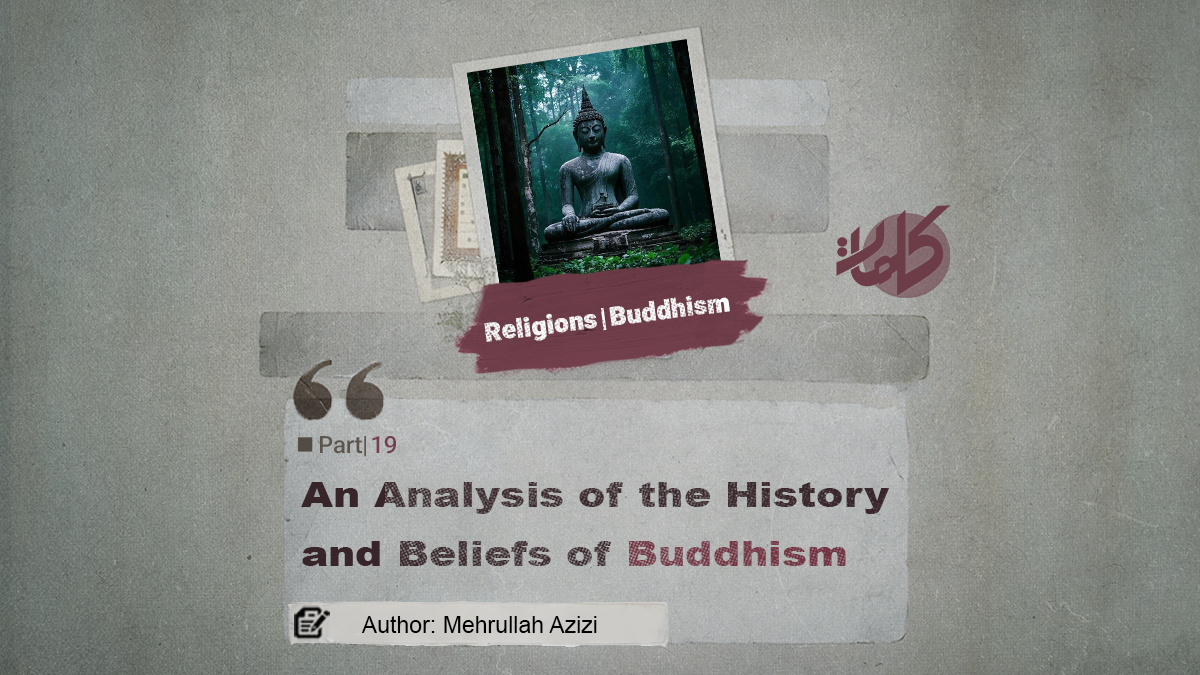
    An Analysis of the History and Beliefs of Buddhism (part 19)

    admin2By admin229/04/2026Updated:29/04/2026No Comments4 Mins Read
    Share Facebook Twitter Telegram WhatsApp
    Share
    Facebook Twitter Telegram Email WhatsApp
    Author: Mehrullah Azizi 
    An Analysis of the History and Beliefs of Buddhism (part 19)
    Monotheism as the Source of Spiritual Life
    Monotheism (tawhid) is the foundation of the spiritual life of both the individual and society. A life without faith in the Oneness of God is a meaningless life, devoid of true joy. A person who does not believe in God is like the dead—deprived of the pure breeze of true life. For this reason, God Almighty describes disbelievers as “dead” due to their distance from tawhid, as He says: لِيُنذِرَ مَن كَانَ حَيًّا وَيَحِقَّ الْقَوْلُ عَلَى الْكَافِرِينَ Translation: “That he may warn whoever is alive (in understanding) and that the Word may be fulfilled against the disbelievers.” (Qur’an 36:70) [1]
    The existence of God is evident to every rational and sound-natured person; it is an undeniable reality. However, some ignorant and desire-driven individuals deny His existence despite the inner call of their nature.
    The existence of God is established through revelation, reason, and human nature. Below are some of these proofs:
    1. Scriptural Evidence for the Existence of God
    وَلَقَدْ خَلَقْنَا الْإِنسَانَ مِن سُلَالَةٍ مِّن طِينٍ ۝ ثُمَّ جَعَلْنَاهُ نُطْفَةً فِي قَرَارٍ مَّكِينٍ ۝ ثُمَّ خَلَقْنَا النُّطْفَةَ عَلَقَةً فَخَلَقْنَا الْعَلَقَةَ مُضْغَةً فَخَلَقْنَا الْمُضْغَةَ عِظَامًا فَكَسَوْنَا الْعِظَامَ لَحْمًا ثُمَّ أَنشَأْنَاهُ خَلْقًا آخَرَ ۚ فَتَبَارَكَ اللَّهُ أَحْسَنُ الْخَالِقِينَ Translation: “And indeed We created man from an extract of clay. Then we placed him as a drop in a secure place. Then We made the drop into a clot, then the clot into a lump, then the lump into bones, and We clothed the bones with flesh; then We produced him as another creation. So blessed is Allah, the Best of creators.” (Qur’an 23:12–14)[2]
    وَمِنْ آيَاتِهِ خَلْقُ السَّمَاوَاتِ وَالْأَرْضِ وَاخْتِلَافُ أَلْسِنَتِكُمْ وَأَلْوَانِكُمْ ۚ إِنَّ فِي ذَٰلِكَ لَآيَاتٍ لِّلْعَالِمِينَ Translation: “And among His signs is the creation of the heavens and the earth and the diversity of your languages and colors. Indeed, in that are signs for those who have knowledge. (Qur’an 30:22) [3]
    وَمِنْ آيَاتِهِ مَنَامُكُم بِاللَّيْلِ وَالنَّهَارِ وَابْتِغَاؤُكُم مِّن فَضْلِهِ ۚ إِنَّ فِي ذَٰلِكَ لَآيَاتٍ لِّقَوْمٍ يَسْمَعُونَ Translation: “And among His signs is your sleep by night and day and your seeking of His bounty. Indeed, in that are signs for a people who listen.” (Qur’an 30:23) [4]
    2. Rational Evidence for the Existence of God
    Argument from Testimony:
    God has testified to His existence through revelation and through His truthful prophets (peace be upon them), who were known for honesty and integrity.
    Argument from Nature:
    Phenomena such as the emergence of a chick from an egg at the precise time demonstrate a higher power and design.
    Sayings of Scholars: 
    Imam al-Shafi‘i said, “The mulberry leaf—though one—produces different outcomes: silk from the silkworm, honey from the bee, milk from the goat, and musk from the deer. This indicates a wise creator.” [5]
    Imam Ahmad said, “The egg, sealed and simple, produces a living creature with sight and form. This is a sign of divine creation.”[6]
    3. Philosophical Evidence for the Existence of Allah
    Every moving object requires a mover. This chain cannot regress infinitely. Therefore, there must be a first mover, unmoved, independent, and possessing absolute power—who is God. [7]
    Additional Hadith on the Recognition of Allah: كُلُّ مَوْلُودٍ يُولَدُ عَلَى الْفِطْرَةِ Translation: “Every child is born upon the natural disposition (fitrah).” (Hadith – Sahih al-Bukhari & Muslim) [8]
    This hadith shows that belief in God is innate within human nature.
    To be continued…

    Previous Part

    Sources:
    1. Ya-Sin: 70.
    2. Al-Mu’minun: 12–14.
    3. Ar-Rum: 22.
    4. Ar-Rum: 23.
    5. Rida al-Haqq, Al-‘Aqidah al-Samawiyyah, Vol. 2, p. 179.
    6. Rida al-Haqq, Al-‘Aqidah al-Samawiyyah, Vol. 2, p. 179.
    7. Fakhr al-Din al-Razi, Tafsir Mafatih al-Ghayb, Vol. 2, pp. 333–334.
    8. Islam and Contemporary Rationality, p. 51, cited in: Idris Kandahlawi, ‘Ilm al-Kalam, p. 41.

    Buddhism Islam Islamic Civilization The History and Beliefs of Buddhism
    admin2

    Related Posts

    An Analysis of the History and Beliefs of Buddhism (part 18)

    28/04/2026

    The Divine Education Model in the Family of the Prophets (part 84)

    28/04/2026

    The Divine Education Model in the Family of the Prophets (part 83)

    27/04/2026
    Leave A Reply Cancel Reply

    Follow us on the social media pages
    • Facebook
    • Twitter
    • Instagram
    • Telegram
    • WhatsApp
    Don’t miss

    An Analysis of the History and Beliefs of Buddhism (part 19)

     Freemasonry (part 52)

    An Analysis of the History and Beliefs of Buddhism (part 18)

    Freemasonry (51)

    About Us:

    The Scientific and Research Office of Kalemaat is an independent office affiliated with Ahl al-Sunnah wa al-Jama‘ah. It works to promote the true values of Islam, achieve the noble goals of the sacred Sharia, resist Western cultural influence, uphold the Word of Allah, and awaken the Muslim community.

    This office is supported by Muslim philanthropists and businessmen, and it also invites all Muslims to fully cooperate and contribute to its mission.

    Famous publications

    An Analysis of the History and Beliefs of Buddhism (part 19)

    29/04/2026

     Freemasonry (part 52)

    29/04/2026
    Follow us on social medias
    • Facebook
    • Twitter
    • YouTube
    • Telegram
    • Instagram
    • WhatsApp
    All right reserved by (kalemaat)
    • Home
    • Analysis of the day
    • The greats of the Ummah
    • library

    Type above and press Enter to search. Press Esc to cancel.