Close Menu
    Facebook X (Twitter) Telegram WhatsApp
    • Language
      • دری
      • پښتو
      • العربیة
    • Home
    • Analysis
    • Islam
      • Prophet of Islam (PBUH)
      • Holy Quran
      • Muslim
      • Belief
      • Faith
      • Worships
      • Fiqh
      • Jihad
      • Islamic Perspectives
      • Islamic Economics
      • Islamic Management
      • Islamic Culture
      • Sufism
      • Crimes
      • Prohibitions
      • Sayings of the Scholars
      • Muhajir Tafsir
      • Hadith
    • Religions
      • Judaism
      • Christianity
      • Buddhism
      • Hinduism
      • Zoroastrianism
      • Satanism
      • Confucianism
      • Sikhism
    • Theories
      • Atheism
      • Secularism
      • liberalism
      • Socialism
      • Communism
      • Democracy
      • Federalism
      • Fascism
      • Capitalism
      • Marxism
      • Feminism
      • Nationalism
      • Colonialism
      • Frankfurt School
      • Freemasonry
      • Humanism
    • Fitan
      • Mu’tazila
      • Murji’ah
      • Jahmiyyah
      • The Fitna of the Khawarij
      • The Fitna of the Rawafid
      • The Fitna of Orientalism
      • Ghamdism
      • The Fitna of the Qadianis
      • Qadariyyah
      • Karramiyyah
    • Ummah
      • Sahabah (Companions of the Prophet ﷺ)
        • Hazrat Abu bakr Siddiq (RA)
        • Hazrat Umar al-Faruq (RA)
        • Hazrat Uthman ibn Affan (RA)
        • Hazrat Ali (RA)
        • Hazrat Khalid ibn al-Walid (RA)
        • Hazrat Fayruz al-Daylami (RA)
        • Hazrat Abdullah ibn al-Zubayr (RA)
      • Ummahat al-Mu’minin
      • Islamic scholars
        • Sayed Abul Hasan Nadavi (MGHM)
        • Imam al-Aʿzam Abu Hanifa (RA)
        • Imam al-Bukhari (RA)
        • Imam al-Tirmidhi (RA)
        • Imam al-Ghazali (RA)
        • Shah Waliullah al-Dehlawi (RA)
        • Sayyid Jamal al-Din Afghani
        • Mawlana Jalal al-Din Muhammad Balkhi Rumi (RA)
      • Muslim Rulers
        • Sultan Salahuddin Ayyubi (RH)
        • Umar ibn Abd al-Aziz (RH)
        • Sultan Yusuf ibn Tashfin (RH)
      • Muslim Scientists
    • Refinement&Civilizations
      • Islamic Civilization
      • Eastern and Western Civilizations
      • Traces of History
    • Diverse
      • Ramadan Message
      • Reports
      • Light and Darkness
    • library
    Facebook X (Twitter) Telegram WhatsApp
    kalemaat Englishkalemaat English
    You are at:Home»Religions»Confucianism»An Overview of “Confucianism Religion'”(Part 5)
    Confucianism

    An Overview of “Confucianism Religion'”(Part 5)

    By 14/07/2024No Comments3 Mins Read
    Share Facebook Twitter Telegram WhatsApp
    Share
    Facebook Twitter Telegram Email WhatsApp
    Author: Dr. Fazl Ahmad Ahmadi
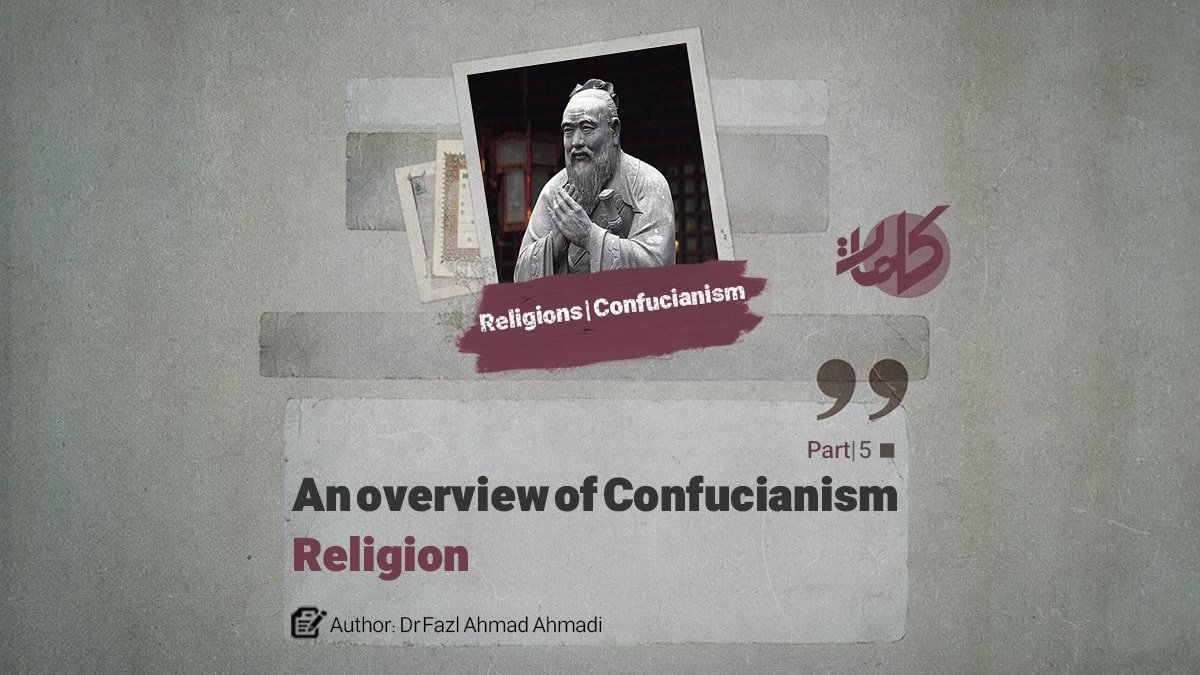
    An Overview of “Confucianism Religion'”(Part 5)
    Sacred Books of Confucianism
    Confucius was left with five books compiled by his students. The Chinese also attributed four more books to him. The sacred books of Confucius are: “Analects” and “Five Kapengs.” According to the book of Confucius, we can say that he was not a religious teacher. Rather, his teachings were only for learning the way and customs of a worthy life. With this method, he was able to attract a large number of people. Today, about five hundred million people follow him through his books.
    Regardless of the books attributed to Confucius himself and the books that were attributed to him later, six ancient books are generally the key to understanding the teachings of Confucius, which are mentioned below:
    1. Shujing or the Book of History: This book contains Confucius’s historical accounts of the ancient dynasties of China, which reach one hundred documents, the time period of these documents is related to the years of the twenty-fourth century BC to the eighth century BC, the reason for the collection of these documents by Confucius This was so that his students would be aware of the facts about the causes of the rise and demise of dynasties.
    Shih Jing or Book of Poems/Songs: This book contains a collection of popular poems written in the five hundred years between the beginning of the Jo Dynasty (12th century BC) and the Spring and Autumn period (8th or 6th century BC). Confucius handpicked 305 poems out of more than 3000 poems and grouped them under four headings related to different topics.
    Yao or Music: In the time of Confucius, music was closely related to poetry, so he compiled a collection of ancient poems, composing a song for each one he finally chose.
    Li Jie or Book of Rituals: (Book of Rituals is a chart of social behavior) of royal dynasties and people of ancient China.
    Yi Jing or Book of Changes: The content of this book is an imaginary system of philosophy, which is based on eight three lines, these eight three lines are made of triple combinations or arrangements of a continuous line and a broken line, one of which is necessarily repeated. to make a three-line.
    Chunqiu or Annals of Spring and Autumn: This book is a chronological account of the important events of the state of Lu, from the first year of the reign of King Yin [722 BC] to the fourteenth year of the reign of King Ai [481 BC]. This “spring and autumn” almanac is derived from this ancient tradition, in which the year, month, day and season were given before each list in which that particular event occurred.
    According to the mentioned works, it is clear that Confucianism is not limited to religious teachings; Rather, it includes various topics including religious, moral, political, social and even economic. In none of the mentioned works, the subject of the unit has not been discussed.
    continues…

    Related Posts

    An Analysis of the History and Beliefs of Buddhism (part 39)

    03/06/2026

    An Analysis of the History and Beliefs of Buddhism (part 38)

    29/05/2026

    An Analysis of the History and Beliefs of Buddhism (part 37)

    29/05/2026
    Leave A Reply Cancel Reply

    Follow us on the social media pages
    • Facebook
    • Twitter
    • Instagram
    • Telegram
    • WhatsApp
    Don’t miss

    The Divine Education Model in the Family of the Prophets (Part 140)

    A High-Level Delegation of Uzbek Scholars Visits the Kalemaat Academic and Research Organization

    The Divine Education Model in the Family of the Prophets (Part 139)

    The Divine Education Model in the Family of the Prophets (Part 138)

    About Us:

    The Academic and Research Organization of Kalemaat is an independent Islamic Da'wah organization affiliated with Ahl al-Sunnah wa al-Jama'ah. It is dedicated to promoting the authentic values of Islam, advancing the higher objectives of the Sharia, countering Western cultural influence, upholding the Word of Allah, and contributing to the intellectual and spiritual awakening of the Muslim Ummah.

    The Organization is supported by Muslim philanthropists and businessmen, and it welcomes the cooperation and support of Muslims worldwide in advancing its mission.

    Famous publications

    The Divine Education Model in the Family of the Prophets (Part 140)

    05/10/2026

    A High-Level Delegation of Uzbek Scholars Visits the Kalemaat Academic and Research Organization

    04/10/2026
    Follow us on social medias
    • Facebook
    • Twitter
    • YouTube
    • Telegram
    • Instagram
    • WhatsApp
    All right reserved by (kalemaat)
    • Home
    • Analysis of the day
    • The greats of the Ummah
    • library

    Type above and press Enter to search. Press Esc to cancel.
