Close Menu
    Facebook X (Twitter) Telegram WhatsApp
    • Language
      • دری
      • پښتو
      • العربیة
    • Home
    • Analysis
    • Islam
      • Prophet of Islam (PBUH)
      • Holy Quran
      • Muslim
      • Belief
      • Faith
      • Worships
      • Fiqh
      • Jihad
      • Islamic Perspectives
      • Islamic Economics
      • Islamic Management
      • Islamic Culture
      • Sufism
      • Crimes
      • Prohibitions
      • Sayings of the Scholars
      • Muhajir Tafsir
      • Hadith
    • Religions
      • Judaism
      • Christianity
      • Buddhism
      • Hinduism
      • Zoroastrianism
      • Satanism
      • Confucianism
      • Sikhism
    • Theories
      • Atheism
      • Secularism
      • liberalism
      • Socialism
      • Communism
      • Democracy
      • Federalism
      • Fascism
      • Capitalism
      • Marxism
      • Feminism
      • Nationalism
      • Colonialism
      • Frankfurt School
      • Freemasonry
      • Humanism
    • Fitan
      • Mu’tazila
      • Murji’ah
      • Jahmiyyah
      • The Fitna of the Khawarij
      • The Fitna of the Rawafid
      • The Fitna of Orientalism
      • Ghamdism
      • The Fitna of the Qadianis
      • Qadariyyah
      • Karramiyyah
    • Ummah
      • Sahabah (Companions of the Prophet ﷺ)
        • Hazrat Abu bakr Siddiq (RA)
        • Hazrat Umar al-Faruq (RA)
        • Hazrat Uthman ibn Affan (RA)
        • Hazrat Ali (RA)
        • Hazrat Khalid ibn al-Walid (RA)
        • Hazrat Fayruz al-Daylami (RA)
        • Hazrat Abdullah ibn al-Zubayr (RA)
      • Ummahat al-Mu’minin
      • Islamic scholars
        • Allamah Sayyid Abul Hasan Ali Nadwi (RH)
        • Imam al-Aʿzam Abu Hanifa (RH)
        • Imam al-Bukhari (RH)
        • Imam al-Tirmidhi (RH)
        • Imam al-Ghazali (RH)
        • Shah Waliullah al-Dehlawi (RH)
        • Sayyid Jamal al-Din Afghani
        • Mawlana Jalal al-Din Muhammad Balkhi Rumi (RH)
      • Muslim Rulers
        • Sultan Salahuddin Ayyubi (RH)
        • Umar ibn Abd al-Aziz (RH)
        • Sultan Yusuf ibn Tashfin (RH)
      • Muslim Scientists
    • Civilizations
      • Islamic Civilization
      • Eastern and Western Civilizations
      • Traces of History
    • Diverse
      • Ramadan Message
      • Reports
      • Light and Darkness
    • library
    Facebook X (Twitter) Telegram WhatsApp Instagram Pinterest YouTube
    kalemaat Englishkalemaat English
    You are at:Home»Diverse»Youth: Irreplaceable Assets! (Part One)
    Diverse

    Youth: Irreplaceable Assets! (Part One)

    By 22/06/2025Updated:23/06/2025No Comments4 Mins Read
    Share Facebook Twitter Telegram WhatsApp
    Share
    Facebook Twitter Telegram Email WhatsApp
    Author: Sadeq Faez
    Youth: Irreplaceable Assets! (Part One)
    Youth: The Springtime of Life
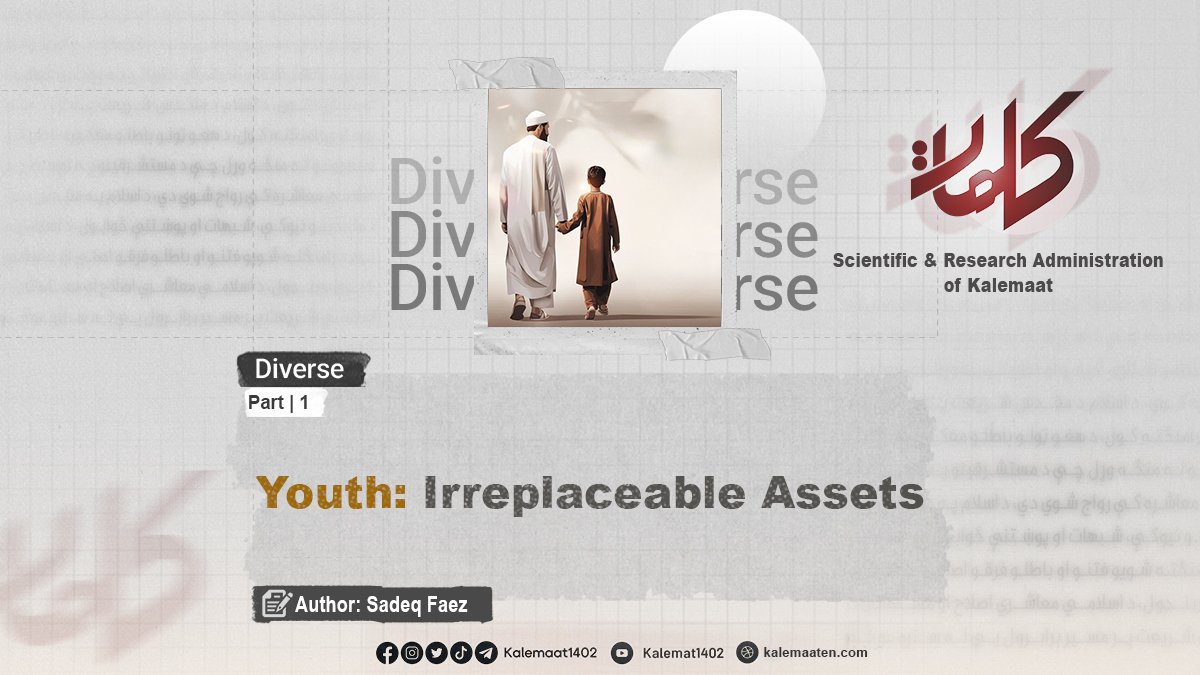
    Youth is the spring of life—a season of purity, freedom, progress, and a time of new experiences aimed at the material and spiritual development of both the individual and society. It is a time when virtues and talents flourish. Youth is one of the greatest blessings bestowed by Allah upon humanity and is among the most significant assets in achieving happiness in human life. Most importantly, the peaks of material and spiritual success are conquered during the period of youth. Therefore, a young person must recognize the value of youth in order to successfully navigate the winding paths of life.
    Youth is a critical stage in human life, a period when strength, emotion, ambition, and courage reach their peak. It is like a double-edged sword—if nurtured and guided properly, it benefits society; otherwise, it may harm it.
    A young person is full of hope and dreams and brimming with love and affection. Friendships during this time are formed on the basis of pure love. Healthy friendships among young people, especially at the beginning of their social lives, strengthen their character and develop their social abilities. If this inclination retains its purity, it holds great value, as it can spark the first true feelings of altruism in a person, transforming a youth into a selfless, devoted, and God-loving individual.
    The young person enters a phase that, although more mature and capable than earlier stages, is still fraught with challenges that are directly linked to their future destiny. Upon entering youth, with the realization that they have reached the spring of their life and possess the energy and strength to achieve many goals, they strive to accomplish the greatest and most meaningful ambitions they hold. Yet, they are still unaware of many matters and fail to understand certain realities. This lack of experience may cause them to deviate from the right path and encounter numerous difficulties and dangers. Moreover, youth often face intense emotional turmoil and psychological distress, to the point that a moment of negligence could lead to their downfall, deviation, and eternal misery.
    The days of youth are the time of brilliance and vitality in life—a time of joy, power, energy, and hope. It is a time of hard work, enthusiasm, and intense emotion. Youth is a period of honesty, love, commitment, and responsible effort. A young person is someone who takes responsibility, and with confidence in their sincerity and purity, they always emerge victorious.
    The spiritual power of a person emerges strongly during youth. Alongside the physical development of the body, warm emotions and deep feelings awaken in the hearts of the youth, driving them toward tireless activity. As their physical and mental faculties blossom, they are given the best tools for progress and excellence. If used wisely, these tools can lead them to success and happiness.
    Youth is a spring that is only appreciated once it has passed. Unlike the spring of the earth, which returns every year, youth come only once—and leaves behind only regret. Poets, reflecting on their youth, lament not having valued it, and they advise the young to treasure this irreplaceable phase of life. As Khayyam beautifully said:
    Alas, the page of youth has turned,
    And the fresh spring of life is gone.
    That bird of joy whose name was youth—
    Alas! I know not when it came nor when it flew away.
    In summary, the energy of youth—when guided by a sense of duty and restraint—can transform society, reshape global politics, and completely revolutionize the economic, social, and cultural face of a nation. History stands as the greatest witness to this truth.

    Continues…

    Next Part

    Atheism and ways to combat it Democracy Islam Islamic Civilization Prophetic Sunnah The Position of Youth in Society Youths

    Related Posts

    The Divine Education Model in the Family of the Prophets (Part 143)

    18/10/2026

    Seeing Allah (SWT)

    18/10/2026

    Kindness to Parents

    18/10/2026
    Leave A Reply Cancel Reply

    Follow us on the social media pages
    • Facebook
    • Twitter
    • Instagram
    • Telegram
    • WhatsApp
    Don’t miss

    The Divine Education Model in the Family of the Prophets (Part 143)

    Seeing Allah (SWT)

    Kindness to Parents

    The Divine Education Model in the Family of the Prophets (Part 142)

    About Us:

    The Academic and Research Organization of Kalemaat is an independent Islamic Da'wah organization affiliated with Ahl al-Sunnah wa al-Jama'ah. It is dedicated to promoting the authentic values of Islam, advancing the higher objectives of the Sharia, countering Western cultural influence, upholding the Word of Allah, and contributing to the intellectual and spiritual awakening of the Muslim Ummah.

    The Organization is supported by Muslim philanthropists and businessmen, and it welcomes the cooperation and support of Muslims worldwide in advancing its mission.

    Famous publications

    The Divine Education Model in the Family of the Prophets (Part 143)

    18/10/2026

    Seeing Allah (SWT)

    18/10/2026
    Follow us on social medias
    • Facebook
    • Twitter
    • YouTube
    • Telegram
    • Instagram
    • WhatsApp
    All right reserved by (kalemaat)
    • Home
    • Analysis of the day
    • The greats of the Ummah
    • library

    Type above and press Enter to search. Press Esc to cancel.