Close Menu
    Facebook X (Twitter) Telegram WhatsApp
    • Language
      • دری
      • پښتو
      • العربیة
    • Home
    • Analysis
    • Islam
      • Prophet of Islam (PBUH)
      • Holy Quran
      • Muslim
      • Belief
      • Faith
      • Worships
      • Fiqh
      • Jihad
      • Islamic Perspectives
      • Islamic Economics
      • Islamic Management
      • Islamic Culture
      • Sufism
      • Crimes
      • Prohibitions
      • Sayings of the Scholars
      • Muhajir Tafsir
      • Hadith
    • Religions
      • Judaism
      • Christianity
      • Buddhism
      • Hinduism
      • Zoroastrianism
      • Satanism
      • Confucianism
      • Sikhism
    • Theories
      • Atheism
      • Secularism
      • liberalism
      • Socialism
      • Communism
      • Democracy
      • Federalism
      • Fascism
      • Capitalism
      • Marxism
      • Feminism
      • Nationalism
      • Colonialism
      • Frankfurt School
      • Freemasonry
      • Humanism
    • Fitan
      • Mu’tazila
      • Murji’ah
      • Jahmiyyah
      • The Fitna of the Khawarij
      • The Fitna of the Rawafid
      • The Fitna of Orientalism
      • Ghamdism
      • The Fitna of the Qadianis
      • Qadariyyah
      • Karramiyyah
    • Ummah
      • Sahabah (Companions of the Prophet ﷺ)
        • Hazrat Abu bakr Siddiq (RA)
        • Hazrat Umar al-Faruq (RA)
        • Hazrat Uthman ibn Affan (RA)
        • Hazrat Ali (RA)
        • Hazrat Khalid ibn al-Walid (RA)
        • Hazrat Fayruz al-Daylami (RA)
        • Hazrat Abdullah ibn al-Zubayr (RA)
      • Ummahat al-Mu’minin
      • Islamic scholars
        • Allamah Sayyid Abul Hasan Ali Nadwi (RH)
        • Imam al-Aʿzam Abu Hanifa (RH)
        • Imam al-Bukhari (RH)
        • Imam al-Tirmidhi (RH)
        • Imam al-Ghazali (RH)
        • Shah Waliullah al-Dehlawi (RH)
        • Sayyid Jamal al-Din Afghani
        • Mawlana Jalal al-Din Muhammad Balkhi Rumi (RH)
      • Muslim Rulers
        • Sultan Salahuddin Ayyubi (RH)
        • Umar ibn Abd al-Aziz (RH)
        • Sultan Yusuf ibn Tashfin (RH)
      • Muslim Scientists
    • Civilizations
      • Islamic Civilization
      • Eastern and Western Civilizations
      • Traces of History
    • Diverse
      • Ramadan Message
      • Reports
      • Light and Darkness
    • library
    Facebook X (Twitter) Telegram WhatsApp Instagram Pinterest YouTube
    kalemaat Englishkalemaat English
    You are at:Home»Islam»Women and their Role in Society (Part Five)
    Islam

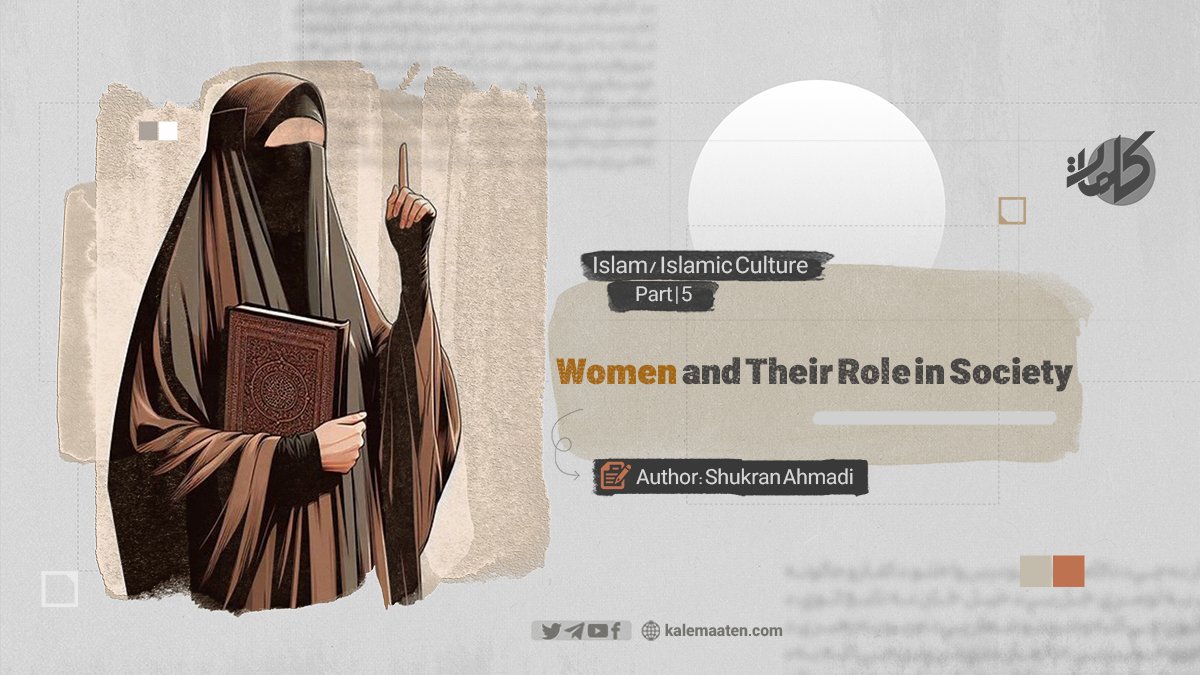
    Women and their Role in Society (Part Five)

    By 28/08/2024No Comments3 Mins Read
    Share Facebook Twitter Telegram WhatsApp
    Share
    Facebook Twitter Telegram Email WhatsApp
    Author: Shukran Ahmadi
    Women and their Role in Society (Part Five)
    The Structural Differences Between Men and Women: Shared Humanity
    While there are structural differences between men and women, there is no difference in their humanity. A woman is not different from a man in terms of humanity; rather, the differences lie in their physical composition. These physical differences have resulted in different roles and responsibilities.
    Genetic and anthropological research demonstrates that women and men have distinct biological compositions. This difference is evident from the very first moments of fertilization (the sperm and egg) and continues through all stages of embryonic development. Men and women differ at every stage. This difference is reflected in every cell of their bodies, preparing each for specific tasks.
    Dr. Alexis Karil, who has witnessed the role of women in contemporary society and the challenges they face, states: “The fact is that women are very different from men. Every cell of a woman’s body has its own structure, and this structure exists in all the organs of her body, especially in her nervous system. It should not be forgotten that genetic laws, like other principles, cannot be compromised, and human desires cannot be altered. They must be accepted as they are. Therefore, women should cultivate their competencies according to their intrinsic nature, avoiding blind imitation of men and embracing their unique feminine duties.”
    Aristotle, a student of Plato, holds that the talents of men and women differ significantly. The duties assigned to each by the law of creation and the rights demanded of them are fundamentally different in many aspects.
    Professor Rick, a well-known American psychologist with extensive research on men and women, states: “A man’s world is entirely different from a woman’s world. If a woman cannot think like a man, it is because their bodies are inherently different. Additionally, the feelings of these two genders will never be identical, nor will they respond in the same manner to events. Based on their inherent sexual roles, men and women behave differently and operate in distinct orbits, much like two stars. They can understand each other and complement one another, but they never become one. This is the reason men and women can live together, fall in love, and appreciate each other’s traits and qualities.”
    Ms. Cleod Elson, a female psychologist, states: “My greatest interest lies in studying the psyche of men. Recently, I was tasked with researching the psychological factors affecting both men and women. Ultimately, I concluded that women are more influenced by emotions, while men are guided by reason. Men tend to think more practically, judge more effectively, organize efficiently, and lead decisively. Regardless of how much women may wish to challenge this reality, it remains steadfast, suggesting they often require male oversight in their lives.”
    Research has evidenced developmental differences between men and women, supported by scientific and psychological studies. These differences are permanent and common across similar demographics, leading to legal and legislative distinctions.
    This principle underpins the division of responsibilities and duties between men and women in Islam, aligning with their inherent compositions and the realities of social and marital life. One key issue regarding women’s lives is family management and guardianship, which we will explore further in upcoming discussions.

    Continues…

    Related Posts

    Guarding One’s Eyes

    22/10/2026

    Safeguarding Secrets

    22/10/2026

    The Reality of Repentance

    21/10/2026
    Leave A Reply Cancel Reply

    Follow us on the social media pages
    • Facebook
    • Twitter
    • Instagram
    • Telegram
    • WhatsApp
    Don’t miss

    Guarding One’s Eyes

    Safeguarding Secrets

    Imam al-A‘zam Abu Hanifa (RA): The Role Model (part 37)

    The Reality of Repentance

    About Us:

    The Academic and Research Organization of Kalemaat is an independent Islamic Da'wah organization affiliated with Ahl al-Sunnah wa al-Jama'ah. It is dedicated to promoting the authentic values of Islam, advancing the higher objectives of the Sharia, countering Western cultural influence, upholding the Word of Allah, and contributing to the intellectual and spiritual awakening of the Muslim Ummah.

    The Organization is supported by Muslim philanthropists and businessmen, and it welcomes the cooperation and support of Muslims worldwide in advancing its mission.

    Famous publications

    Guarding One’s Eyes

    22/10/2026

    Safeguarding Secrets

    22/10/2026
    Follow us on social medias
    • Facebook
    • Twitter
    • YouTube
    • Telegram
    • Instagram
    • WhatsApp
    All right reserved by (kalemaat)
    • Home
    • Analysis of the day
    • The greats of the Ummah
    • library

    Type above and press Enter to search. Press Esc to cancel.