Close Menu
    Facebook X (Twitter) Telegram WhatsApp
    • Language
      • دری
      • پښتو
      • العربیة
    • Home
    • Analysis
    • Islam
      • Prophet of Islam (PBUH)
      • Holy Quran
      • Muslim
      • Belief
      • Faith
      • Worships
      • Fiqh
      • Jihad
      • Islamic Perspectives
      • Islamic Economics
      • Islamic Management
      • Islamic Culture
      • Sufism
      • Crimes
      • Prohibitions
      • Sayings of the Scholars
      • Muhajir Tafsir
      • Hadith
    • Religions
      • Judaism
      • Christianity
      • Buddhism
      • Hinduism
      • Zoroastrianism
      • Satanism
      • Confucianism
      • Sikhism
    • Theories
      • Atheism
      • Secularism
      • liberalism
      • Socialism
      • Communism
      • Democracy
      • Federalism
      • Fascism
      • Capitalism
      • Marxism
      • Feminism
      • Nationalism
      • Colonialism
      • Frankfurt School
      • Freemasonry
      • Humanism
    • Fitan
      • Mu’tazila
      • Murji’ah
      • Jahmiyyah
      • The Fitna of the Khawarij
      • The Fitna of the Rawafid
      • The Fitna of Orientalism
      • Ghamdism
      • The Fitna of the Qadianis
      • Qadariyyah
      • Karramiyyah
    • Ummah
      • Sahabah (Companions of the Prophet ﷺ)
        • Hazrat Abu bakr Siddiq (RA)
        • Hazrat Umar al-Faruq (RA)
        • Hazrat Uthman ibn Affan (RA)
        • Hazrat Ali (RA)
        • Hazrat Khalid ibn al-Walid (RA)
        • Hazrat Fayruz al-Daylami (RA)
        • Hazrat Abdullah ibn al-Zubayr (RA)
      • Ummahat al-Mu’minin
      • Islamic scholars
        • Allamah Sayyid Abul Hasan Ali Nadwi (RH)
        • Imam al-Aʿzam Abu Hanifa (RH)
        • Imam al-Bukhari (RH)
        • Imam al-Tirmidhi (RH)
        • Imam al-Ghazali (RH)
        • Shah Waliullah al-Dehlawi (RH)
        • Sayyid Jamal al-Din Afghani
        • Mawlana Jalal al-Din Muhammad Balkhi Rumi (RH)
      • Muslim Rulers
        • Sultan Salahuddin Ayyubi (RH)
        • Umar ibn Abd al-Aziz (RH)
        • Sultan Yusuf ibn Tashfin (RH)
      • Muslim Scientists
    • Civilizations
      • Islamic Civilization
      • Eastern and Western Civilizations
      • Traces of History
    • Diverse
      • Ramadan Message
      • Reports
      • Light and Darkness
    • library
    Facebook X (Twitter) Telegram WhatsApp Instagram Pinterest YouTube
    kalemaat Englishkalemaat English
    You are at:Home»Islam»The Wisdom and Philosophy of Hajj and Its Hidden Secrets (Part 18)
    Islam

    The Wisdom and Philosophy of Hajj and Its Hidden Secrets (Part 18)

    By 04/06/2025Updated:04/06/2025No Comments4 Mins Read
    Share Facebook Twitter Telegram WhatsApp
    Share
    Facebook Twitter Telegram Email WhatsApp
    Author: M. Asim Ismail Zahi
    The Wisdom and Philosophy of Hajj and Its Hidden Secrets (Part 18)
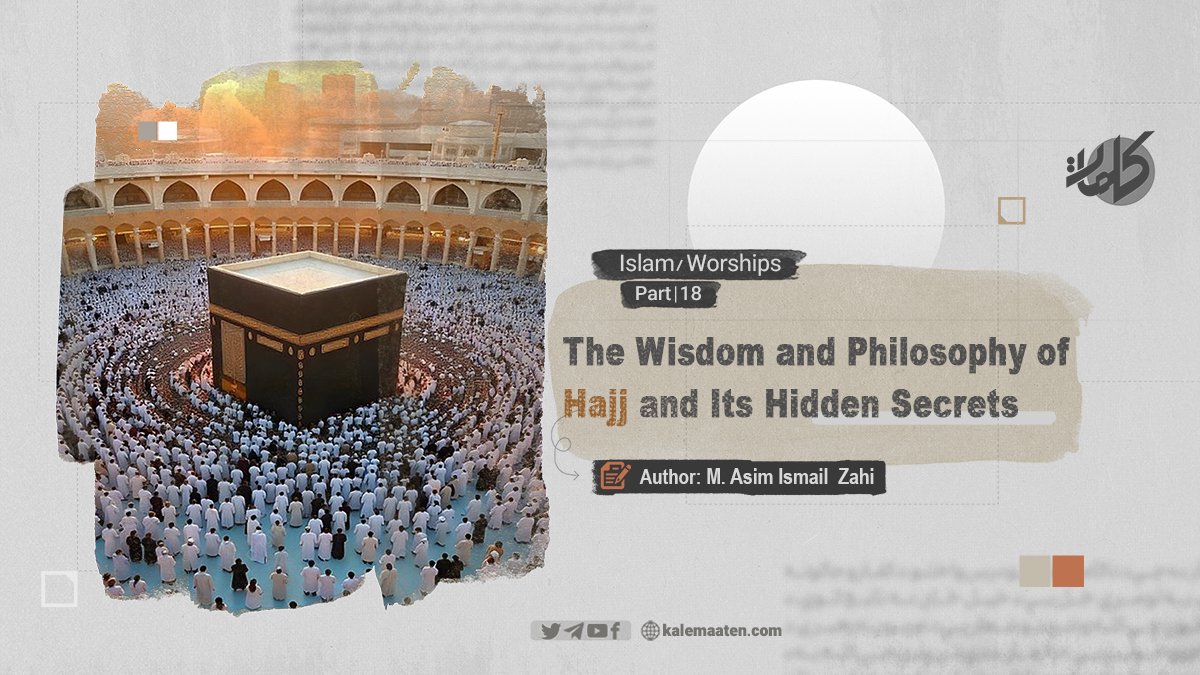
    Doubt 3: Do Muslims Worship the Ka’ba?
    Explanation of the Doubt:
    Some claim that circumambulating the Ka’ba (Tawaf) is, in reality, a form of worship of the structure itself. If Muslims claim to worship God, why then do they worship His House?
    Response:
    The Ka’ba itself is not the object of worship; rather, the intended object is Allah, the Exalted. The Ka’bah merely serves as a means to unify the direction of worship (Qiblah), enabling all Muslims to worship in harmony and uniformity.
    No one has the right to object to why the Ka’ba was chosen as the Qiblah. The response is simple: we had to face some direction in our prayers, and Allah, the Exalted, chose the Ka’ba. Had He chosen any other place, atheists would still have questioned why that specific location was chosen. What follows are several points that clarify that the Ka’ba is not the object of worship; rather, it is Allah alone who is worshipped:
    1. The Prophet of Islam (peace and blessings be upon him) and the Muslims prayed toward Bayt al-Maqdis (Jerusalem) for approximately 16 or 17 months. If the Ka’ba itself were the object of worship, why then did they face another direction? This proves that Muslims offer prayer to Allah, not to the Ka’ba.
    2. If the Ka’ba itself were worshipped, why is it impermissible to touch and wipe it except for the Black Stone (Hajar al-Aswad)? Why are Muslims forbidden from swearing an oath by the Ka’ba itself, but instead must swear by the “Lord of the Ka’ba”?
    3. We clearly reject the divinity of the Ka’ba. It is evident that no true worshipper would ever deny the divinity of what they worship. Thus, the Ka’ba is not divine and is not an object of worship.
    4. Hypothetically, if the Ka’ba were to be destroyed one day, Muslims would still continue to pray in the direction where it once stood. If the structure itself were the object of worship, worship would cease with its destruction. Therefore, Muslims do not worship bricks and stones.
    5. If someone prays on the rooftop of the Ka’ba, their prayer remains valid. If the Ka’ba were the object of worship, ascending above it and performing prayer there would be inappropriate, as it would no longer be in front of the worshipper. Moreover, stepping above a deity—even with a respectful intention—would be considered an act of disrespect. However, because the Ka’ba is not divine, during the early days of Islam, the muezzins (callers to prayer) would ascend it to make the call to prayer (Adhan).
    Doubt 4: Why Are Non-Muslims Not Allowed to Enter Makkah and Madinah?
    1. In every country, there are restricted areas where even its own citizens are not allowed access, let alone foreigners. For example, military zones or special camps are limited to authorized personnel only. Islam is a universal religion that has its own sacred headquarters—namely, the holy cities of Makkah and Madinah. Only Muslims are permitted to enter these sacred areas, and others have no grounds for objection.
    2. When someone wishes to enter a foreign country, they are required to obtain a visa, and every country has its own rules and conditions for issuing one. If those requirements are not met, entry is denied. Makkah and Madinah have their own spiritual entry conditions. Whoever accepts the “visa” of Makkah and Madinah must also abide by their laws. The “visa” for these sacred cities is very simple: proclaiming «لا إله إلا الله محمد رسول الله» Translation: “There is no god but Allah, and Muhammad is the Messenger of Allah.”
    Continues…

    Previous Part

    Hajj Islam Worships

    Related Posts

    Seeing Allah (SWT)

    18/10/2026

    Kindness to Parents

    18/10/2026

    The Smallness of a Sin

    17/10/2026
    Leave A Reply Cancel Reply

    Follow us on the social media pages
    • Facebook
    • Twitter
    • Instagram
    • Telegram
    • WhatsApp
    Don’t miss

    The Divine Education Model in the Family of the Prophets (Part 143)

    Seeing Allah (SWT)

    Kindness to Parents

    The Divine Education Model in the Family of the Prophets (Part 142)

    About Us:

    The Academic and Research Organization of Kalemaat is an independent Islamic Da'wah organization affiliated with Ahl al-Sunnah wa al-Jama'ah. It is dedicated to promoting the authentic values of Islam, advancing the higher objectives of the Sharia, countering Western cultural influence, upholding the Word of Allah, and contributing to the intellectual and spiritual awakening of the Muslim Ummah.

    The Organization is supported by Muslim philanthropists and businessmen, and it welcomes the cooperation and support of Muslims worldwide in advancing its mission.

    Famous publications

    The Divine Education Model in the Family of the Prophets (Part 143)

    18/10/2026

    Seeing Allah (SWT)

    18/10/2026
    Follow us on social medias
    • Facebook
    • Twitter
    • YouTube
    • Telegram
    • Instagram
    • WhatsApp
    All right reserved by (kalemaat)
    • Home
    • Analysis of the day
    • The greats of the Ummah
    • library

    Type above and press Enter to search. Press Esc to cancel.
