Close Menu
    Facebook X (Twitter) Telegram WhatsApp
    • Language
      • دری
      • پښتو
      • العربیة
    • Home
    • Analysis
    • Islam
      • Prophet of Islam (PBUH)
      • Holy Quran
      • Muslim
      • Belief
      • Faith
      • Worships
      • Fiqh
      • Jihad
      • Islamic Perspectives
      • Islamic Economics
      • Islamic Management
      • Islamic Culture
      • Sufism
      • Crimes
      • Prohibitions
      • Sayings of the Scholars
      • Muhajir Tafsir
      • Hadith
    • Religions
      • Judaism
      • Christianity
      • Buddhism
      • Hinduism
      • Zoroastrianism
      • Satanism
      • Confucianism
      • Sikhism
    • Theories
      • Atheism
      • Secularism
      • liberalism
      • Socialism
      • Communism
      • Democracy
      • Federalism
      • Fascism
      • Capitalism
      • Marxism
      • Feminism
      • Nationalism
      • Colonialism
      • Frankfurt School
      • Freemasonry
      • Humanism
    • Fitan
      • Mu’tazila
      • Murji’ah
      • Jahmiyyah
      • The Fitna of the Khawarij
      • The Fitna of the Rawafid
      • The Fitna of Orientalism
      • Ghamdism
      • The Fitna of the Qadianis
      • Qadariyyah
      • Karramiyyah
    • Ummah
      • Sahabah (Companions of the Prophet ﷺ)
        • Hazrat Abu bakr Siddiq (RA)
        • Hazrat Umar al-Faruq (RA)
        • Hazrat Uthman ibn Affan (RA)
        • Hazrat Ali (RA)
        • Hazrat Khalid ibn al-Walid (RA)
        • Hazrat Fayruz al-Daylami (RA)
        • Hazrat Abdullah ibn al-Zubayr (RA)
      • Ummahat al-Mu’minin
      • Islamic scholars
        • Allamah Sayyid Abul Hasan Ali Nadwi (RH)
        • Imam al-Aʿzam Abu Hanifa (RH)
        • Imam al-Bukhari (RH)
        • Imam al-Tirmidhi (RH)
        • Imam al-Ghazali (RH)
        • Shah Waliullah al-Dehlawi (RH)
        • Sayyid Jamal al-Din Afghani
        • Mawlana Jalal al-Din Muhammad Balkhi Rumi (RH)
      • Muslim Rulers
        • Sultan Salahuddin Ayyubi (RH)
        • Umar ibn Abd al-Aziz (RH)
        • Sultan Yusuf ibn Tashfin (RH)
      • Muslim Scientists
    • Civilizations
      • Islamic Civilization
      • Eastern and Western Civilizations
      • Traces of History
    • Diverse
      • Ramadan Message
      • Reports
      • Light and Darkness
    • library
    Facebook X (Twitter) Telegram WhatsApp Instagram Pinterest YouTube
    kalemaat Englishkalemaat English
    You are at:Home»Diverse»The Spread of Islam and Its Interaction with Non-Muslims from the Perspective of Orientalists (Part One)
    Diverse

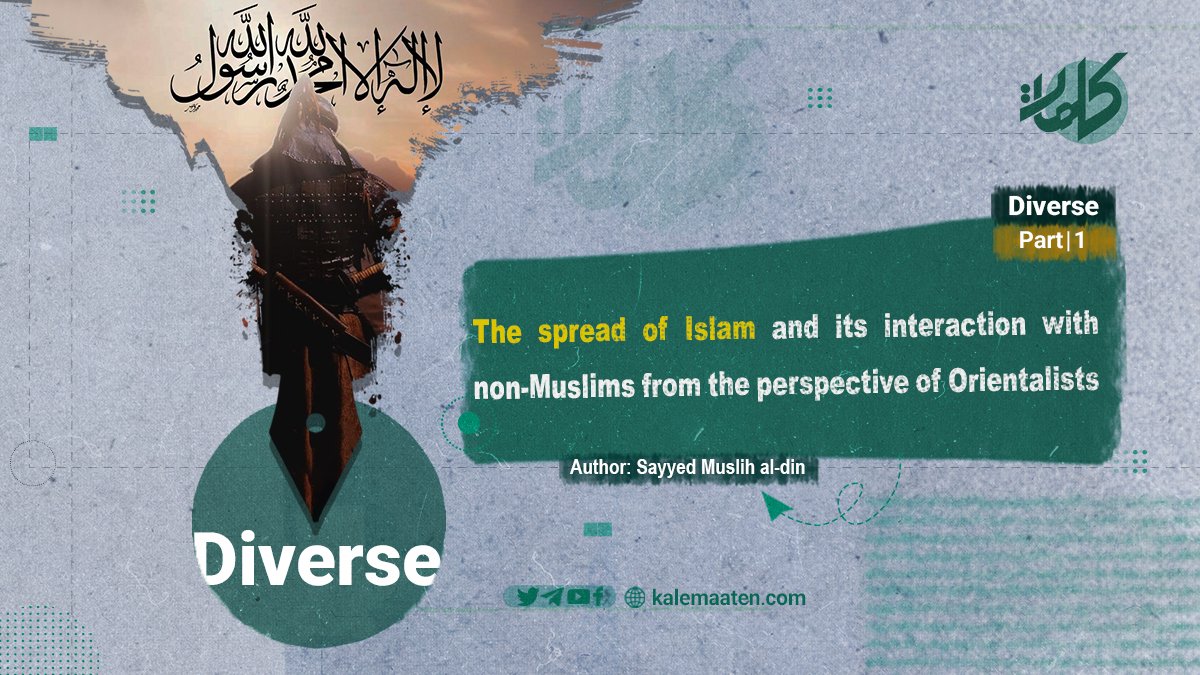
    The Spread of Islam and Its Interaction with Non-Muslims from the Perspective of Orientalists (Part One)

    By 19/02/2025No Comments3 Mins Read
    Share Facebook Twitter Telegram WhatsApp
    Share
    Facebook Twitter Telegram Email WhatsApp
    Author: Sayyed Muslih al-din
    The Spread of Islam and Its Interaction with Non-Muslims from the Perspective of Orientalists (Part
    One)
    Summary:
    Achieving the truth and being saved from misunderstandings and deviations is the desire of every human being. In order to achieve this desire, it is necessary to observe certain principles, the most important of which is creating a suitable environment for cultivating the spirit of seeking truth. A person can only realize the truth when he faces different thoughts and ideas without any prejudice and examines the reasons for each one to recognize and accept the best of them. Of course, if a person with a certain mindset encounters a matter, he cannot distinguish its truth from falsehood.
    Therefore, religious leaders and Muslims, relying on the Prophet (PBUH) and his Sahaba, should speak to their audience in such a way that they can better understand the beliefs and teachings of Islam so that they can be guided. Violence and aggression are not something that human nature and reason accept, and every healthy person runs away from it. A Muslim and a preacher of Islam must deal with followers of other religions in a way that stimulates their spirit of seeking justice.
    One of the important social issues in Islam is interaction with non-Muslims. Considering that Islam is a religion of thought and rationality, interaction with non-Muslims has been given attention and emphasis. Islam values free thinking, and therefore, in interactions with non-Muslims, it recommends the path of rationality and observance of human dignity.
    Introduction:
    Since Islam is a religion of mercy and humanity, it emphasizes logical and reasonable interactions with non-Muslims and any other human beings, preventing Muslims from confrontation and antagonism with followers of other religions. Such interactions allow followers of other religions to recognize the value of Islam.
    However, violence, confrontation, and antagonism in interactions with non-Muslims cause hatred among followers of other religions towards Islam, which is not compatible with the spirit of Islam. Therefore, the Holy Quran states: «وَ لا تَسُبُّوا الَّذینَ یَدْعُونَ مِنْ دُونِ اللَّهِ فَیَسُبُّوا اللَّهَ عَدْواً بِغَیْرِ عِلْمٍ» Translation: “And do not insult those they invoke other than Allah, lest they insult Allah in enmity without knowledge.”
    Therefore, Muslims must follow the commands of Allah and behave properly towards non-believers and non-Muslims, presenting the religion of Islam in a beautiful and reasonable manner to attract others to it. Violent and confrontational behavior, in addition to violating the purpose of Islam, creates hatred in the minds of others toward the religion of Islam.
    The Prophet of Islam (PBUH) and his sincere Sahaba, recognizing the positive and beneficial effects of good and reasonable behavior in dealing with non-Muslims, have shown kindness and tolerance toward followers of other religions. Compassion and tolerance in any human relationship and interaction—whether in individual relationships, family relationships, or in the relationships of a larger community—are the most important rules for organizing and regulating relationships properly. This principle is evident in the life of the Holy Prophet (PBUH) and his Sahaba.
    Continues…

    Related Posts

    The Divine Education Model in the Family of the Prophets (Part 144)

    19/10/2026

    The Divine Education Model in the Family of the Prophets (Part 143)

    18/10/2026

    The Divine Education Model in the Family of the Prophets (Part 142)

    17/10/2026
    Leave A Reply Cancel Reply

    Follow us on the social media pages
    • Facebook
    • Twitter
    • Instagram
    • Telegram
    • WhatsApp
    Don’t miss

    The Divine Education Model in the Family of the Prophets (Part 144)

    Who Is a Sufi?

    The Responsibility of Faith

    The Divine Education Model in the Family of the Prophets (Part 143)

    About Us:

    The Academic and Research Organization of Kalemaat is an independent Islamic Da'wah organization affiliated with Ahl al-Sunnah wa al-Jama'ah. It is dedicated to promoting the authentic values of Islam, advancing the higher objectives of the Sharia, countering Western cultural influence, upholding the Word of Allah, and contributing to the intellectual and spiritual awakening of the Muslim Ummah.

    The Organization is supported by Muslim philanthropists and businessmen, and it welcomes the cooperation and support of Muslims worldwide in advancing its mission.

    Famous publications

    The Divine Education Model in the Family of the Prophets (Part 144)

    19/10/2026

    Who Is a Sufi?

    19/10/2026
    Follow us on social medias
    • Facebook
    • Twitter
    • YouTube
    • Telegram
    • Instagram
    • WhatsApp
    All right reserved by (kalemaat)
    • Home
    • Analysis of the day
    • The greats of the Ummah
    • library

    Type above and press Enter to search. Press Esc to cancel.
