Close Menu
    Facebook X (Twitter) Telegram WhatsApp
    • Language
      • دری
      • پښتو
      • العربیة
    • Home
    • Analysis
    • Islam
      • Prophet of Islam (PBUH)
      • Holy Quran
      • Muslim
      • Belief
      • Faith
      • Worships
      • Fiqh
      • Jihad
      • Islamic Perspectives
      • Islamic Economics
      • Islamic Management
      • Islamic Culture
      • Sufism
      • Crimes
      • Prohibitions
      • Sayings of the Scholars
      • Muhajir Tafsir
      • Hadith
    • Religions
      • Judaism
      • Christianity
      • Buddhism
      • Hinduism
      • Zoroastrianism
      • Satanism
      • Confucianism
      • Sikhism
    • Theories
      • Atheism
      • Secularism
      • liberalism
      • Socialism
      • Communism
      • Democracy
      • Federalism
      • Fascism
      • Capitalism
      • Marxism
      • Feminism
      • Nationalism
      • Colonialism
      • Frankfurt School
      • Freemasonry
      • Humanism
    • Fitan
      • Mu’tazila
      • Murji’ah
      • Jahmiyyah
      • The Fitna of the Khawarij
      • The Fitna of the Rawafid
      • The Fitna of Orientalism
      • Ghamdism
      • The Fitna of the Qadianis
      • Qadariyyah
      • Karramiyyah
    • Ummah
      • Sahabah (Companions of the Prophet ﷺ)
        • Hazrat Abu bakr Siddiq (RA)
        • Hazrat Umar al-Faruq (RA)
        • Hazrat Uthman ibn Affan (RA)
        • Hazrat Ali (RA)
        • Hazrat Khalid ibn al-Walid (RA)
        • Hazrat Fayruz al-Daylami (RA)
        • Hazrat Abdullah ibn al-Zubayr (RA)
      • Ummahat al-Mu’minin
      • Islamic scholars
        • Allamah Sayyid Abul Hasan Ali Nadwi (RH)
        • Imam al-Aʿzam Abu Hanifa (RH)
        • Imam al-Bukhari (RH)
        • Imam al-Tirmidhi (RH)
        • Imam al-Ghazali (RH)
        • Shah Waliullah al-Dehlawi (RH)
        • Sayyid Jamal al-Din Afghani
        • Mawlana Jalal al-Din Muhammad Balkhi Rumi (RH)
      • Muslim Rulers
        • Sultan Salahuddin Ayyubi (RH)
        • Umar ibn Abd al-Aziz (RH)
        • Sultan Yusuf ibn Tashfin (RH)
      • Muslim Scientists
    • Civilizations
      • Islamic Civilization
      • Eastern and Western Civilizations
      • Traces of History
    • Diverse
      • Ramadan Message
      • Reports
      • Light and Darkness
    • library
    Facebook X (Twitter) Telegram WhatsApp Instagram Pinterest YouTube
    kalemaat Englishkalemaat English
    You are at:Home»Islam»The Position of Women in Islam (Part 58)
    Islam

    The Position of Women in Islam (Part 58)

    By 19/01/2025No Comments3 Mins Read
    Share Facebook Twitter Telegram WhatsApp
    Share
    Facebook Twitter Telegram Email WhatsApp
    Author: Um Ayesha
    The Position of Women in Islam (Part 58)
    Introduction:
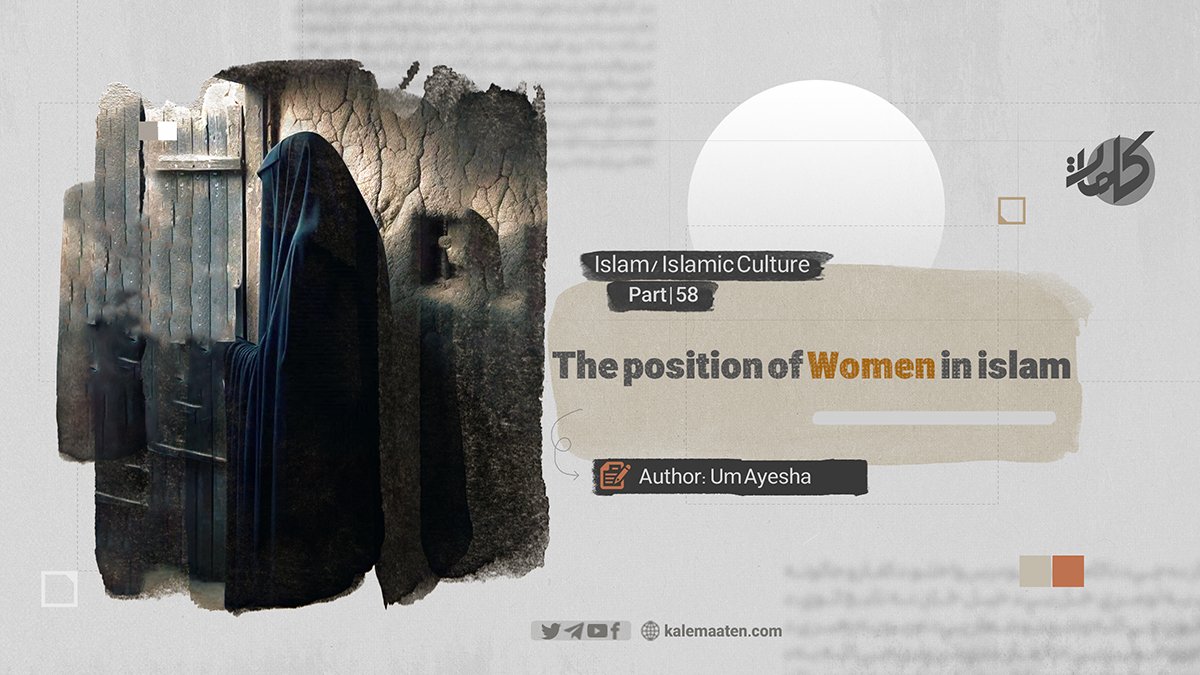
    The dignity and pride of a society depend on the existence of honorable, dignified, and modest individuals within that society, and a significant part of this demand can be addressed through the observance of the laws of hijab and Islamic attire. One of the most troubling phenomena that has become widespread in the present era—often referred to as the 21st century—among young Muslim boys and girls is corruption and promiscuity. All of these issues can be controlled to some extent by adhering to Islamic hijab and chastity. There have been many discussions regarding hijab and its importance in Islam; its value and significance are certainly not hidden from anyone. In this part of the research, we will discuss hijab.
    Definition of Hijab
    Ibn Manzoor (may Allah have mercy on him) states: “Hijab comes from the root ‘hajab,’ meaning covering and preventing one from reaching something. Since a woman’s covering prevents others from seeing her, it is referred to as hijab.”
    Hijab in Terms
    Hijab is defined as “A covering specifically for Muslim women that protects their bodies from being exposed to the eyes of strangers.”
    Philosophy of Hijab
    One of the most fundamental gifts that protect and preserve a Muslim girl, keeping her away from all moral and social corruption and various troubles, is chastity and hijab. Hijab and chastity help eradicate all evils, ugliness, and corruption that young people, adolescents, and other groups suffer from on the global stage.
    Therefore, Islamic law mandates hijab to protect human dignity and virtue and to safeguard women from harassment and abuse by indifferent and reckless individuals, ensuring that women can be safe from any potential harassment.
    Hijab is immunity, not restriction. It signifies the modesty of a young woman coupled with chastity. A person possessing chastity holds great value and status. Hijab is the safest shelter for a woman; a woman in hijab is like a gem encased in a shell. Ultimately, hijab is a source of a woman’s perfection.
    Qari Muhammad Tayeb (may Allah have mercy on him) writes: “Hijab is not an intention in itself, but a measure to protect against a deadly and very dangerous disease that is considered poison for every human being, whose adverse effects lead to the ruin and destruction of tribes and nations. This deadly disease is the one the Holy Quran interprets as prostitution, known in terminology as shamelessness, jealousy, and immodesty. Without a doubt, this disease is such that it causes the destruction and annihilation of tribes and nations.”
    Professor Akkad writes in his book Women in the Quran: “The Islamic hijab is not considered a restriction but rather prevents the individual from going astray. There is no veil in Islam that signifies captivity. Certainly, the veil serves as a barrier against immorality and nudity. The veil is the protector of sanctity, chastity, and modesty.”

    Continues…

    Related Posts

    The Reminder of Death

    24/10/2026

    Justice Among Children

    24/10/2026

    Guarding One’s Eyes

    22/10/2026
    Leave A Reply Cancel Reply

    Follow us on the social media pages
    • Facebook
    • Twitter
    • Instagram
    • Telegram
    • WhatsApp
    Don’t miss

    Imam al-A‘zam Abu Hanifa (RA): The Role Model (part 39)

    Imam al-A‘zam Abu Hanifa (RA): The Role Model (part 38)

    The Reminder of Death

    Justice Among Children

    About Us:

    The Academic and Research Organization of Kalemaat is an independent Islamic Da'wah organization affiliated with Ahl al-Sunnah wa al-Jama'ah. It is dedicated to promoting the authentic values of Islam, advancing the higher objectives of the Sharia, countering Western cultural influence, upholding the Word of Allah, and contributing to the intellectual and spiritual awakening of the Muslim Ummah.

    The Organization is supported by Muslim philanthropists and businessmen, and it welcomes the cooperation and support of Muslims worldwide in advancing its mission.

    Popular Publications

    The Importance of Security in Islam (Part 18)

    13/11/2024

    Secularism (Part 19)

    25/07/2024

    The Quran; A Miracle Beyond Time – A Study of Its Miraculous Nature (Part 8)

    23/07/2025
    Follow Us on Social Media
    • Facebook
    • Twitter
    • YouTube
    • Telegram
    • Instagram
    • WhatsApp
    All right reserved by (kalemaat)
    • Home
    • Analysis of the day
    • The greats of the Ummah
    • library

    Type above and press Enter to search. Press Esc to cancel.