Close Menu
    Facebook X (Twitter) Telegram WhatsApp
    • Language
      • دری
      • پښتو
      • العربیة
    • Home
    • Analysis
    • Islam
      • Prophet of Islam (PBUH)
      • Holy Quran
      • Muslim
      • Belief
      • Faith
      • Worships
      • Fiqh
      • Jihad
      • Islamic Perspectives
      • Islamic Economics
      • Islamic Management
      • Islamic Culture
      • Sufism
      • Crimes
      • Prohibitions
      • Muhajir Tafsir
    • Religions
      • Judaism
      • Christianity
      • Buddhism
      • Hinduism
      • Zoroastrianism
      • Satanism
      • Confucianism
      • Sikhism
    • Theories
      • Atheism
      • Secularism
      • liberalism
      • Socialism
      • Communism
      • Democracy
      • Federalism
      • Fascism
      • Capitalism
      • Marxism
      • Feminism
      • Nationalism
      • Colonialism
      • Frankfurt School
      • Freemasonry
      • Humanism
    • Fitan
      • Mu’tazila
      • Murji’ah
      • Jahmiyyah
      • The Fitna of the Khawarij
      • The Fitna of the Rawafid
      • The Fitna of Orientalism
      • Ghamdism
      • The Fitna of the Qadianis
      • Qadariyyah
      • Karramiyyah
    • Ummah
      • Sahabah (Companions of the Prophet ﷺ)
        • Hazrat Abu bakr Siddiq (RA)
        • Hazrat Umar al-Faruq (RA)
        • Hazrat Uthman ibn Affan (RA)
        • Hazrat Ali (RA)
        • Hazrat Khalid ibn al-Walid (RA)
        • Hazrat Fayruz al-Daylami (RA)
        • Hazrat Abdullah ibn al-Zubayr (RA)
      • Ummahat al-Mu’minin
      • Islamic scholars
        • Allamah Sayyid Abul Hasan Ali Nadwi (RH)
        • Imam al-Aʿzam Abu Hanifa (RH)
        • Imam al-Bukhari (RH)
        • Imam al-Tirmidhi (RH)
        • Imam al-Ghazali (RH)
        • Shah Waliullah al-Dehlawi (RH)
        • Sayyid Jamal al-Din Afghani
        • Mawlana Jalal al-Din Muhammad Balkhi Rumi (RH)
      • Muslim Rulers
        • Sultan Salahuddin Ayyubi (RH)
        • Umar ibn Abd al-Aziz (RH)
        • Sultan Yusuf ibn Tashfin (RH)
      • Muslim Scientists
    • Civilizations
      • Islamic Civilization
      • Eastern and Western Civilizations
      • Traces of History
    • Diverse
      • Ramadan Message
      • Reports
      • Light and Darkness
    • library
    • Encyclopedia of Hadith
    • Encyclopedia of the Sayings of the Scholars
    Facebook X (Twitter) Telegram WhatsApp Instagram Pinterest YouTube
    kalemaat Englishkalemaat English
    You are at:Home»Islam»The Position of Women in Islam (Part 50)
    Islam

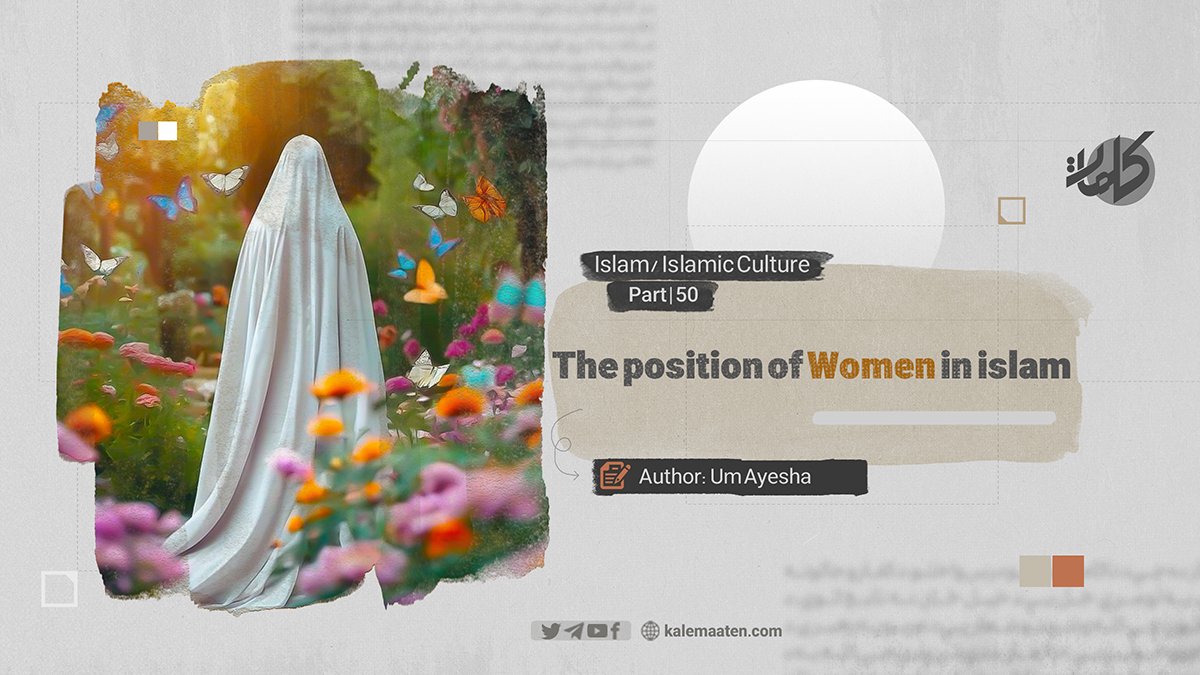
    The Position of Women in Islam (Part 50)

    By 24/12/2024No Comments4 Mins Read
    Share Facebook Twitter Telegram WhatsApp
    Share
    Facebook Twitter Telegram Email WhatsApp
    Author: Um Ayesha 
    The Position of Women in Islam (Part 50)
    In the Name of Defending Women’s Rights
    Unfortunately, today, the high values of women have been gradually trampled under the pretext of progress and advancement. Instead of being honored in society, they are insulted. Those who talk about enlightenment and progress often say: “In Islam, women are covered in veils and imprisoned within the four walls of the house. As a result, they have lagged behind the caravan of knowledge and progress.” They also argue: “If Islam considers men and women to be equal in rights, why does it judge in favor of men in some cases and under particular circumstances? Why is divorce placed in the hands of men? Why has Islam not legislated polygamy for women?” Furthermore, they ask: “Why has Islam made men the guardians of women, while every honorable human being—regardless of being male or female, white or black, subject to any country or religion—should be free? Forcing a woman to wear a hijab is a disregard for her right to freedom and an insult to her human dignity.” They have also raised objections about the dowry that Islam obliges the husband to provide at the time of marriage.
    1. Why have men been made the guardians of women?
    Men’s guardianship over women is based on a specific rule and order dictated by societal context, intended to establish and maintain family unity and social stability. The nature of men is such that they are suitable for this guardianship because they are often physically and mentally stronger than women when it comes to facing life’s challenges and accepting responsibility. As Allah Almighty states: «الرِّجَالُ قَوَّامُونَ عَلَى النِّسَاءِ بِمَا فَضَّلَ اللَّهُ بَعْضَهُمْ عَلَى بَعْضٍ وَبِمَا أَنْفَقُوا مِنْ أَمْوَالِهِمْ» Translation: “Men are the guardians of women because Allah has preferred some of them over others and because they spend out of their wealth.”
    Allamah Ibn Kasir (may Allah have mercy on him) explained this verse by saying: “The man is the leader and the ruler; if the woman deviates, the man can discipline her. This is because men are superior to women in many areas. Therefore, Allah Almighty has assigned prophethood exclusively to men, making it appropriate for them to be the guardians of women, as Allah states: «وللرجال علیهن درجة» “And men are superior to women.”
    Mufti Muhammad Taqi Usmani states: “If a person examines the creation, nature, strength, talent, and competence of men and women, and reflects rationally, he will conclude that men are better equipped to handle the responsibilities of married life. Allah Almighty has not endowed women with the strength and competence for the significant responsibilities given to men.”
    In Islam, leadership is synonymous with service. The term Allah Almighty used in the Quran is “Qawam,” as opposed to terms like “emir,” “ruler,” or “king.”
    “Qawam” refers to a person responsible for various matters, and the essence of this responsibility implies that he will generally determine the guiding principles and interests of life, shaping his life according to those principles. Qawam does not imply a male master and a female slave but rather indicates a relationship between a leader and an agent, a ruler and a subject. The Islamic concept of leadership does not equate to one who sits on a throne and exercises rule.
    The Islamic ideal of a leader is captured in the saying of the Holy Prophet (peace and blessings of Allah be upon him): “The leader of the people is the servant of the people.”
    From the perspective of the Quran and Hadith, a leader is defined as someone who serves the people; he executes the orders and decrees that hold legal validity and value, all in order to promote the welfare and benevolence of the people. As such, the people obey him voluntarily, without question.

    Continues…

    Related Posts

    The Reminder of Death

    24/10/2026

    Justice Among Children

    24/10/2026

    Guarding One’s Eyes

    22/10/2026
    Leave A Reply Cancel Reply

    Follow us on the social media pages
    • Facebook
    • Twitter
    • Instagram
    • Telegram
    • WhatsApp
    Don’t miss

    The Divine Education Model in the Family of the Prophets (Part 153)

    The Martyr of Hijab and Chastity (Part 8)

    Imam al-A‘zam Abu Hanifa (RA): The Role Model (part 46)

    Imam al-A‘zam Abu Hanifa (RA): The Role Model (part 45)

    About Us:

    The Academic and Research Organization of Kalemaat is an independent Islamic Da'wah organization affiliated with Ahl al-Sunnah wa al-Jama'ah. It is dedicated to promoting the authentic values of Islam, advancing the higher objectives of the Sharia, countering Western cultural influence, upholding the Word of Allah, and contributing to the intellectual and spiritual awakening of the Muslim Ummah.

    The Organization is supported by Muslim philanthropists and businessmen, and it welcomes the cooperation and support of Muslims worldwide in advancing its mission.

    Popular Publications

    The Importance of Security in Islam (Part 18)

    13/11/2024

    Secularism (Part 19)

    25/07/2024

    The Quran; A Miracle Beyond Time – A Study of Its Miraculous Nature (Part 8)

    23/07/2025
    Follow Us on Social Media
    • Facebook
    • Twitter
    • YouTube
    • Telegram
    • Instagram
    • WhatsApp
    All right reserved by (kalemaat)
    • Home
    • Analysis of the day
    • The greats of the Ummah
    • library

    Type above and press Enter to search. Press Esc to cancel.