Close Menu
    Facebook X (Twitter) Telegram WhatsApp
    • Language
      • دری
      • پښتو
      • العربیة
    • Home
    • Analysis
    • Islam
      • Prophet of Islam (PBUH)
      • Holy Quran
      • Muslim
      • Belief
      • Faith
      • Worships
      • Fiqh
      • Jihad
      • Islamic Perspectives
      • Islamic Economics
      • Islamic Management
      • Islamic Culture
      • Sufism
      • Crimes
      • Prohibitions
      • Sayings of the Scholars
      • Muhajir Tafsir
      • Hadith
    • Religions
      • Judaism
      • Christianity
      • Buddhism
      • Hinduism
      • Zoroastrianism
      • Satanism
      • Confucianism
      • Sikhism
    • Theories
      • Atheism
      • Secularism
      • liberalism
      • Socialism
      • Communism
      • Democracy
      • Federalism
      • Fascism
      • Capitalism
      • Marxism
      • Feminism
      • Nationalism
      • Colonialism
      • Frankfurt School
      • Freemasonry
      • Humanism
    • Fitan
      • Mu’tazila
      • Murji’ah
      • Jahmiyyah
      • The Fitna of the Khawarij
      • The Fitna of the Rawafid
      • The Fitna of Orientalism
      • Ghamdism
      • The Fitna of the Qadianis
      • Qadariyyah
      • Karramiyyah
    • Ummah
      • Sahabah (Companions of the Prophet ﷺ)
        • Hazrat Abu bakr Siddiq (RA)
        • Hazrat Umar al-Faruq (RA)
        • Hazrat Uthman ibn Affan (RA)
        • Hazrat Ali (RA)
        • Hazrat Khalid ibn al-Walid (RA)
        • Hazrat Fayruz al-Daylami (RA)
        • Hazrat Abdullah ibn al-Zubayr (RA)
      • Ummahat al-Mu’minin
      • Islamic scholars
        • Allamah Sayyid Abul Hasan Ali Nadwi (RH)
        • Imam al-Aʿzam Abu Hanifa (RH)
        • Imam al-Bukhari (RH)
        • Imam al-Tirmidhi (RH)
        • Imam al-Ghazali (RH)
        • Shah Waliullah al-Dehlawi (RH)
        • Sayyid Jamal al-Din Afghani
        • Mawlana Jalal al-Din Muhammad Balkhi Rumi (RH)
      • Muslim Rulers
        • Sultan Salahuddin Ayyubi (RH)
        • Umar ibn Abd al-Aziz (RH)
        • Sultan Yusuf ibn Tashfin (RH)
      • Muslim Scientists
    • Civilizations
      • Islamic Civilization
      • Eastern and Western Civilizations
      • Traces of History
    • Diverse
      • Ramadan Message
      • Reports
      • Light and Darkness
    • library
    Facebook X (Twitter) Telegram WhatsApp Instagram Pinterest YouTube
    kalemaat Englishkalemaat English
    You are at:Home»Theories»Atheism»The Phenomenon of Atheism and Ways to Combat It (Part 13)
    Atheism

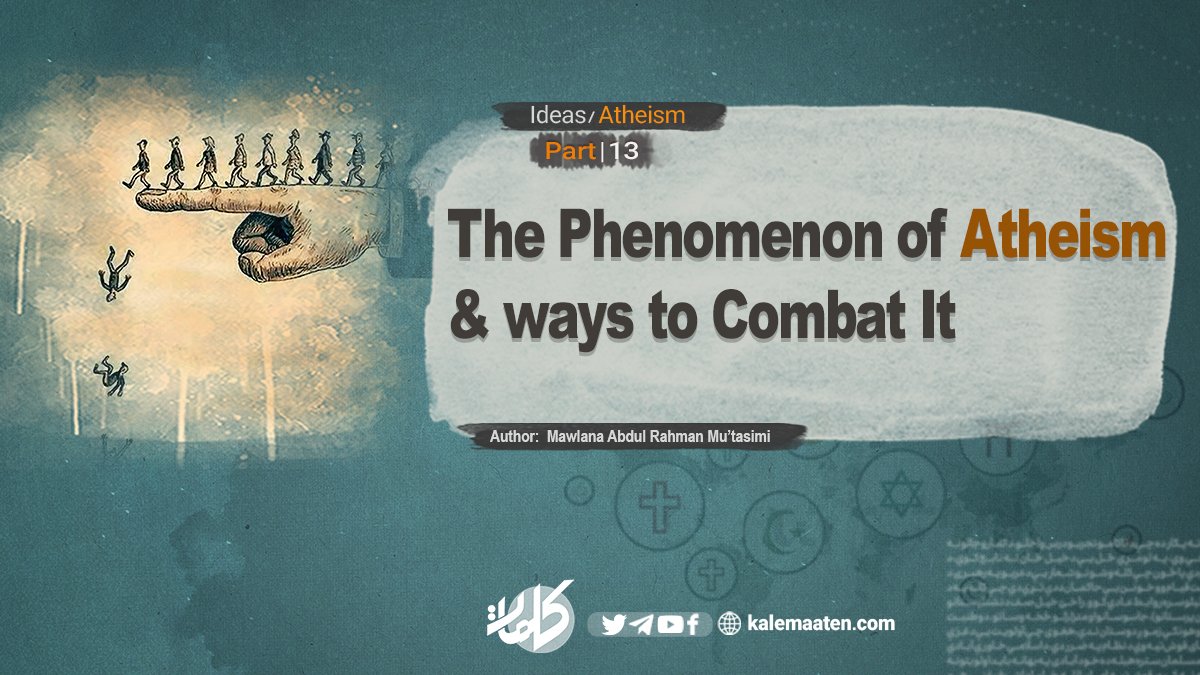
    The Phenomenon of Atheism and Ways to Combat It (Part 13)

    By 23/02/2025No Comments3 Mins Read
    Share Facebook Twitter Telegram WhatsApp
    Share
    Facebook Twitter Telegram Email WhatsApp
    Author: Mawlana Abdul Rahman Mu'tasimi
    The Phenomenon of Atheism and Ways to Combat It (Part 13)
    Third: The Role of Media in the Trend Towards Atheism
    Given the remarkable power of media in shaping thoughts, habits, and ultimately the personalities of individuals, utilizing it to control and guide society has become a competitive arena for various groups within the community. Pascuini believes that atheistic thought has effectively harnessed these media for its purposes to the extent that atheism is no longer merely a lack of belief in God; rather, it has transformed into a system of thought that suppresses all religions, beliefs, and their manifestations.
    Violence, sex, and drugs are the three corners of the triangle of atheistic media. The American Psychological Association emphasizes in its findings that individuals who watch violent television shows exhibit less sensitivity to the pain and suffering of others and are more inclined to commit violent crimes. Children exposed to violent films often display greater aggression and, in adulthood, are more likely to engage in criminal acts than those who are not.
    The pornography industry and the worship of physical beauty are among the defined roles of media, especially television. In America, an average of 15,000 sexual images are viewed each year. Fifty-six percent of television programs in the U.S. contain sexual content, displaying 150 sexual acts of unmarried couples throughout the day, while this figure is three to one for married couples. Additionally, the average family viewing time for television is estimated to be eight hours, with most of this time focusing on daily sexual incidents. The extreme promotion of beauty products conveys to consumers that if they lose their physical beauty, they will no longer hold value in society and will gradually be ostracized.
    The situation regarding the use of alcohol, cigarettes, cigars, and drugs is similar. In over 90 percent of films and 50 percent of music videos and television shows, the consumption of various alcoholic beverages and drug use is explicitly or implicitly promoted. The statistics on the use of performance-enhancing drugs and the illegal use of specific medications are sharply increasing. In many films and series, the main hero or beloved character is heavily inclined toward drinking alcohol and may even be addicted to it; however, this behavior is not only not condemned but is also portrayed as attractive and pleasurable, leading teenagers to unconsciously try to imitate and repeat such behaviors.
    In fact, this shift from God to self or self-centeredness is an atheistic idea that creates an empty self— a self without God that resorts to any means to fill its inner void. Sometimes it turns to performance-enhancing drugs, and at other times chooses opiates, ultimately leading to feelings of emptiness and meaninglessness.
    According to Pascuini, television in secular societies has become a pretentious and rude medium that exhibits hostile and insulting behavior towards believers. It behaves in a bullying manner towards religions and constantly mocks religious values. Therefore, the control of minds by secular atheists has fostered a generation that views issues such as violence, abortion, euthanasia or assisted dying, suicide assistance, and an extreme focus on the rights of homosexuals with empathy and support; however, the pain and suffering of others and religious values are often portrayed as trivial matters and even ridiculed and condemned.
    Continues…

    Related Posts

    Islam and Democracy (The 47th and Final Part)

    26/09/2026

    Islam and Democracy (Part 46)

    24/09/2026

    Islam and Democracy (Part 45)

    23/09/2026
    Leave A Reply Cancel Reply

    Follow us on the social media pages
    • Facebook
    • Twitter
    • Instagram
    • Telegram
    • WhatsApp
    Don’t miss

    Imam al-A‘zam Abu Hanifa (RA): The Role Model (part 39)

    Imam al-A‘zam Abu Hanifa (RA): The Role Model (part 38)

    The Reminder of Death

    Justice Among Children

    About Us:

    The Academic and Research Organization of Kalemaat is an independent Islamic Da'wah organization affiliated with Ahl al-Sunnah wa al-Jama'ah. It is dedicated to promoting the authentic values of Islam, advancing the higher objectives of the Sharia, countering Western cultural influence, upholding the Word of Allah, and contributing to the intellectual and spiritual awakening of the Muslim Ummah.

    The Organization is supported by Muslim philanthropists and businessmen, and it welcomes the cooperation and support of Muslims worldwide in advancing its mission.

    Popular Publications

    The Importance of Security in Islam (Part 18)

    13/11/2024

    Secularism (Part 19)

    25/07/2024

    The Quran; A Miracle Beyond Time – A Study of Its Miraculous Nature (Part 8)

    23/07/2025
    Follow Us on Social Media
    • Facebook
    • Twitter
    • YouTube
    • Telegram
    • Instagram
    • WhatsApp
    All right reserved by (kalemaat)
    • Home
    • Analysis of the day
    • The greats of the Ummah
    • library

    Type above and press Enter to search. Press Esc to cancel.
