

Close Menu
    Facebook X (Twitter) Telegram WhatsApp
    • Language
      • دری
      • پښتو
      • العربیة
    • Home
    • Analysis
    • Islam
      • Prophet of Islam (PBUH)
      • Holy Quran
      • Muslim
      • Belief
      • Faith
      • Worships
      • Fiqh
      • Jihad
      • Islamic Perspectives
      • Islamic Economics
      • Islamic Management
      • Islamic Culture
      • Sufism
      • Crimes
      • Prohibitions
      • Sayings of the Scholars
      • Muhajir Tafsir
      • Hadith
    • Religions
      • Judaism
      • Christianity
      • Buddhism
      • Hinduism
      • Zoroastrianism
      • Satanism
      • Confucianism
      • Sikhism
    • Theories
      • Atheism
      • Secularism
      • liberalism
      • Socialism
      • Communism
      • Democracy
      • Federalism
      • Fascism
      • Capitalism
      • Marxism
      • Feminism
      • Nationalism
      • Colonialism
      • Frankfurt School
      • Freemasonry
      • Humanism
    • Fitan
      • Mu’tazila
      • Murji’ah
      • Jahmiyyah
      • The Fitna of the Khawarij
      • The Fitna of the Rawafid
      • The Fitna of Orientalism
      • Ghamdism
      • The Fitna of the Qadianis
      • Qadariyyah
      • Karramiyyah
    • Ummah
      • Sahabah (Companions of the Prophet ﷺ)
        • Hazrat Abu bakr Siddiq (RA)
        • Hazrat Umar al-Faruq (RA)
        • Hazrat Uthman ibn Affan (RA)
        • Hazrat Ali (RA)
        • Hazrat Khalid ibn al-Walid (RA)
        • Hazrat Fayruz al-Daylami (RA)
        • Hazrat Abdullah ibn al-Zubayr (RA)
      • Ummahat al-Mu’minin
      • Islamic scholars
        • Allamah Sayyid Abul Hasan Ali Nadwi (RH)
        • Imam al-Aʿzam Abu Hanifa (RH)
        • Imam al-Bukhari (RH)
        • Imam al-Tirmidhi (RH)
        • Imam al-Ghazali (RH)
        • Shah Waliullah al-Dehlawi (RH)
        • Sayyid Jamal al-Din Afghani
        • Mawlana Jalal al-Din Muhammad Balkhi Rumi (RH)
      • Muslim Rulers
        • Sultan Salahuddin Ayyubi (RH)
        • Umar ibn Abd al-Aziz (RH)
        • Sultan Yusuf ibn Tashfin (RH)
      • Muslim Scientists
    • Civilizations
      • Islamic Civilization
      • Eastern and Western Civilizations
      • Traces of History
    • Diverse
      • Ramadan Message
      • Reports
      • Light and Darkness
    • library
    Facebook X (Twitter) Telegram WhatsApp Instagram Pinterest YouTube
    kalemaat Englishkalemaat English
    You are at:Home»Diverse»Telephone Etiquette (Part Three)
    Diverse

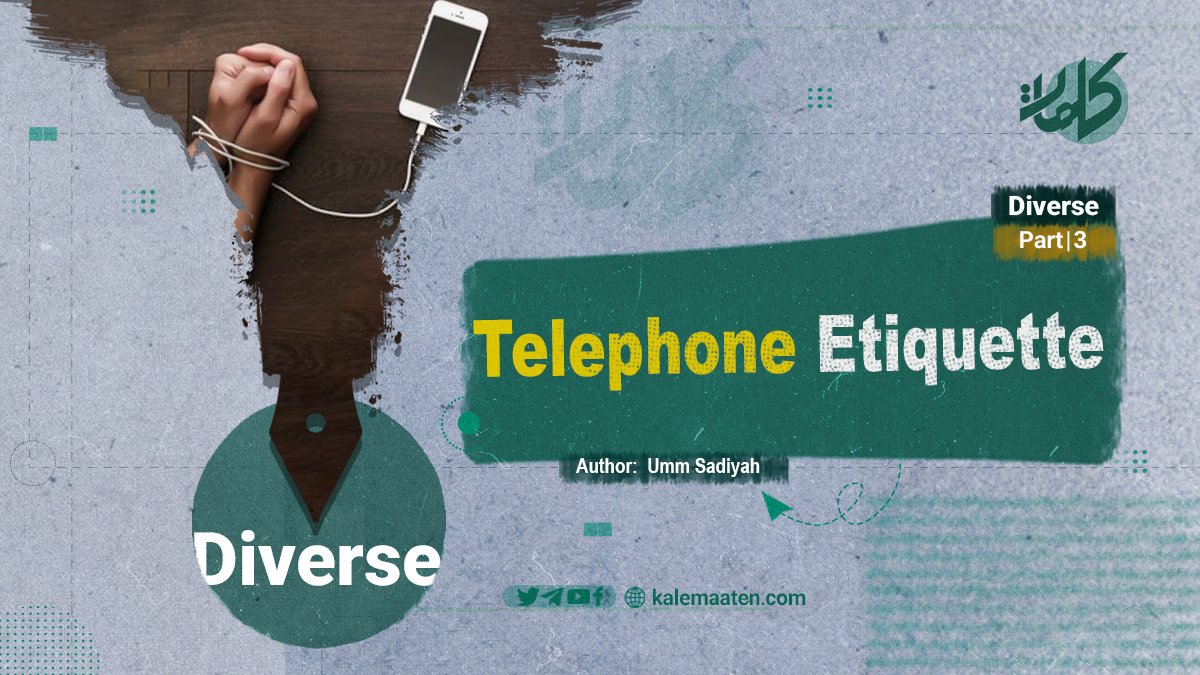
    Telephone Etiquette (Part Three)

    By 12/02/2025No Comments3 Mins Read
    Share Facebook Twitter Telegram WhatsApp
    Share
    Facebook Twitter Telegram Email WhatsApp
    Author: Umm Sadiyah
    Telephone Etiquette (Part Three)
    Seventh Etiquette: Avoiding Unnecessarily Occupying Public Telephones for Long Periods
    Some people use public telephone booths or payphones. When phone lines are busy, someone might attempt to make a call and end up occupying the line unnecessarily while others are waiting to use it. This can cause significant inconvenience and problems. The delay may lead to frustration, disputes, and arguments with others. It is better for a person, after several unsuccessful attempts to make a call, to leave the booth and allow others to use it, then try again later.
    Additionally, individuals who engage in long conversations about trivial matters while others are waiting for important calls may negatively impact public welfare or cause unnecessary difficulties. Therefore, public phones should not be occupied for unimportant matters unless one is sure that no one else needs to use them. If a person realizes that someone is waiting, they should end their conversation and let the other person use the phone. This behavior reflects the good character of a Muslim, who should not be selfish, harm others’ interests, or cause anyone distress.
    Eighth Etiquette: The Caller Should End the Conversation
    Once the purpose of the conversation has been fulfilled, the caller should be the one to end the conversation with words that indicate its conclusion, such as a farewell. This is because the caller is like a visitor or someone knocking on a door; he is the one requesting to communicate. Just as it would be inappropriate for the host to dismiss a guest abruptly, it is also improper for the receiver of the call to terminate the conversation first. Therefore, it is preferable for the caller to end the conversation, as this essentially serves as seeking permission from the receiver to conclude the call. In this way, the caller will not feel uncomfortable about the conversation being ended by the other party.
    Ninth etiquette: gently placing the phone down after the conversation ends:
    When the caller has finished the telephone conversation and wishes to hang up, they should place the phone down gently after saying goodbye, ensuring the other person understands that the conversation has ended. The phone should not be put down harshly, as this might make the other person think that something has gone wrong or that the caller is angry. A Muslim should always strive to avoid any words or actions that could lead to discord or misunderstanding between them and their fellow Muslims. Allah the Almighty says: «وَقُلْ لِعِبَادِي يَقُولُوا الَّتِي هِيَ أَحْسَنُ إِنَّ الشَّيْطَانَ يَنْزَغُ بَيْنَهُمْ إِنَّ الشَّيْطَانَ كَانَ لِلْإِنْسَانِ عَدُوًّا مُبِينًا»؛ Translation: “And tell My servants to speak in the best manner, for indeed, Satan sows discord among them. Surely, Satan is a clear enemy to mankind.” [Surah Al-Isra, Ayah 53]
    This verse emphasizes the importance of using kind and pleasant words, leaving no room for Satan to create division and enmity among people.
    Continues…

    [1] – Surah Al-Isra, verse 53.

    Related Posts

    The Divine Education Model in the Family of the Prophets (Part 144)

    19/10/2026

    The Divine Education Model in the Family of the Prophets (Part 143)

    18/10/2026

    The Divine Education Model in the Family of the Prophets (Part 142)

    17/10/2026
    Leave A Reply Cancel Reply

    Follow us on the social media pages
    • Facebook
    • Twitter
    • Instagram
    • Telegram
    • WhatsApp
    Don’t miss

    Imam al-A‘zam Abu Hanifa (RA): The Role Model (part 36)

    Loyalty to One’s Teacher

    The Divine Education Model in the Family of the Prophets (Part 144)

    Who Is a Sufi?

    About Us:

    The Academic and Research Organization of Kalemaat is an independent Islamic Da'wah organization affiliated with Ahl al-Sunnah wa al-Jama'ah. It is dedicated to promoting the authentic values of Islam, advancing the higher objectives of the Sharia, countering Western cultural influence, upholding the Word of Allah, and contributing to the intellectual and spiritual awakening of the Muslim Ummah.

    The Organization is supported by Muslim philanthropists and businessmen, and it welcomes the cooperation and support of Muslims worldwide in advancing its mission.

    Famous publications

    Imam al-A‘zam Abu Hanifa (RA): The Role Model (part 36)

    20/10/2026

    Loyalty to One’s Teacher

    20/10/2026
    Follow us on social medias
    • Facebook
    • Twitter
    • YouTube
    • Telegram
    • Instagram
    • WhatsApp
    All right reserved by (kalemaat)
    • Home
    • Analysis of the day
    • The greats of the Ummah
    • library

    Type above and press Enter to search. Press Esc to cancel.