Close Menu
    Facebook X (Twitter) Telegram WhatsApp
    • Language
      • دری
      • پښتو
      • العربیة
    • Home
    • Analysis
    • Islam
      • Prophet of Islam (PBUH)
      • Holy Quran
      • Muslim
      • Belief
      • Faith
      • Worships
      • Fiqh
      • Jihad
      • Islamic Perspectives
      • Islamic Economics
      • Islamic Management
      • Islamic Culture
      • Sufism
      • Crimes
      • Prohibitions
      • Sayings of the Scholars
      • Muhajir Tafsir
      • Hadith
    • Religions
      • Judaism
      • Christianity
      • Buddhism
      • Hinduism
      • Zoroastrianism
      • Satanism
      • Confucianism
      • Sikhism
    • Theories
      • Atheism
      • Secularism
      • liberalism
      • Socialism
      • Communism
      • Democracy
      • Federalism
      • Fascism
      • Capitalism
      • Marxism
      • Feminism
      • Nationalism
      • Colonialism
      • Frankfurt School
      • Freemasonry
      • Humanism
    • Fitan
      • Mu’tazila
      • Murji’ah
      • Jahmiyyah
      • The Fitna of the Khawarij
      • The Fitna of the Rawafid
      • The Fitna of Orientalism
      • Ghamdism
      • The Fitna of the Qadianis
      • Qadariyyah
      • Karramiyyah
    • Ummah
      • Sahabah (Companions of the Prophet ﷺ)
        • Hazrat Abu bakr Siddiq (RA)
        • Hazrat Umar al-Faruq (RA)
        • Hazrat Uthman ibn Affan (RA)
        • Hazrat Ali (RA)
        • Hazrat Khalid ibn al-Walid (RA)
        • Hazrat Fayruz al-Daylami (RA)
        • Hazrat Abdullah ibn al-Zubayr (RA)
      • Ummahat al-Mu’minin
      • Islamic scholars
        • Allamah Sayyid Abul Hasan Ali Nadwi (RH)
        • Imam al-Aʿzam Abu Hanifa (RH)
        • Imam al-Bukhari (RH)
        • Imam al-Tirmidhi (RH)
        • Imam al-Ghazali (RH)
        • Shah Waliullah al-Dehlawi (RH)
        • Sayyid Jamal al-Din Afghani
        • Mawlana Jalal al-Din Muhammad Balkhi Rumi (RH)
      • Muslim Rulers
        • Sultan Salahuddin Ayyubi (RH)
        • Umar ibn Abd al-Aziz (RH)
        • Sultan Yusuf ibn Tashfin (RH)
      • Muslim Scientists
    • Civilizations
      • Islamic Civilization
      • Eastern and Western Civilizations
      • Traces of History
    • Diverse
      • Ramadan Message
      • Reports
      • Light and Darkness
    • library
    Facebook X (Twitter) Telegram WhatsApp Instagram Pinterest YouTube
    kalemaat Englishkalemaat English
    You are at:Home»Diverse»Responsibility and Duty Awareness in Islam (Part Five)
    Diverse

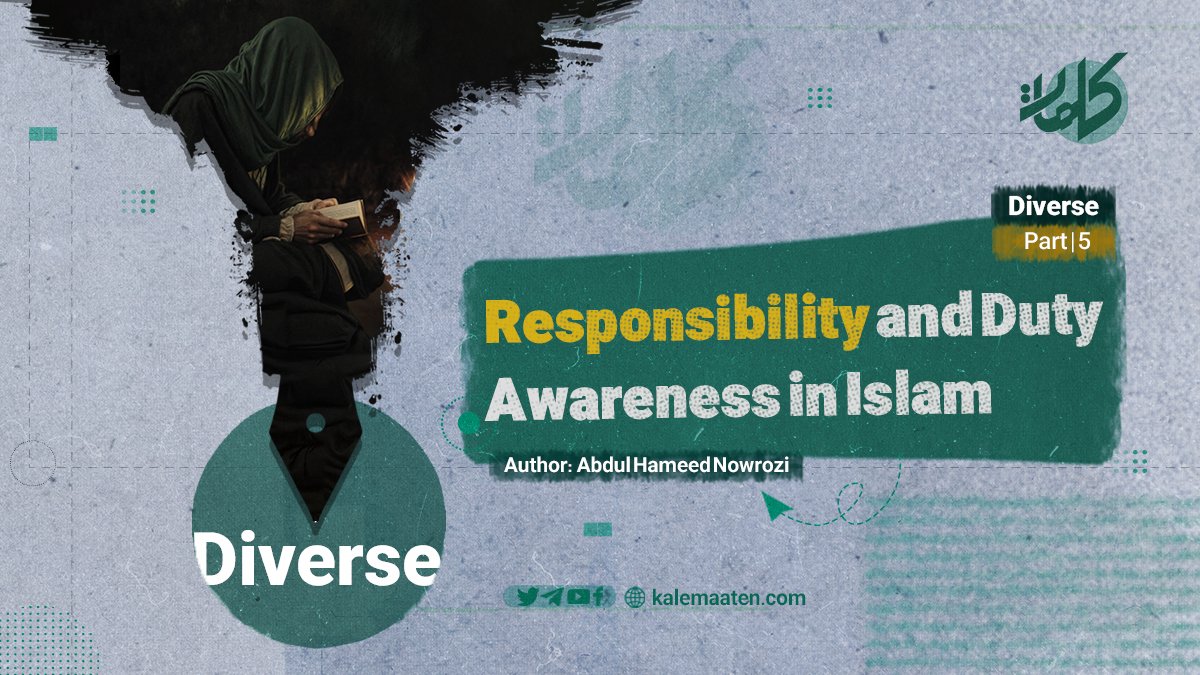
    Responsibility and Duty Awareness in Islam (Part Five)

    By 17/12/2024No Comments4 Mins Read
    Share Facebook Twitter Telegram WhatsApp
    Share
    Facebook Twitter Telegram Email WhatsApp
    Author: Abdul Hameed Nowrozi
    Responsibility and Duty Awareness in Islam (Part Five)
    A Woman’s Responsibility in Her Husband’s House
    We will briefly explain a woman’s responsibilities in the household as follows:
    First: The primary responsibility of a woman is to remain at home, which enables her to better fulfill her duties, such as raising children, managing household chores, and caring for her husband. Her presence at home not only allows her to perform these essential tasks but also provides her with dignity, honor, and significance. This does not imply that a woman is imprisoned within four walls; she is permitted to leave her home for essential activities such as performing the five daily prayers in congregation, attending Eid and Istisqa prayers, visiting relatives, caring for the sick, and shopping for necessities. However, the guiding principle remains that a woman should primarily stay at home.
    Second: A woman must respect her husband’s rights. When her husband calls her to bed, she should respond willingly, strive to make their home a center of love and joy, and refrain from using her words to make her husband feel inadequate. She should follow his commands as long as they do not involve disobedience to Allah. The Messenger of Allah (peace and blessings be upon him) said: “If a woman prays her five daily prayers, observes her fasts in Ramadan, guards her private parts, and obeys her husband, it will be said to her, ‘Enter Paradise from any of its gates you wish.’”
    Third: A woman has the responsibility of raising her children in the best possible manner. Raising children is a significant task that only a mother can fulfill appropriately. Allah (s.w.t) has endowed mothers with compassion, kindness, the ability to respond to their children’s needs, patience in the face of challenges, and the strength to endure the difficulties of parenting. Anyone who claims otherwise goes against nature.
    Fourth: A woman must safeguard her husband’s property and use it judiciously, ensuring that it is spent only on household needs, such as food and clothing for herself, her children, and her husband. She should avoid being extravagant or stingy with resources, as she will be accountable before Allah for her actions—even for seemingly minor waste, such as a cup of tea or a spoonful of sugar.
    Fifth: A woman does not have the right to invite anyone into her home without her husband’s permission, whether the guest is a relative or a stranger.
    Sixth: She must protect her chastity and dignity in her husband’s absence and avoid actions that expose her to suspicion or doubt.
    Seventh: A woman should not leave the house without first obtaining permission from her husband.
    Eighth: When leaving the house, she must adhere to the Islamic hijab, as there is honor and dignity in a woman’s modest attire. She should avoid mingling with unrelated men and any situations that could lead to disrepute or compromise her character.
    Ninth: A woman is also responsible for her servants. She must ensure their rights are met, including adequate food, clothing, rest, and overall well-being. Failure to fulfill these duties may lead to accountability on the Day of Judgment. Both men and women share responsibility in this regard, complementing each other’s roles.
    Tenth: Women are responsible for maintaining appropriate boundaries in their interactions with drivers, maids, and other household workers. They must protect their dignity and that of their children, recognizing that men also hold responsibility in this area.
    A concerning modern trend is that some women and girls mistakenly consider their domestic helpers or drivers as family members, which can lead to neglect of boundaries. The Prophet Muhammad (peace and blessings be upon him) advised: “None of you should be alone with a woman, for the devil is the third among them.”
    For this reason, women and girls should avoid such situations and also educate young boys and girls about maintaining appropriate boundaries. Negligence and irresponsibility in this area have regrettably led to incidents where innocent children have fallen victim to harmful situations.
    Continues…

    Related Posts

    The Divine Education Model in the Family of the Prophets (Part 144)

    19/10/2026

    The Divine Education Model in the Family of the Prophets (Part 143)

    18/10/2026

    The Divine Education Model in the Family of the Prophets (Part 142)

    17/10/2026
    Leave A Reply Cancel Reply

    Follow us on the social media pages
    • Facebook
    • Twitter
    • Instagram
    • Telegram
    • WhatsApp
    Don’t miss

    Imam al-A‘zam Abu Hanifa (RA): The Role Model (part 36)

    Loyalty to One’s Teacher

    The Divine Education Model in the Family of the Prophets (Part 144)

    Who Is a Sufi?

    About Us:

    The Academic and Research Organization of Kalemaat is an independent Islamic Da'wah organization affiliated with Ahl al-Sunnah wa al-Jama'ah. It is dedicated to promoting the authentic values of Islam, advancing the higher objectives of the Sharia, countering Western cultural influence, upholding the Word of Allah, and contributing to the intellectual and spiritual awakening of the Muslim Ummah.

    The Organization is supported by Muslim philanthropists and businessmen, and it welcomes the cooperation and support of Muslims worldwide in advancing its mission.

    Famous publications

    Imam al-A‘zam Abu Hanifa (RA): The Role Model (part 36)

    20/10/2026

    Loyalty to One’s Teacher

    20/10/2026
    Follow us on social medias
    • Facebook
    • Twitter
    • YouTube
    • Telegram
    • Instagram
    • WhatsApp
    All right reserved by (kalemaat)
    • Home
    • Analysis of the day
    • The greats of the Ummah
    • library

    Type above and press Enter to search. Press Esc to cancel.
