Close Menu
    Facebook X (Twitter) Telegram WhatsApp
    • Language
      • دری
      • پښتو
      • العربیة
    • Home
    • Analysis
    • Islam
      • Prophet of Islam (PBUH)
      • Holy Quran
      • Muslim
      • Belief
      • Faith
      • Worships
      • Fiqh
      • Jihad
      • Islamic Perspectives
      • Islamic Economics
      • Islamic Management
      • Islamic Culture
      • Sufism
      • Crimes
      • Prohibitions
      • Sayings of the Scholars
      • Muhajir Tafsir
      • Hadith
    • Religions
      • Judaism
      • Christianity
      • Buddhism
      • Hinduism
      • Zoroastrianism
      • Satanism
      • Confucianism
      • Sikhism
    • Theories
      • Atheism
      • Secularism
      • liberalism
      • Socialism
      • Communism
      • Democracy
      • Federalism
      • Fascism
      • Capitalism
      • Marxism
      • Feminism
      • Nationalism
      • Colonialism
      • Frankfurt School
      • Freemasonry
      • Humanism
    • Fitan
      • Mu’tazila
      • Murji’ah
      • Jahmiyyah
      • The Fitna of the Khawarij
      • The Fitna of the Rawafid
      • The Fitna of Orientalism
      • Ghamdism
      • The Fitna of the Qadianis
      • Qadariyyah
      • Karramiyyah
    • Ummah
      • Sahabah (Companions of the Prophet ﷺ)
        • Hazrat Abu bakr Siddiq (RA)
        • Hazrat Umar al-Faruq (RA)
        • Hazrat Uthman ibn Affan (RA)
        • Hazrat Ali (RA)
        • Hazrat Khalid ibn al-Walid (RA)
        • Hazrat Fayruz al-Daylami (RA)
        • Hazrat Abdullah ibn al-Zubayr (RA)
      • Ummahat al-Mu’minin
      • Islamic scholars
        • Allamah Sayyid Abul Hasan Ali Nadwi (RH)
        • Imam al-Aʿzam Abu Hanifa (RH)
        • Imam al-Bukhari (RH)
        • Imam al-Tirmidhi (RH)
        • Imam al-Ghazali (RH)
        • Shah Waliullah al-Dehlawi (RH)
        • Sayyid Jamal al-Din Afghani
        • Mawlana Jalal al-Din Muhammad Balkhi Rumi (RH)
      • Muslim Rulers
        • Sultan Salahuddin Ayyubi (RH)
        • Umar ibn Abd al-Aziz (RH)
        • Sultan Yusuf ibn Tashfin (RH)
      • Muslim Scientists
    • Civilizations
      • Islamic Civilization
      • Eastern and Western Civilizations
      • Traces of History
    • Diverse
      • Ramadan Message
      • Reports
      • Light and Darkness
    • library
    Facebook X (Twitter) Telegram WhatsApp Instagram Pinterest YouTube
    kalemaat Englishkalemaat English
    You are at:Home»Diverse»How Should I Raise My Child? (Part Three)
    Diverse

    How Should I Raise My Child? (Part Three)

    By 11/11/2024No Comments3 Mins Read
    Share Facebook Twitter Telegram WhatsApp
    Share
    Facebook Twitter Telegram Email WhatsApp
    Author: Abdul Hameed Nowrozi
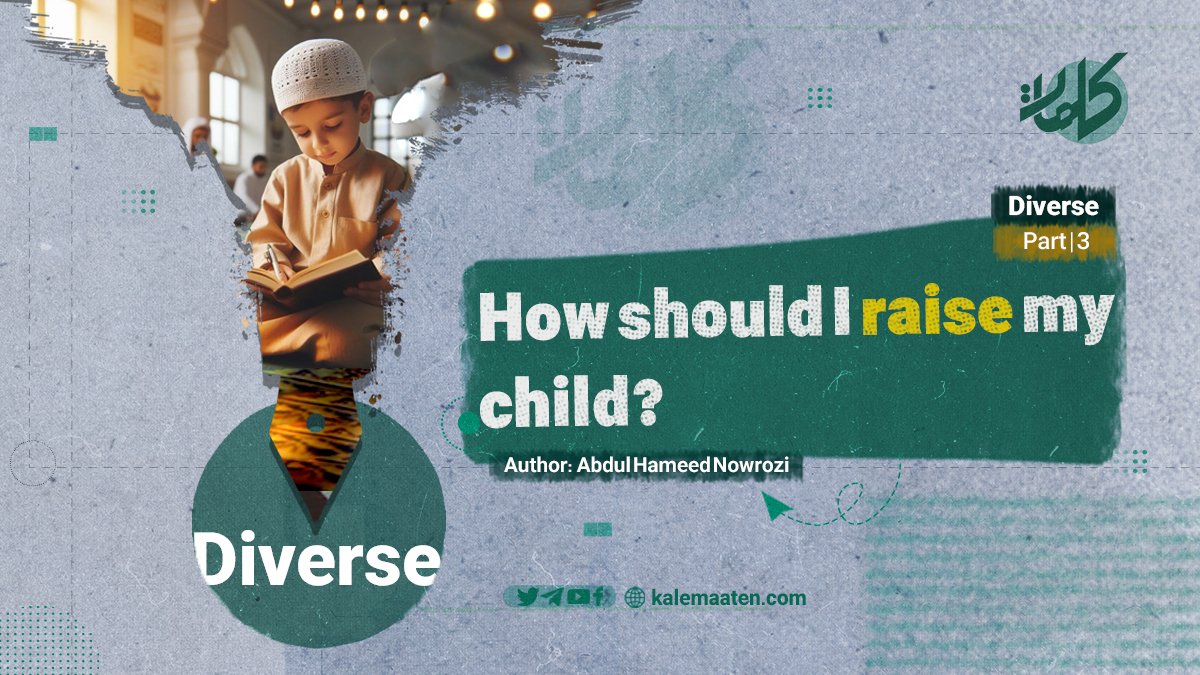
    How Should I Raise My Child? (Part Three)
    Primary Education of Children
    Some of our elders believe that it is not right to put the burden of education on children before the age of seven. Before this age, their upbringing and education should be addressed while they are playing and having fun; however, it is not appropriate to formally educate and train them before this age.
    Today, one of the misconceptions that has spread like a plague in society is that when a child turns three, they must start focusing on lessons and homework, which is fundamentally wrong. The right approach is to teach three-year-old child basic concepts, such as the words of monotheism and some teachings of Islam; however, it is not advisable to send them to kindergarten as compulsory students.
    Paying Attention to Children in the First Six Years of Life
    The first stage of a child’s life, specifically the first six years, is one of the most important and critical periods; during this time, the child’s structure and personality are significantly influenced. What takes root in the child’s mind at this age will have a lasting impact on their growth and development, often evident when they reach adulthood. Parents and educators should pay special attention and care to their children during this period and observe the following points:
    1. Love for the Child from the Parents, Especially the mother
    It is imperative that the child learns to love others. If they do not feel such love, a selfish child may emerge, becoming unloving and indifferent to others. A Muslim mother must understand her child’s needs and ensure nothing prevents her from showing love and affection and taking good care of her child; if she fails in this matter, she may jeopardize the child’s overall well-being and lead them toward corruption. The love and affection that Allah, in His wisdom and mercy, has placed in a mother’s heart should meet the needs of her child. Therefore, the mother must be diligent and sensitive about this responsibility; nothing—whether work outside the home or disputes with her husband—should hinder her from fulfilling this duty.
    2. Getting the Child Used to Discipline, especially in the Early Months of Life
    This task should not be seen as difficult or impossible, as it has been proven feasible to teach children to breastfeed or defecate at specific times. This helps the child’s body become accustomed to discipline and regularity. Such practices will grow alongside the child until they develop the strength to manage their needs and desires in the future.
    3. Parents Should Be Good Role Models for Their Children
    Parents must commit to the Islamic method in all their affairs, especially in interactions with their children, observing Islamic manners completely and avoiding mistakes in front of the child. Parents should not underestimate the child’s ability to notice and understand their surroundings; these experiences significantly influence the child’s psyche. The child’s capacity for observation and absorption is often much greater than what we typically acknowledge.
    While it is true that the child may not comprehend everything they see, they are nonetheless affected by it. The baby possesses two very sensitive systems: 1. The receiving and collecting system; 2. The expressing and communicating system. Babies receive and collect information, often imitating everything they see or hear around them, regardless of their full understanding or awareness.
    Continues…

    Related Posts

    The Divine Education Model in the Family of the Prophets (Part 144)

    19/10/2026

    The Divine Education Model in the Family of the Prophets (Part 143)

    18/10/2026

    The Divine Education Model in the Family of the Prophets (Part 142)

    17/10/2026
    Leave A Reply Cancel Reply

    Follow us on the social media pages
    • Facebook
    • Twitter
    • Instagram
    • Telegram
    • WhatsApp
    Don’t miss

    The Reality of Repentance

    Increase in Lifespan

    Imam al-A‘zam Abu Hanifa (RA): The Role Model (part 36)

    Loyalty to One’s Teacher

    About Us:

    The Academic and Research Organization of Kalemaat is an independent Islamic Da'wah organization affiliated with Ahl al-Sunnah wa al-Jama'ah. It is dedicated to promoting the authentic values of Islam, advancing the higher objectives of the Sharia, countering Western cultural influence, upholding the Word of Allah, and contributing to the intellectual and spiritual awakening of the Muslim Ummah.

    The Organization is supported by Muslim philanthropists and businessmen, and it welcomes the cooperation and support of Muslims worldwide in advancing its mission.

    Famous publications

    The Reality of Repentance

    21/10/2026

    Increase in Lifespan

    21/10/2026
    Follow us on social medias
    • Facebook
    • Twitter
    • YouTube
    • Telegram
    • Instagram
    • WhatsApp
    All right reserved by (kalemaat)
    • Home
    • Analysis of the day
    • The greats of the Ummah
    • library

    Type above and press Enter to search. Press Esc to cancel.
