Close Menu
    Facebook X (Twitter) Telegram WhatsApp
    • Language
      • دری
      • پښتو
      • العربیة
    • Home
    • Analysis
    • Islam
      • Prophet of Islam (PBUH)
      • Holy Quran
      • Muslim
      • Belief
      • Faith
      • Worships
      • Fiqh
      • Jihad
      • Islamic Perspectives
      • Islamic Economics
      • Islamic Management
      • Islamic Culture
      • Sufism
      • Crimes
      • Prohibitions
      • Sayings of the Scholars
      • Muhajir Tafsir
      • Hadith
    • Religions
      • Judaism
      • Christianity
      • Buddhism
      • Hinduism
      • Zoroastrianism
      • Satanism
      • Confucianism
      • Sikhism
    • Theories
      • Atheism
      • Secularism
      • liberalism
      • Socialism
      • Communism
      • Democracy
      • Federalism
      • Fascism
      • Capitalism
      • Marxism
      • Feminism
      • Nationalism
      • Colonialism
      • Frankfurt School
      • Freemasonry
      • Humanism
    • Fitan
      • Mu’tazila
      • Murji’ah
      • Jahmiyyah
      • The Fitna of the Khawarij
      • The Fitna of the Rawafid
      • The Fitna of Orientalism
      • Ghamdism
      • The Fitna of the Qadianis
      • Qadariyyah
      • Karramiyyah
    • Ummah
      • Sahabah (Companions of the Prophet ﷺ)
        • Hazrat Abu bakr Siddiq (RA)
        • Hazrat Umar al-Faruq (RA)
        • Hazrat Uthman ibn Affan (RA)
        • Hazrat Ali (RA)
        • Hazrat Khalid ibn al-Walid (RA)
        • Hazrat Fayruz al-Daylami (RA)
        • Hazrat Abdullah ibn al-Zubayr (RA)
      • Ummahat al-Mu’minin
      • Islamic scholars
        • Allamah Sayyid Abul Hasan Ali Nadwi (RH)
        • Imam al-Aʿzam Abu Hanifa (RH)
        • Imam al-Bukhari (RH)
        • Imam al-Tirmidhi (RH)
        • Imam al-Ghazali (RH)
        • Shah Waliullah al-Dehlawi (RH)
        • Sayyid Jamal al-Din Afghani
        • Mawlana Jalal al-Din Muhammad Balkhi Rumi (RH)
      • Muslim Rulers
        • Sultan Salahuddin Ayyubi (RH)
        • Umar ibn Abd al-Aziz (RH)
        • Sultan Yusuf ibn Tashfin (RH)
      • Muslim Scientists
    • Civilizations
      • Islamic Civilization
      • Eastern and Western Civilizations
      • Traces of History
    • Diverse
      • Ramadan Message
      • Reports
      • Light and Darkness
    • library
    Facebook X (Twitter) Telegram WhatsApp Instagram Pinterest YouTube
    kalemaat Englishkalemaat English
    You are at:Home»Diverse»How Should I raise my child? (Part Four)
    Diverse

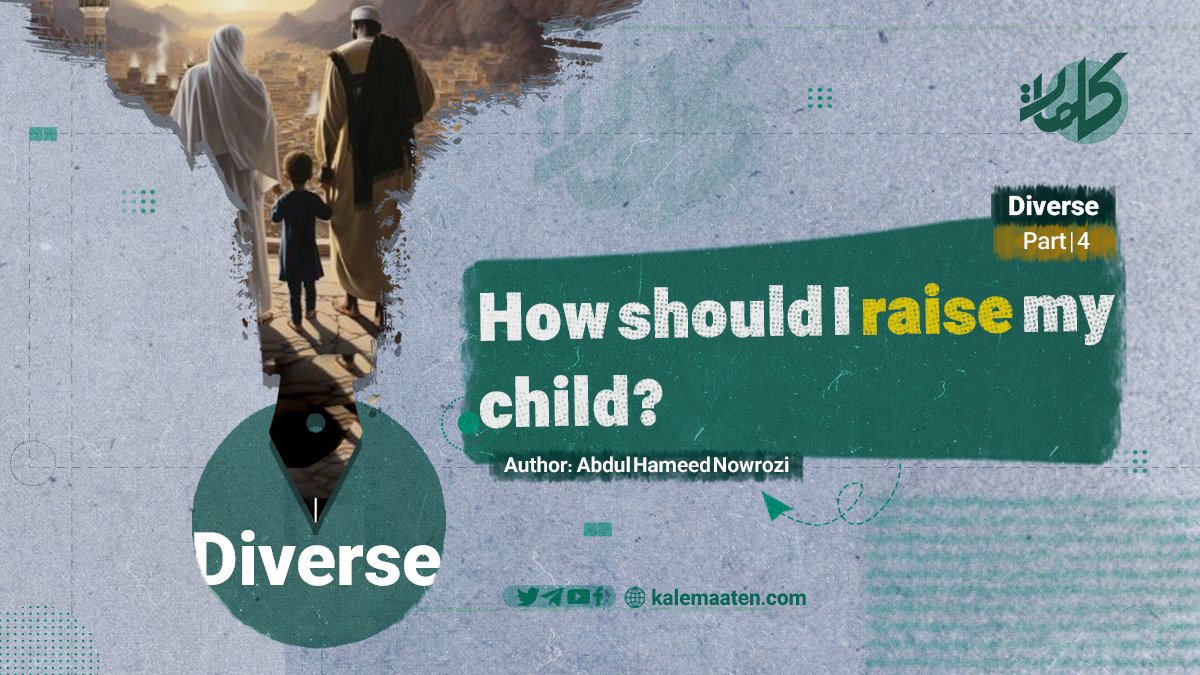
    How Should I raise my child? (Part Four)

    By 18/11/2024No Comments4 Mins Read
    Share Facebook Twitter Telegram WhatsApp
    Share
    Facebook Twitter Telegram Email WhatsApp
    Author: Abdul Hameed Nowrozi
    How Should I raise my child? (Part Four)
    Attention to Children After the Age of Six
    At this stage, a child’s ability to learn systematically improves significantly. They are more receptive to reasoning and explanations and bond better with peers through play. In summary, their comprehension and skill-learning abilities increase, making it possible to guide them more directly. This period is one of the most important stages for teaching and nurturing children. Here, we will outline key aspects that educators should pay special attention to during this phase:
    Teaching a Simple Understanding of God to Children
    Introduce God to the child in a manner that aligns with their understanding, intellect, and mental capacity. It is enough for the child to know that God is One, Unique, and the Creator of the heavens, the earth, humans, animals, trees, streams, and everything else. Educators should seize opportunities to ask questions that spark awareness of God’s greatness. For instance, during a trip to a garden or a natural setting, they might ask, “Who created the water, rivers, trees, earth, and other things?” This helps the child recognize God’s magnificence and understand His power.
    Teach them love and gratitude toward God by pointing out the blessings He has bestowed upon them, such as their hearing, sight, intellect, ability to move, and provisions for them and their family. Encourage them to appreciate these blessings and express thankfulness.
    Teaching Clear Rules of Halal and Haram
    Children should learn about modesty, performing ablution, rules of cleanliness, and how to perform prayers. They should also be taught to avoid prohibited acts such as lying, gossiping, and looking at inappropriate things.
    In essence, children should be guided to follow the same commands and prohibitions required of adults so they become accustomed to these practices. Efforts should also be made to impart knowledge, as Sufyan Thawri (may Allah have mercy on him) said: “It is obligatory for a man to compel his child to seek knowledge because he is responsible for this and will be questioned about it on the Day of Judgment.”
    Teaching the Recitation of the Holy Quran
    The Quran is the only unchanging and firmly established guide that is protected from any falsehood. Teaching children the proper recitation of the Quran and encouraging them to memorize it, or at least large portions of it, brings immense blessings.
    Parents should strive to enroll their child in Quran memorization schools or programs. If this is not possible, they should encourage participation in short-term Quran memorization circles. Learning the Quran guides children to the straight path and brings abundant rewards for their parents.
    The Prophet (peace be upon him) said: “Whoever says ‘Subhan Allah al-Azim,’ a tree is planted for them in Paradise. Whoever recites the Quran, completes it, and acts upon it, their parents will be adorned with a crown of light on the Day of Judgment. Its brightness will surpass the brightness of the sun in worldly homes. What then do you think of the person who acts upon it?”
    The pious predecessors paid special attention to teaching and encouraging their children to memorize the Quran. One example is Sheikh Yasin bin Yusuf al-Maghribi, who said about Imam Nawawi (may Allah have mercy on him): “I saw him in Nawa when he was 10 years old. The other children criticized him for not playing with them, but he would flee from them, crying, and reciting the Quran. Even though his father had placed him in a shop to sell goods, this did not stop him from reciting the Quran. I took him to his teacher and recommended him, saying, ‘I hope he will become the most knowledgeable and pious man of his time, benefiting others.’ His teacher asked if I was an astrologer. I said, ‘No, but God inspired me to say this.’ He completed the Quran before reaching puberty.”
    Continues…

    Related Posts

    The Divine Education Model in the Family of the Prophets (Part 144)

    19/10/2026

    The Divine Education Model in the Family of the Prophets (Part 143)

    18/10/2026

    The Divine Education Model in the Family of the Prophets (Part 142)

    17/10/2026
    Leave A Reply Cancel Reply

    Follow us on the social media pages
    • Facebook
    • Twitter
    • Instagram
    • Telegram
    • WhatsApp
    Don’t miss

    The Reality of Repentance

    Increase in Lifespan

    Imam al-A‘zam Abu Hanifa (RA): The Role Model (part 36)

    Loyalty to One’s Teacher

    About Us:

    The Academic and Research Organization of Kalemaat is an independent Islamic Da'wah organization affiliated with Ahl al-Sunnah wa al-Jama'ah. It is dedicated to promoting the authentic values of Islam, advancing the higher objectives of the Sharia, countering Western cultural influence, upholding the Word of Allah, and contributing to the intellectual and spiritual awakening of the Muslim Ummah.

    The Organization is supported by Muslim philanthropists and businessmen, and it welcomes the cooperation and support of Muslims worldwide in advancing its mission.

    Famous publications

    The Reality of Repentance

    21/10/2026

    Increase in Lifespan

    21/10/2026
    Follow us on social medias
    • Facebook
    • Twitter
    • YouTube
    • Telegram
    • Instagram
    • WhatsApp
    All right reserved by (kalemaat)
    • Home
    • Analysis of the day
    • The greats of the Ummah
    • library

    Type above and press Enter to search. Press Esc to cancel.
