Close Menu
    Facebook X (Twitter) Telegram WhatsApp
    • Language
      • دری
      • پښتو
      • العربیة
    • Home
    • Analysis
    • Islam
      • Prophet of Islam (PBUH)
      • Holy Quran
      • Muslim
      • Belief
      • Faith
      • Worships
      • Fiqh
      • Jihad
      • Islamic Perspectives
      • Islamic Economics
      • Islamic Management
      • Islamic Culture
      • Sufism
      • Crimes
      • Prohibitions
      • Sayings of the Scholars
      • Muhajir Tafsir
      • Hadith
    • Religions
      • Judaism
      • Christianity
      • Buddhism
      • Hinduism
      • Zoroastrianism
      • Satanism
      • Confucianism
      • Sikhism
    • Theories
      • Atheism
      • Secularism
      • liberalism
      • Socialism
      • Communism
      • Democracy
      • Federalism
      • Fascism
      • Capitalism
      • Marxism
      • Feminism
      • Nationalism
      • Colonialism
      • Frankfurt School
      • Freemasonry
      • Humanism
    • Fitan
      • Mu’tazila
      • Murji’ah
      • Jahmiyyah
      • The Fitna of the Khawarij
      • The Fitna of the Rawafid
      • The Fitna of Orientalism
      • Ghamdism
      • The Fitna of the Qadianis
      • Qadariyyah
      • Karramiyyah
    • Ummah
      • Sahabah (Companions of the Prophet ﷺ)
        • Hazrat Abu bakr Siddiq (RA)
        • Hazrat Umar al-Faruq (RA)
        • Hazrat Uthman ibn Affan (RA)
        • Hazrat Ali (RA)
        • Hazrat Khalid ibn al-Walid (RA)
        • Hazrat Fayruz al-Daylami (RA)
        • Hazrat Abdullah ibn al-Zubayr (RA)
      • Ummahat al-Mu’minin
      • Islamic scholars
        • Allamah Sayyid Abul Hasan Ali Nadwi (RH)
        • Imam al-Aʿzam Abu Hanifa (RH)
        • Imam al-Bukhari (RH)
        • Imam al-Tirmidhi (RH)
        • Imam al-Ghazali (RH)
        • Shah Waliullah al-Dehlawi (RH)
        • Sayyid Jamal al-Din Afghani
        • Mawlana Jalal al-Din Muhammad Balkhi Rumi (RH)
      • Muslim Rulers
        • Sultan Salahuddin Ayyubi (RH)
        • Umar ibn Abd al-Aziz (RH)
        • Sultan Yusuf ibn Tashfin (RH)
      • Muslim Scientists
    • Civilizations
      • Islamic Civilization
      • Eastern and Western Civilizations
      • Traces of History
    • Diverse
      • Ramadan Message
      • Reports
      • Light and Darkness
    • library
    Facebook X (Twitter) Telegram WhatsApp Instagram Pinterest YouTube
    kalemaat Englishkalemaat English
    You are at:Home»Diverse»Funeral Prayer and Its Educational and Social Aspects (Part One)
    Diverse

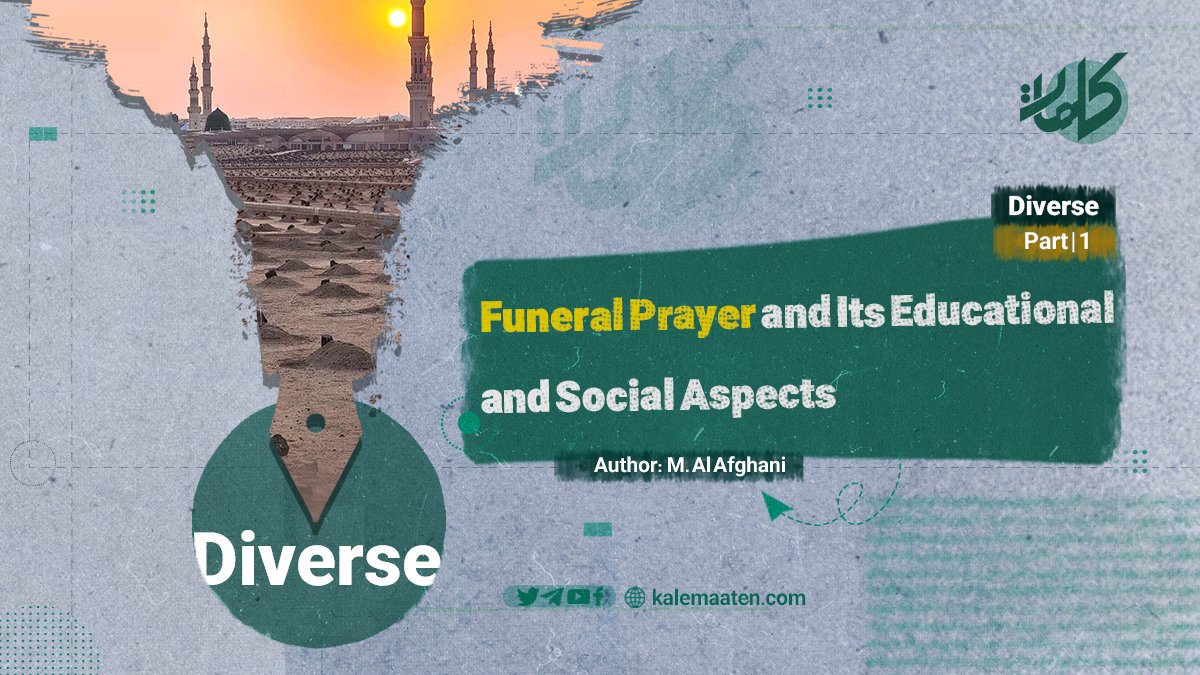
    Funeral Prayer and Its Educational and Social Aspects (Part One)

    By 08/10/2024No Comments3 Mins Read
    Share Facebook Twitter Telegram WhatsApp
    Share
    Facebook Twitter Telegram Email WhatsApp
    Author: M Al-Afghani
    Funeral Prayer and Its Educational and Social Aspects (Part One)
    Introduction
    In Islamic thought, just as a living person holds a special place, personality, and respect, similarly, after death and the transition to the eternal world, the deceased also retains a special status and respect. After death, specific rulings and issues are imposed to ensure that the deceased’s body is honored and their personality is preserved. These rulings include rituals such as Ghusl (washing), Takfin (shrouding), preparing the body for burial, and performing the funeral prayer.
    The funeral prayer, which is said for the deceased, embodies the attention of the living towards the dead. This prayer contains many educational and social lessons, as well as wisdom, some of which we will discuss in this short article.
    Educational Points
    Peace of Mind
    Allah’s grace encompasses humanity to such an extent that it is not limited to one’s state of life; it also extends to what happens after death.
    Humans who leave this world are generally deprived of performing good deeds; however, there are certain actions that, if carried out by the living after a person’s death, can help alleviate their torment or grant them peace. One of these significant acts is the funeral prayer. In fact, the funeral prayer not only liberates the deceased in some way but also brings peace of mind to their survivors.
    The family or loved ones of the deceased, by performing the funeral prayer alongside other Muslims, find solace in their hearts. They recognize others as partners in their suffering and grief, which alleviates their sense of isolation in mourning.
    Consideration About the Hereafter
    Observing the funeral and participating in the funeral prayer encourages individuals to reflect on the affairs of the hereafter, which awaits every person, and prepares them for it.
    Thinking about the Hereafter and the Day of Judgment is one of the significant commandments emphasized by Allah Almighty. A person can structure their life plans by contemplating the implications of the Day of Judgment and the Last Day. The hidden lessons in Islamic teachings regarding the funeral prayer prompt individuals to reflect on their current lives.
    Reflecting on the afterlife of others inspires a person to arrange their present life with order and purpose, making them increasingly prepared for the hereafter.
    Through the performance of the funeral prayer, individuals come to the realization that death could occur at any moment; therefore, they should prepare themselves and contemplate their afterlife while there is still time.

    Continues…

    Related Posts

    The Divine Education Model in the Family of the Prophets (Part 144)

    19/10/2026

    The Divine Education Model in the Family of the Prophets (Part 143)

    18/10/2026

    The Divine Education Model in the Family of the Prophets (Part 142)

    17/10/2026
    Leave A Reply Cancel Reply

    Follow us on the social media pages
    • Facebook
    • Twitter
    • Instagram
    • Telegram
    • WhatsApp
    Don’t miss

    Imam al-A‘zam Abu Hanifa (RA): The Role Model (part 37)

    The Reality of Repentance

    Increase in Lifespan

    Imam al-A‘zam Abu Hanifa (RA): The Role Model (part 36)

    About Us:

    The Academic and Research Organization of Kalemaat is an independent Islamic Da'wah organization affiliated with Ahl al-Sunnah wa al-Jama'ah. It is dedicated to promoting the authentic values of Islam, advancing the higher objectives of the Sharia, countering Western cultural influence, upholding the Word of Allah, and contributing to the intellectual and spiritual awakening of the Muslim Ummah.

    The Organization is supported by Muslim philanthropists and businessmen, and it welcomes the cooperation and support of Muslims worldwide in advancing its mission.

    Famous publications

    Imam al-A‘zam Abu Hanifa (RA): The Role Model (part 37)

    21/10/2026

    The Reality of Repentance

    21/10/2026
    Follow us on social medias
    • Facebook
    • Twitter
    • YouTube
    • Telegram
    • Instagram
    • WhatsApp
    All right reserved by (kalemaat)
    • Home
    • Analysis of the day
    • The greats of the Ummah
    • library

    Type above and press Enter to search. Press Esc to cancel.