Close Menu
    Facebook X (Twitter) Telegram WhatsApp
    • Language
      • دری
      • پښتو
      • العربیة
    • Home
    • Analysis
    • Islam
      • Prophet of Islam (PBUH)
      • Holy Quran
      • Muslim
      • Belief
      • Faith
      • Worships
      • Fiqh
      • Jihad
      • Islamic Perspectives
      • Islamic Economics
      • Islamic Management
      • Islamic Culture
      • Sufism
      • Crimes
      • Prohibitions
      • Sayings of the Scholars
      • Muhajir Tafsir
      • Hadith
    • Religions
      • Judaism
      • Christianity
      • Buddhism
      • Hinduism
      • Zoroastrianism
      • Satanism
      • Confucianism
      • Sikhism
    • Theories
      • Atheism
      • Secularism
      • liberalism
      • Socialism
      • Communism
      • Democracy
      • Federalism
      • Fascism
      • Capitalism
      • Marxism
      • Feminism
      • Nationalism
      • Colonialism
      • Frankfurt School
      • Freemasonry
      • Humanism
    • Fitan
      • Mu’tazila
      • Murji’ah
      • Jahmiyyah
      • The Fitna of the Khawarij
      • The Fitna of the Rawafid
      • The Fitna of Orientalism
      • Ghamdism
      • The Fitna of the Qadianis
      • Qadariyyah
      • Karramiyyah
    • Ummah
      • Sahabah (Companions of the Prophet ﷺ)
        • Hazrat Abu bakr Siddiq (RA)
        • Hazrat Umar al-Faruq (RA)
        • Hazrat Uthman ibn Affan (RA)
        • Hazrat Ali (RA)
        • Hazrat Khalid ibn al-Walid (RA)
        • Hazrat Fayruz al-Daylami (RA)
        • Hazrat Abdullah ibn al-Zubayr (RA)
      • Ummahat al-Mu’minin
      • Islamic scholars
        • Allamah Sayyid Abul Hasan Ali Nadwi (RH)
        • Imam al-Aʿzam Abu Hanifa (RH)
        • Imam al-Bukhari (RH)
        • Imam al-Tirmidhi (RH)
        • Imam al-Ghazali (RH)
        • Shah Waliullah al-Dehlawi (RH)
        • Sayyid Jamal al-Din Afghani
        • Mawlana Jalal al-Din Muhammad Balkhi Rumi (RH)
      • Muslim Rulers
        • Sultan Salahuddin Ayyubi (RH)
        • Umar ibn Abd al-Aziz (RH)
        • Sultan Yusuf ibn Tashfin (RH)
      • Muslim Scientists
    • Civilizations
      • Islamic Civilization
      • Eastern and Western Civilizations
      • Traces of History
    • Diverse
      • Ramadan Message
      • Reports
      • Light and Darkness
    • library
    Facebook X (Twitter) Telegram WhatsApp Instagram Pinterest YouTube
    kalemaat Englishkalemaat English
    You are at:Home»Feminism»Feminism (Part 23)
    Feminism

    Feminism (Part 23)

    By 02/10/2024No Comments3 Mins Read
    Share Facebook Twitter Telegram WhatsApp
    Share
    Facebook Twitter Telegram Email WhatsApp
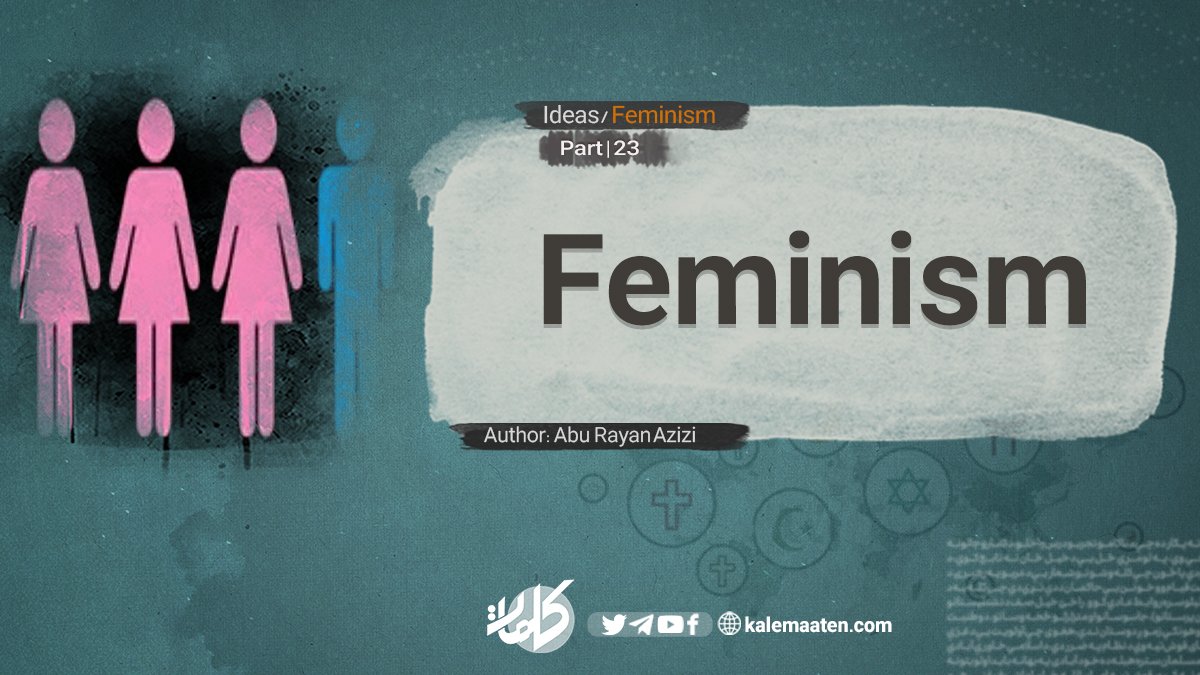
    Author: Abu Rayan Azizi
    Feminism (Part 23)
    Wisdom Hidden in Polygamy
    Islam is a system that is compatible with human nature and creation; it aligns itself with human needs and also pays attention to human structure and needs. As a result, it makes laws that do not conflict with human structure, and wants human society to remain healthy and does not allow anything to harm human morality.
    Islam is the last divine religion with the last divine prophet as its bearer; after that, the gate of prophecy was closed. For this reason, Allah Almighty sent a Sharia that covers all corners of the world and is applicable to all times. It is not limited only to urban dwellers and high classes, nor does it ignore the Bedouin people. Furthermore, it does not cater exclusively to cold climates while ignoring hot climates, nor is it tailored to a specific era to the exclusion of others. Therefore, Islam is a universal religion.
    It was the will of Almighty Allah to make the family the pillar of life and the basis of prosperity; civilizations were established by these families . For this reason, Almighty Allah has surrounded the structure of families with a set of fixed rules to protect it from damage and weakness. One of these rules, which is designed for the strengthening of the human system, is the permissibility of the “polygamy” system in Islam.
    The system of polygamy, as legislated in Islam, is a humane and moral system. In this sense, it does not allow a man to speak to any woman whenever he wants; he is limited to having no more than three additional wives, besides his first wife. This choice must be accompanied by a marriage contract, which must be public, notifying the community and inviting blessings, even if the number of invitees and witnesses is small. It is also necessary for the woman’s family to be aware of this relationship and to give their consent, and for this marriage to be officially registered in the marriage registry.
    These are some of its moral aspects; however, the human side is that under the shadow of the “polygamy” system, a man bears the heavy responsibility of society and accepts a woman who is left without a husband as his wife; he includes her among his wives and pays her dowry. He completes the obligations of his household and provides for her alimony.
    The polygamy we want to discuss entails hardships for the husband in a second marriage because he has to bear the expenses of that additional woman. Furthermore, bringing another woman into the household can elicit feelings of jealousy from the first wife. Despite these challenges, polygamy may avert greater harm and heal many wounds. Therefore, it is necessary for a woman to be self-sacrificing for the sake of other women, and for men to endure hardships to maintain a healthy family structure.
    The religion of Islam allows Muslims to marry four wives; however, this permission is not intended to fulfill a male’s sexual desires alone, but rather there are hidden motives, reasons, and secrets that lead a man to choose more than one wife.

    Continues…

    Related Posts

    Islam and Democracy (The 47th and Final Part)

    26/09/2026

    Islam and Democracy (Part 46)

    24/09/2026

    Islam and Democracy (Part 45)

    23/09/2026
    Leave A Reply Cancel Reply

    Follow us on the social media pages
    • Facebook
    • Twitter
    • Instagram
    • Telegram
    • WhatsApp
    Don’t miss

    Guarding One’s Eyes

    Safeguarding Secrets

    Imam al-A‘zam Abu Hanifa (RA): The Role Model (part 37)

    The Reality of Repentance

    About Us:

    The Academic and Research Organization of Kalemaat is an independent Islamic Da'wah organization affiliated with Ahl al-Sunnah wa al-Jama'ah. It is dedicated to promoting the authentic values of Islam, advancing the higher objectives of the Sharia, countering Western cultural influence, upholding the Word of Allah, and contributing to the intellectual and spiritual awakening of the Muslim Ummah.

    The Organization is supported by Muslim philanthropists and businessmen, and it welcomes the cooperation and support of Muslims worldwide in advancing its mission.

    Famous publications

    Guarding One’s Eyes

    22/10/2026

    Safeguarding Secrets

    22/10/2026
    Follow us on social medias
    • Facebook
    • Twitter
    • YouTube
    • Telegram
    • Instagram
    • WhatsApp
    All right reserved by (kalemaat)
    • Home
    • Analysis of the day
    • The greats of the Ummah
    • library

    Type above and press Enter to search. Press Esc to cancel.