Close Menu
    Facebook X (Twitter) Telegram WhatsApp
    • Language
      • دری
      • پښتو
      • العربیة
    • Home
    • Analysis
    • Islam
      • Prophet of Islam (PBUH)
      • Holy Quran
      • Muslim
      • Belief
      • Faith
      • Worships
      • Fiqh
      • Jihad
      • Islamic Perspectives
      • Islamic Economics
      • Islamic Management
      • Islamic Culture
      • Sufism
      • Crimes
      • Prohibitions
      • Sayings of the Scholars
      • Muhajir Tafsir
      • Hadith
    • Religions
      • Judaism
      • Christianity
      • Buddhism
      • Hinduism
      • Zoroastrianism
      • Satanism
      • Confucianism
      • Sikhism
    • Theories
      • Atheism
      • Secularism
      • liberalism
      • Socialism
      • Communism
      • Democracy
      • Federalism
      • Fascism
      • Capitalism
      • Marxism
      • Feminism
      • Nationalism
      • Colonialism
      • Frankfurt School
      • Freemasonry
      • Humanism
    • Fitan
      • Mu’tazila
      • Murji’ah
      • Jahmiyyah
      • The Fitna of the Khawarij
      • The Fitna of the Rawafid
      • The Fitna of Orientalism
      • Ghamdism
      • The Fitna of the Qadianis
      • Qadariyyah
      • Karramiyyah
    • Ummah
      • Sahabah (Companions of the Prophet ﷺ)
        • Hazrat Abu bakr Siddiq (RA)
        • Hazrat Umar al-Faruq (RA)
        • Hazrat Uthman ibn Affan (RA)
        • Hazrat Ali (RA)
        • Hazrat Khalid ibn al-Walid (RA)
        • Hazrat Fayruz al-Daylami (RA)
        • Hazrat Abdullah ibn al-Zubayr (RA)
      • Ummahat al-Mu’minin
      • Islamic scholars
        • Allamah Sayyid Abul Hasan Ali Nadwi (RH)
        • Imam al-Aʿzam Abu Hanifa (RH)
        • Imam al-Bukhari (RH)
        • Imam al-Tirmidhi (RH)
        • Imam al-Ghazali (RH)
        • Shah Waliullah al-Dehlawi (RH)
        • Sayyid Jamal al-Din Afghani
        • Mawlana Jalal al-Din Muhammad Balkhi Rumi (RH)
      • Muslim Rulers
        • Sultan Salahuddin Ayyubi (RH)
        • Umar ibn Abd al-Aziz (RH)
        • Sultan Yusuf ibn Tashfin (RH)
      • Muslim Scientists
    • Civilizations
      • Islamic Civilization
      • Eastern and Western Civilizations
      • Traces of History
    • Diverse
      • Ramadan Message
      • Reports
      • Light and Darkness
    • library
    Facebook X (Twitter) Telegram WhatsApp Instagram Pinterest YouTube
    kalemaat Englishkalemaat English
    You are at:Home»Blog»the roots and impact of hopelessness strategies for Overcoming it (Part Eight)
    Blog

    the roots and impact of hopelessness strategies for Overcoming it (Part Eight)

    By 04/01/2025Updated:04/01/2025No Comments3 Mins Read
    Share Facebook Twitter Telegram WhatsApp
    Share
    Facebook Twitter Telegram Email WhatsApp
    Author: Abdul Majid Dosti
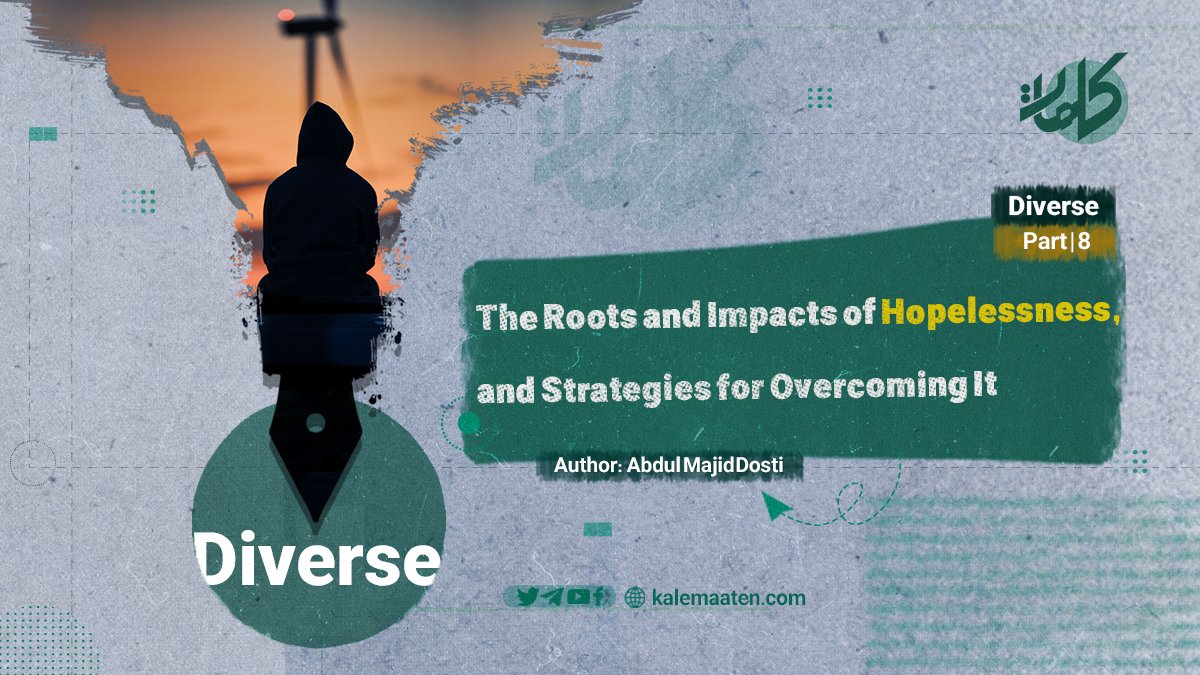
    The roots and impact of hopelessness strategies for Overcoming it (Part Eight)
    Letting Go of the Future:
    Another consequence of Hopelessness is losing hope for the future and severing ties with the uncertain but promising days ahead. As long as a person remains hopeful and their heart is tethered to the promise of better tomorrows, they possess the excitement, motivation, and strength to move forward. However, when Hopelessness takes over and their mind succumbs to the hardships of life, they lose their grip on the only option to live with hope and optimism. At that point, it no longer matters what the future holds or what challenges may arise. They simply breathe and move forward, surrendering themselves to the currents of life.
    Yet, human existence is deeply intertwined with the future, where the fruits of one’s efforts grow and ripen within the intellectual and cultural soil of tomorrow. From this, individuals draw success, prosperity, and fulfilment, both for themselves and others. When a person gives up on this critical aspect, retreats into isolation, and lets go of their connection to the future, they inflict the most severe and destructive wound upon themselves. It’s like sprinkling salt on wounds inflicted by others, preventing them from healing.
    In truth, even the most irreversible events in life can be endured and remedied with hope for the future. Looking ahead to create change in life is one way to navigate through the complex stages of grief and stagnation, allowing one to rise again and continue the journey. The future should not be an additional burden weighing us down, shackling our hands, or imprisoning us behind the bars of Hopelessness and failure.
    Surrendering to Hopelessness and failing to act against this dark and malicious force slows down progress, disrupts connections with a bright future, and traps the individual in the filthy depths of defeat and stagnation. Each time, it pushes them deeper into this abyss and holds them there.
    One of the effects of Hopelessness is falling into an unstable and turbulent state in life. Overcoming and emerging from this condition is a true victory, marking the first step toward liberation from the towering barriers of Hopelessness, failure, and surrender to life’s many challenges.
    When Hopelessness approaches, even the best of circumstances seem inadequate. Under its scorching rays, the essence of a person’s being slowly melts away. No one denies the profound impact of Hopelessness when it takes root in life. However, the difference lies in how individuals confront it, for certain victory emerges from facing this pervasive and destructive challenge. This is where the resilient and determined distinguish themselves from the fragile and weak, forcing Hopelessness to bow in respect before the iron will of the strong.
    Continues…

    Related Posts

    The Divine Education Model in the Family of the Prophets (Part 144)

    19/10/2026

    The Divine Education Model in the Family of the Prophets (Part 143)

    18/10/2026

    The Divine Education Model in the Family of the Prophets (Part 142)

    17/10/2026
    Leave A Reply Cancel Reply

    Follow us on the social media pages
    • Facebook
    • Twitter
    • Instagram
    • Telegram
    • WhatsApp
    Don’t miss

    Imam al-A‘zam Abu Hanifa (RA): The Role Model (part 36)

    Loyalty to One’s Teacher

    The Divine Education Model in the Family of the Prophets (Part 144)

    Who Is a Sufi?

    About Us:

    The Academic and Research Organization of Kalemaat is an independent Islamic Da'wah organization affiliated with Ahl al-Sunnah wa al-Jama'ah. It is dedicated to promoting the authentic values of Islam, advancing the higher objectives of the Sharia, countering Western cultural influence, upholding the Word of Allah, and contributing to the intellectual and spiritual awakening of the Muslim Ummah.

    The Organization is supported by Muslim philanthropists and businessmen, and it welcomes the cooperation and support of Muslims worldwide in advancing its mission.

    Famous publications

    Imam al-A‘zam Abu Hanifa (RA): The Role Model (part 36)

    20/10/2026

    Loyalty to One’s Teacher

    20/10/2026
    Follow us on social medias
    • Facebook
    • Twitter
    • YouTube
    • Telegram
    • Instagram
    • WhatsApp
    All right reserved by (kalemaat)
    • Home
    • Analysis of the day
    • The greats of the Ummah
    • library

    Type above and press Enter to search. Press Esc to cancel.
