




Author: Khaled Yaghi Zahi
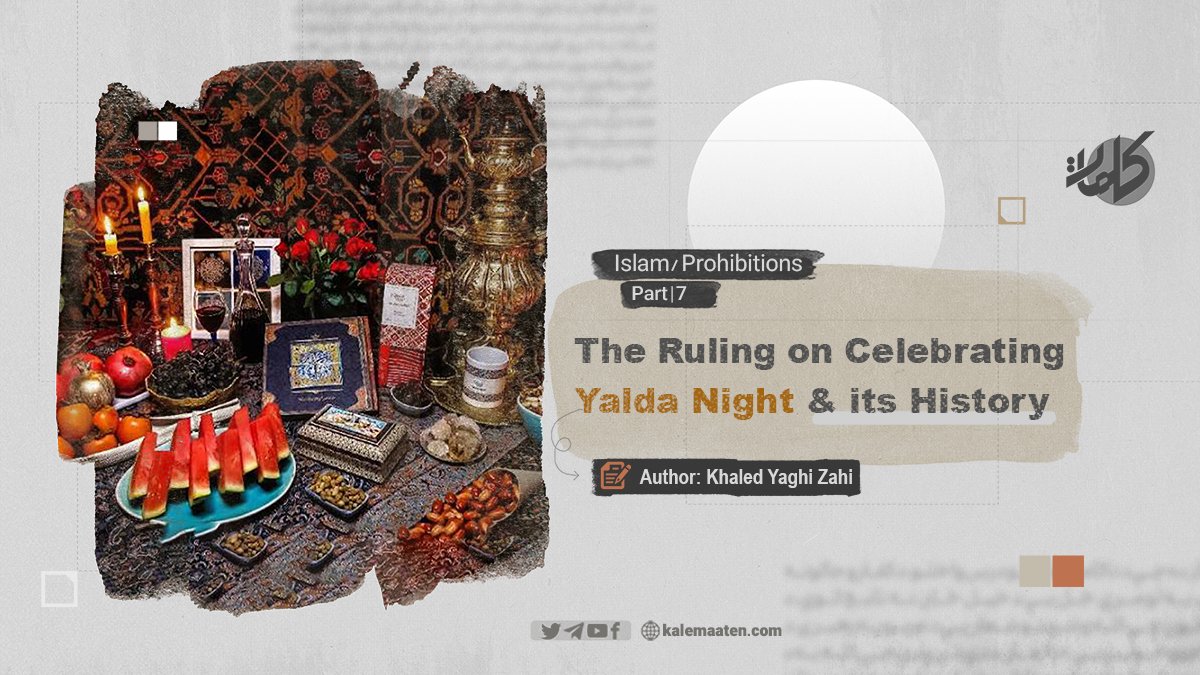
The Ruling on Celebrating Yalda Night and its History (part 7)
Yalda in the Scale of the Shari‘ah (continuation)
Allah the Exalted has regarded the resemblance of hearts and souls as something that incurs His wrath, and He will call hearts to account regarding this matter. So how do you make your hearts resemble the hearts of your forefathers; who were upon a religion other than Islam by holding celebrations such as the night of Yalda?
Look at how Allah condemns and reproaches them and then explains the reason for this rebuke and wrath in the following manner: “قَالَ الَّذِينَ مِنْ قَبْلِهِمْ مِثْلَ قَوْلِهِمْ تَشَابَهَتْ قُلُوبُهُمْ” Translation: “Those before them said the same; their hearts are alike.” [1] The noble Companion Abdullah ibn ‘Amr (RA) says: “من بنى في بلاد الأعاجم وصنع نيروزهم ومهرجانهم وتشبه بهم حتى يموت وهو كذلك حشر معهم يوم القيامة” Translation: “Whoever settles in the lands of the non-Arabs, celebrates their Nowruz and their Mehregan, and resembles them until he dies in that state, will be resurrected with them on the Day of Resurrection.” [2]
Reflect upon this narration; how great the threat is and how severe the warning is. Then know that the night of Yalda is no different from the festival of Nowruz and the ceremony of Mehregan; rather, both are among the festivals and celebrations of the Zoroastrians. Therefore, one must beware of resembling previous nations in their festivals, because festivals are themselves religious rites, and rites are among the matters specific to each religion. We know that the nations before us were misguided and that their customs have been abrogated, and we have no right to follow them. Rather, true guidance and the straight path are those that oppose misguided nations and conform to what Allah loves, and every day we ask Allah for such guidance seventeen times: “اهْدِنَا الصِّرَاطَ الْمُسْتَقِيمَ صِرَاطَ الَّذِينَ أَنْعَمْتَ عَلَيْهِمْ غَيْرِ الْمَغْضُوبِ عَلَيْهِمْ وَلَا الضَّالِّينَ” Translation: “Guide us to the straight path—the path of those upon whom You have bestowed favor; not of those who have incurred anger, nor of those who are astray.” [3]
Now, with all these daily supplications and requests to Allah that He keep us away from the ways and methods of previous nations and guide us to the straight path—is it reasonable to contradict our own supplication through our actions, by holding Zoroastrian festivals such as the night of Yalda and following their ways in these matters? Is this reasonable, or is it among the most ignorant of behaviors?
Allah has strictly forbidden us from resembling previous nations and says: وَلَا تَكُونُوا كَالَّذِينَ تَفَرَّقُوا وَاخْتَلَفُوا مِنْ بَعْدِ مَا جَاءَهُمُ الْبَيِّنَاتُ وَأُولَئِكَ لَهُمْ عَذَابٌ عَظِيمٌ” Translation: “And do not be like those who became divided and differed after clear proofs had come to them; for them is a great punishment.” [4]
And the Messenger of Allah (Peace be upon him) said: “لتتبعن سنن من كان قبلكم شبرا شبرا وذراعا بذراع حتى لو دخلوا جحر ضب تبعتموهم قلنا يا رسول الله اليهود والنصاراى قال فمن؟” Translation: “You will surely follow the ways of those who came before you, step by step and cubit by cubit, to the point that if they were to enter the hole of a lizard, you would follow them.” We said, “O Messenger of Allah, do you mean the Jews and the Christians?” He said, “Who else?” [5]
Now look at the condition of the people: in addition to following the customs and traditions of the Jews and Christians, they also follow the customs of the Zoroastrians, establish their festivals, and celebrate their holidays such as Nowruz and the night of Yalda, saying, “This was the tradition of our forefathers!”
Misguided nations have always been like this: whatever they did, they said, “This is the custom of our forefathers, and God has commanded it, and it does not contradict the religion of God at all!” Their condition is like those of whom it is said: “وَإِذَا فَعَلُوا فَاحِشَةً قَالُوا وَجَدْنَا عَلَيْهَا آبَاءَنَا وَاللَّهُ أَمَرَنَا بِهَا قُلْ إِنَّ اللَّهَ لَا يَأْمُرُ بِالْفَحْشَاءِ أَتَقُولُونَ عَلَى اللَّهِ مَا لَا تَعْلَمُونَ” Translation: “And when they commit an indecent act, they say, ‘We found our forefathers doing it, and Allah commanded us to do it.’ Say, ‘Indeed, Allah does not command indecency. Do you say about Allah that which you do not know?’” [6]
Every sin and obscenity that they commit, and every false celebration that they hold, they immediately say: “It is part of our culture! It has no problem with Islam! Rather, God Himself has encouraged such things!” Far exalted is Allah and Islam above encouraging celebrations that are the festivals of the disbelievers. Far exalted is God and His religion above encouraging people toward matters that are full of prohibitions, evils, and innovations, when such an Eid and celebration has not entered into our religion. So why should we establish it? When Allah, Glorified and Exalted, has warned us against following the desires of people and of previous nations, then why should we hold their festivals?
Allah has said: وَءاتَيْنَاهُم بَيِّنَاتٍ مِّنَ الْاَمْرِ فَمَا اخْتَلَفُواْ إِلاَّ مِن بَعْدِ مَا جَآءَهُمُ الْعِلْمُ بَغْياً بَيْنَهُمْ إِنَّ رَبَّكَ يَقْضِى بَيْنَهُمْ يَوْمَ الْقِيَامَةِ فِيمَا كَانُواْ فِيهِ يَخْتَلِفُونَ ثُمَّ جَعَلْنَاكَ عَلَى شَرِيعَةٍ مِّنَ الْاَمْرِ فَاتَّبِعْهَا وَلاَ تَتَّبِعْ أَهْوَآءَ الَّذِينَ لاَ يَعْلَمُونَ إِنَّهُمْ لَن يُغْنُواْ عَنكَ مِنَ اللَّهِ شَيْئاً وَإِنَّ الظَّالِمِينَ بَعْضُهُمْ أَوْلِيَآءُ بَعْضٍ وَاللَّهُ وَلِىُّ الْمُتَّقِينَ هَذَا بَصَائِرُ لِلنَّاسِ وَهُدًى وَرَحْمَةً لِّقَوْمٍ يُوقِنُونَ. Translation: And We gave them clear proofs of the matter, and they did not differ except after knowledge had come to them, out of transgression among themselves. Indeed, your Lord will judge between them on the Day of Resurrection concerning that over which they used to differ. Then We placed you upon a clear law from the command, so follow it and do not follow the desires of those who do not know. Indeed, they will never avail you against Allah at all. And indeed, the wrongdoers are allies of one another; but Allah is the Protector of the righteous. This is enlightenment for mankind, and guidance and mercy for a people who are certain. [7]
To be continued…
Previous Part/ Next Part
References:
- Surah al-Baqarah, Ayah 118.
- Al-Bayhaqi, Ahmad ibn al-Husayn ibn Ali. Sunan al-Bayhaqi al-Kubra. Vol. 9, p. 234. Kitab al-Jizyah, Bab Karahiyat al-Dukhul ‘ala Ahl al-Dhimmah fi Kana’isihim wa al-Tashabbuh bihim Yawm Nayruzihim wa Mahrajanihim, Hadith no. 18643. Publisher: Makkah al-Mukarramah: Maktabat Dar al-Baz, 1414H / 1994.
- Surah al-Fatihah, Ayahs 6–7.
- Surah Al ‘Imran, Ayah 105.
- Al-‘Ayni, Badr al-Din. ‘Umdat al-Qari Sharh Sahih al-Bukhari. Vol. 35, p. 437. Kitab al-I‘tisam bi al-Kitab wa al-Sunnah, Bab Qawl al-Nabi (PBUH): “Lattattabi‘unna Sanan Man Kana Qablakum”, Hadith no. 7320. Beirut: Dar al-Kitab al-‘Arabi.
- Surah al-A‘raf, Ayah 28.]
-
Surah al-Jathiyah, Ayahs 17–20.


