Author: Khaled Yaghi Zahi
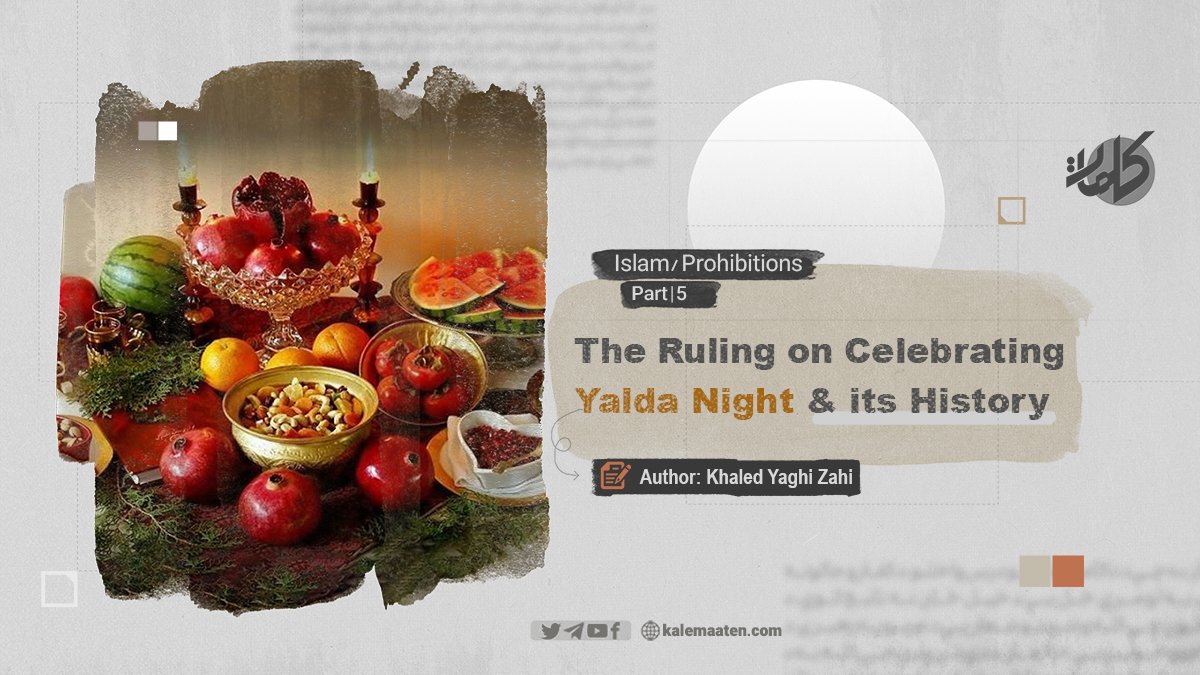
The Ruling on Celebrating Yalda Night and its History (Part Five)
Yalda in the Scale of the Shari‘ah
Celebrating the night of Yalda and holding ceremonies and festivities on it is prohibited (haram), because:
-
The night of Yalda is one of the specific festivals of other religions such as Zoroastrians, Hindus, and Christians, and it is not among the Islamic festivals; celebrating it constitutes imitation of the disbelievers.
-
Because of the incorrect and improper beliefs associated with this night, such as: considering it an ill-omened night; believing that a person is purified from evils on the morning of the first of Jadi/Dey; lighting fires to repel evils and harms; gathering together to ward off harms and impurities; staying awake at night to witness the sunrise; and other beliefs of this kind.
-
Because of the sins and prohibitions that occur on this night, such as: free mixing between non-mahram men and women from among relatives; extravagance in wealth, food, fruits, and meals; while on the coldest night of the year the poor and needy spend the night without food or clothing; wasting time and spending it in matters other than the worship of Allah; reviving obsolete, abrogated, and false rites; backbiting and idle talk; music and similar prohibitions.
Firstly: based on all the information mentioned in the previous sections, it has become clear that the night of Yalda is among the customs of non-Islamic religions and is considered part of their specific rites and ceremonies.
Secondly: the pure religion of Islam has taught Muslims that their religion is complete and that they have no need for rituals that exist in other religions.
Thirdly: Islam has stated in its sources that no Muslim has the right to liken himself to the disbelievers in matters that are part of their customs, rites, and traditions, nor to imitate them.
Allah has said: “حُرِّمَتْ عَلَيْكُمُ الْمَيْتَةُ وَالدَّمُ وَلَحْمُ الْخِنْزِيرِ وَمَا أُهِلَّ لِغَيْرِ اللَّهِ بِهِ وَالْمُنْخَنِقَةُ وَالْمَوْقُوذَةُ وَالْمُتَرَدِّيَةُ وَالنَّطِيحَةُ وَمَا أَكَلَ السَّبُعُ إلَّا مَا ذَكَّيْتُمْ وَمَا ذُبِحَ عَلَى النُّصُبِ وَأَنْ تَسْتَقْسِمُوا بِالْأَزْلَامِ ذَلِكُمْ فِسْقٌ الْيَوْمَ يَئِسَ الَّذِينَ كَفَرُوا مِنْ دِينِكُمْ فَلَا تَخْشَوْهُمْ وَاخْشَوْنِ الْيَوْمَ أَكْمَلْت لَكُمْ دِينَكُمْ وَأَتْمَمْت عَلَيْكُمْ نِعْمَتِي وَرَضِيت لَكُمْ الْإِسْلَامَ دِينًا فَمَن اُضْطُرَّ فِي مَخْمَصَةٍ غَيْرَ مُتَجَانِفٍ لِإِثْمٍ فَإِنَّ اللَّهَ غَفُورٌ رَحِيمٌ” Translation: “Carrion, blood, the flesh of swine, and that over which the name of other than Allah has been mentioned (at the time of slaughter); and animals that have been strangled, beaten to death, fallen from a height, gored to death, and those eaten by beasts; except what you have properly slaughtered; and what has been sacrificed to idols; and that you seek decision by divining arrows; all of that has been made prohibited (haram) for you, and resorting to all of this is disobedience. Today the disbelievers have despaired of your religion; so do not fear them, but fear Me. Today I have perfected your religion for you, completed My favor upon you, and have chosen Islam as your religion. But whoever is compelled by hunger, without inclination to sin; then indeed Allah is Forgiving, Merciful.” [1]
When Allah has mentioned in His religion all that is lawful and unlawful, and has clarified the rites and ceremonies of the Muslims, and has perfected this religion, then what need is there for ceremonies and festivals that exist in other religions? If someone says there is a need, then he has assumed that the religion has not been perfected; this contradicts the verse and amounts to denying the Qur’an and the Sunnah. And if he says there is no need, yet still pursues such festivals, then his words and actions contradict one another; he has done something futile and meaningless, and by his action he has negated his own statement. No rational person would do this.
Allah has designated the ceremonies, rites, practices, and customs of every religion specifically for that religion, and no one has the right to follow the practices of another religion in such matters. For example, to observe the festival of Yalda, which belongs to the Zoroastrian religion, because this festival is among the customs of Zoroastrianism; it is not permissible for any Muslim to celebrate it. Allah says: “وَأَنزَلْنَآ إِلَيْكَ الْكِتَابَ بِالْحَقِّ مُصَدِّقاً لِّمَا بَيْنَ يَدَيْهِ مِنَ الْكِتَابِ وَمُهَيْمِناً عَلَيْهِ فَاحْكُم بَيْنَهُم بِمَآ أَنزَلَ اللَّهُ وَلاَ تَتَّبِعْ أَهْوَآءَهُمْ عَمَّا جَآءَكَ مِنَ الْحَقِّ لِكُلٍّ جَعَلْنَا مِنكُمْ شِرْعَةً وَمِنْهَاجاً وَلَوْ شَآءَ اللَّهُ لَجَعَلَكُمْ أُمَّةً وَاحِدَةً وَلَكِن لِّيَبْلُوَكُمْ فِي مَآ آتَاكُم فَاسْتَبِقُوا الخَيْرَاتِ إِلَى اللَّهِ مَرْجِعُكُمْ جَمِيعاً فَيُنَبِّئُكُم بِمَا كُنتُمْ فِيهِ تَخْتَلِفُونَ.” Translation: “And We have revealed to you the Book (the Qur’an) in truth, confirming what came before it of the Scripture and as a guardian over it. So judge between them by what Allah has revealed, and do not follow their desires instead of the truth that has come to you. For each of you We have appointed a law and a clear way. Had Allah willed, He would have made you one community, but He intended to test you in what He has given you; so compete with one another in good deeds. To Allah is the return of you all, then He will inform you about that in which you used to differ.” [2]
O Muslim, when you know that Allah the Exalted has revealed His Book and His religion in truth, and has made it the criterion and standard for resolving disputes; so that people may refer their differences to it, solve their problems according to it, and find the answers to their questions in it; then what is the matter with you that, regarding ceremonies and festivals as well, you do not refer to this same Book to see what your Lord has said about them? Especially when Allah has explicitly forbidden following personal inclinations and desires and turning away from the truth, saying: “وَلاَ تَتَّبِعْ أَهْوَآءَهُمْ عَمَّا جَآءَكَ مِنَ الْحَقِّ” Translation: “And do not follow their whims and desires instead of the truth that has come to you (and do not turn away from the divine rulings).” [3]
That is, beware lest following the customs of people, imitating their rituals and personal preferences, and trailing after their cultures and festivals prevent you from accepting and following the truth; beware! You must not replace the truth with the corrupt desires that oppose it, thereby exchanging something good for something evil. Therefore, you must not turn away from the truth on the basis of following carnal desires or incline toward the opinions and views of others, for Allah says: “لِكُلٍّ جَعَلْنَا مِنكُمْ شِرْعَةً وَمِنْهَاجاً” Translation: “For each of you We have appointed a law and a clear way.” [4]
When Allah the Exalted states the exclusivity of these programs, the addressee must understand that he has no right to abandon the distinctive features of his own religion and adopt the distinctive features of other religions. The terms “law” (shar‘ah) and “way” (minhāj) mentioned by Allah in this verse refer to the path, method, and religious system. Some scholars say: “shar‘ah” refers to law, and “minhāj” refers to clarity and explicitness—meaning: We have appointed for each of you (each community) a clear and manifest law.
Other scholars say: “shar‘ah” points to beliefs, and “Minhaj” points to rulings—meaning: We have appointed for each of you (each community) beliefs and rulings. [5]
To be continued…
References:
- Surah Al-Ma’idah, verse 3.
- Surah Al-Ma’idah, verse 48.
- Surah Al-Ma’idah, verse 48.
- Surah Al-Ma’idah, verse 48.
- Tafsir Ibn Kathir, volume 3, page 79, Surah Al-Ma’idah, under verse 48; total set volume 8; Takhrij al-Ahadith by Hani al-Hajj; publisher: Al-Maktabah Al-Tawfiqiyyah, Egypt; year of publication: 2013 CE.And Madarik al-Tanzil wa Haqa’iq al-Ta’wil (Tafsir al-Nasafi), volume 1, page 325, Surah Al-Ma’idah, under verse 48; edited by Shaykh Zakariya ‘Umayrat; volume 2; Wahidi Bookstore, Peshawar.