Close Menu
    Facebook X (Twitter) Telegram WhatsApp
    • Language
      • دری
      • پښتو
    • Home
    • Analysis
    • Islam
      • Prophet of Islam (PBUH)
      • Holy Quran
      • Muslim
      • Belief
      • Faith
      • Worships
      • Jurisprudence
      • Jihad
      • Beauty of Islam
      • Islamic Economy
      • Islamic Management
      • Islamic Culture
      • Islamic Sufism
      • Crimes
      • Prohibitions
    • Religions
      • Judaism
      • Christianity
      • Buddhism
      • Hinduism
      • Zoroastrian
      • Satanism
      • Confucius
      • Sikhism
    • Ideas
      • Atheism
      • secularism
      • liberalism
      • Socialism
      • Communism
      • Democracy
      • Federalism
      • Fascism
      • Capitalism
      • Marxism
      • Feminism
      • Nationalism
      • Colonialism
      • Frankfurt School
    • Seduction
      • Mu’tazila
      • Murjea
      • Jahmiyyah Sect
      • Khawarij’s sedition
      • Rawafez sedition
      • Istishraq’s sedition
      • Ghamediyat’s sedition
      • Qadiani’s sedition
      • Qadriyyah Sect
      • Karramiyyah Sect
    • Ummah
      • Companions
        • Hazrat Abubakr Seddiq (MGH)
        • Hazrat Umar Farooq (MGH)
        • Hazrat Usman (MGH)
        • Biography of Hazrat Ali (MGH)
        • Hazrat Khaled bin Waleed (MGH)
        • Hazrat Firooz Dilami (MGH)
        • Hazrat Abdullah Ibn Zubair (MGH)
      • Mothers of the believers
      • Islamic scholars
        • Sayed Abul Hasan Nadavi (MGHM)
        • Grand Imam Abu Hanifah (MGHM)
        • Imam Bukhari (MGHM)
        • Imam Tirmidhi (MGHM)
        • Imam al-Ghazali (MGHM)
        • Shah Waliullah Dehlavi (MGHM)
        • Seyyed Jamaluddin Afghan
        • Maulana Jalaluddin Balkhi Rumi (MGHM)
      • Muslim Governor’s
        • Sultan Salahuddin Ayyubi (MGHM)
        • Omar bin Abdul Aziz (MGHM)
        • Sultan Yusuf bin Tashfin (MGHM)
      • Islamic scientists
    • Civilizations
      • Islamic civilization
      • Eastern & Western civilizations
    • Diverse
      • Ramadan Message
    • library
    Facebook X (Twitter) Telegram WhatsApp
    کلمات انگلیسیکلمات انگلیسی
    You are at:Home»Analysis of the day»A Study on the Role of the Media and Its Effect on the Identity of Muslims (Part 41)
    Analysis of the day

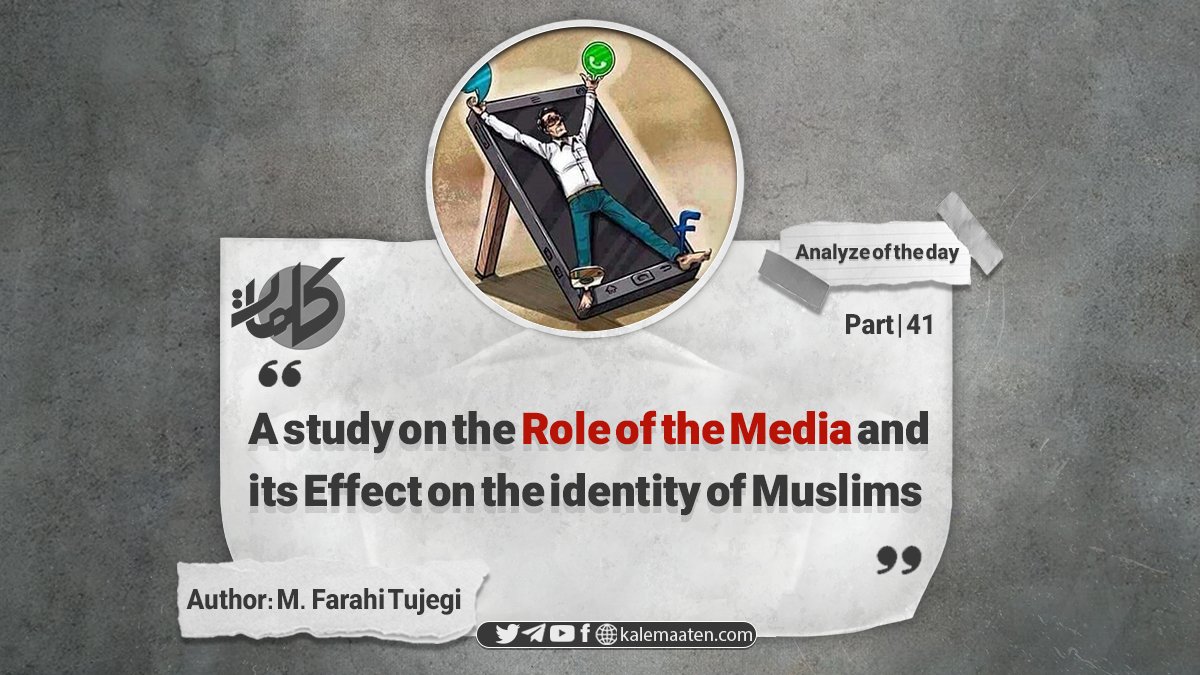
    A Study on the Role of the Media and Its Effect on the Identity of Muslims (Part 41)

    admin2By admin216/12/2024No Comments3 Mins Read
    Share Facebook Twitter Telegram WhatsApp
    Share
    Facebook Twitter Telegram Email WhatsApp
    Author: M. Farahi Tujegi
    A Study on the Role of the Media and Its Effect on the Identity of Muslims (Part 41)
    Historical Interaction of Religion and Media
    The use of media in religion has a long and complex history. Different religions are classified based on their relationships with various forms of media. For instance, the expansion of religions in the modern West has been significantly influenced by the movable type printing industry. In the 20th century, several religions have developed unique relationships with mass media.
    In the modern and postmodern West, Christianity has been closely linked with mass media. Given that the media of the Christian West has dominated the media landscape, this connection has been pivotal. However, the situation is gradually changing, as Christian groups were among the first publishers in Europe and North America.
    Historically, all Christian groups, along with major non-Christian groups and various other religious movements in Europe and North America, have published written works, including pamphlets, brochures, magazines, and books. They have remained prolific and active in preaching programs, including Bible dissemination.
    However, non-print media has not been regarded as a highly effective platform for most religions. In the 20th century, as established European and North American religions encountered the rise of mass media, Christian groups exerted considerable efforts to renew and reclaim cultural influence, a struggle that has continued unabated.
    It is important to recognize that the media has always played a significant role in our religious lives. While one might think of television when hearing the term “media,” this is not the sole aspect; humans have been writing and reading for centuries. Religious texts—including the Sutras (Buddhist scriptures), the Bible (Christian scriptures), the Vedas (Hindu scriptures), the Quran and Hadith (Islamic scriptures), as well as the Tanach, Mishnah, Talmud, and Midrash (Jewish scriptures)—serve to inform us on how to think about this life and the next.
    Thus, since ancient times, media has been intertwined with religion. One of the most effective ways for religions to convey their messages has been through media, particularly written forms, which served as significant mediums and messengers of their time. Consequently, the evolving relationship between religion and media has transformed into a mutual interaction rather than a one-sided influence. Scholars of religion and media increasingly focus on studying this interaction and its reception by individuals and groups engaging with media culture.
    For a religion to enter people’s lives and familiarize them with its teachings, it must be spread effectively. Historically, religions have utilized various media to achieve this goal. The emergence of religion through the media platforms of its respective eras reflects the harmony between religion and these forms of communication. Nonetheless, with the advent of modern media, a new dynamic has emerged that challenges religious preachers and raises various questions. With the rise and expansion of new media—considered products of Western civilization—many researchers and experts in religious studies, along with thinkers in the social sciences, have increasingly focused on understanding the relationship between religion and media. How do these two interact? Is there compatibility and convergence between religion and the institution of media, or are they inherently in conflict?
    Ultimately, the root of these questions addresses broader issues about the relationship between tradition and modernity—an exploration that exceeds the scope of this brief article.


    Continues…

    admin2

    Related Posts

    Eastern Oil Is Vital for the Western Economy

    09/07/2025

    The Influence of Islam in America (Part 9)

    03/05/2025

    The Influence of Islam in America (Part Eight)

    03/05/2025
    Leave A Reply Cancel Reply

    Follow us on the social media pages
    • Facebook
    • Twitter
    • Instagram
    • Telegram
    • WhatsApp
    Don’t miss

    Freemasonry (part 22)

    The Quran: A Miracle Beyond Time- A Study of Its Miraculous Nature (part 74)

    Freemasonry (part 21)

    The Quran: A Miracle Beyond Time- A Study of Its Miraculous Nature (part 73)

    About Us:

    The Scientific and Research Office of Kalemaat is an independent office affiliated with Ahl al-Sunnah wa al-Jama‘ah. It works to promote the true values of Islam, achieve the noble goals of the sacred Sharia, resist Western cultural influence, uphold the Word of Allah, and awaken the Muslim community.

    This office is supported by Muslim philanthropists and businessmen, and it also invites all Muslims to fully cooperate and contribute to its mission.

    Famous publications

    Freemasonry (part 22)

    25/01/2026

    The Quran: A Miracle Beyond Time- A Study of Its Miraculous Nature (part 74)

    24/01/2026
    Follow us on social medias
    • Facebook
    • Twitter
    • YouTube
    • Telegram
    • Instagram
    • WhatsApp
    All right reserved by (kalemaat)
    • Home
    • Analysis of the day
    • The greats of the Ummah
    • library

    Type above and press Enter to search. Press Esc to cancel.