Close Menu
    Facebook X (Twitter) Telegram WhatsApp
    • Language
      • دری
      • پښتو
    • Home
    • Analysis
    • Islam
      • Prophet of Islam (PBUH)
      • Holy Quran
      • Muslim
      • Belief
      • Faith
      • Worships
      • Jurisprudence
      • Jihad
      • Beauty of Islam
      • Islamic Economy
      • Islamic Management
      • Islamic Culture
      • Islamic Sufism
      • Crimes
      • Prohibitions
    • Religions
      • Judaism
      • Christianity
      • Buddhism
      • Hinduism
      • Zoroastrian
      • Satanism
      • Confucius
      • Sikhism
    • Ideas
      • Atheism
      • secularism
      • liberalism
      • Socialism
      • Communism
      • Democracy
      • Federalism
      • Fascism
      • Capitalism
      • Marxism
      • Feminism
      • Nationalism
      • Colonialism
      • Frankfurt School
    • Seduction
      • Mu’tazila
      • Murjea
      • Jahmiyyah Sect
      • Khawarij’s sedition
      • Rawafez sedition
      • Istishraq’s sedition
      • Ghamediyat’s sedition
      • Qadiani’s sedition
      • Qadriyyah Sect
      • Karramiyyah Sect
    • Ummah
      • Companions
        • Hazrat Abubakr Seddiq (MGH)
        • Hazrat Umar Farooq (MGH)
        • Hazrat Usman (MGH)
        • Biography of Hazrat Ali (MGH)
        • Hazrat Khaled bin Waleed (MGH)
        • Hazrat Firooz Dilami (MGH)
        • Hazrat Abdullah Ibn Zubair (MGH)
      • Mothers of the believers
      • Islamic scholars
        • Sayed Abul Hasan Nadavi (MGHM)
        • Grand Imam Abu Hanifah (MGHM)
        • Imam Bukhari (MGHM)
        • Imam Tirmidhi (MGHM)
        • Imam al-Ghazali (MGHM)
        • Shah Waliullah Dehlavi (MGHM)
        • Seyyed Jamaluddin Afghan
        • Maulana Jalaluddin Balkhi Rumi (MGHM)
      • Muslim Governor’s
        • Sultan Salahuddin Ayyubi (MGHM)
        • Omar bin Abdul Aziz (MGHM)
        • Sultan Yusuf bin Tashfin (MGHM)
      • Islamic scientists
    • Civilizations
      • Islamic civilization
      • Eastern & Western civilizations
    • Diverse
      • Ramadan Message
    • library
    Facebook X (Twitter) Telegram WhatsApp
    کلمات انگلیسیکلمات انگلیسی
    You are at:Home»Diverse»The Importance of Hygiene in Islam (Part 4)
    Diverse

    The Importance of Hygiene in Islam (Part 4)

    admin2By admin211/11/2024No Comments3 Mins Read
    Share Facebook Twitter Telegram WhatsApp
    Share
    Facebook Twitter Telegram Email WhatsApp
    Author: Shukran Ahmadi
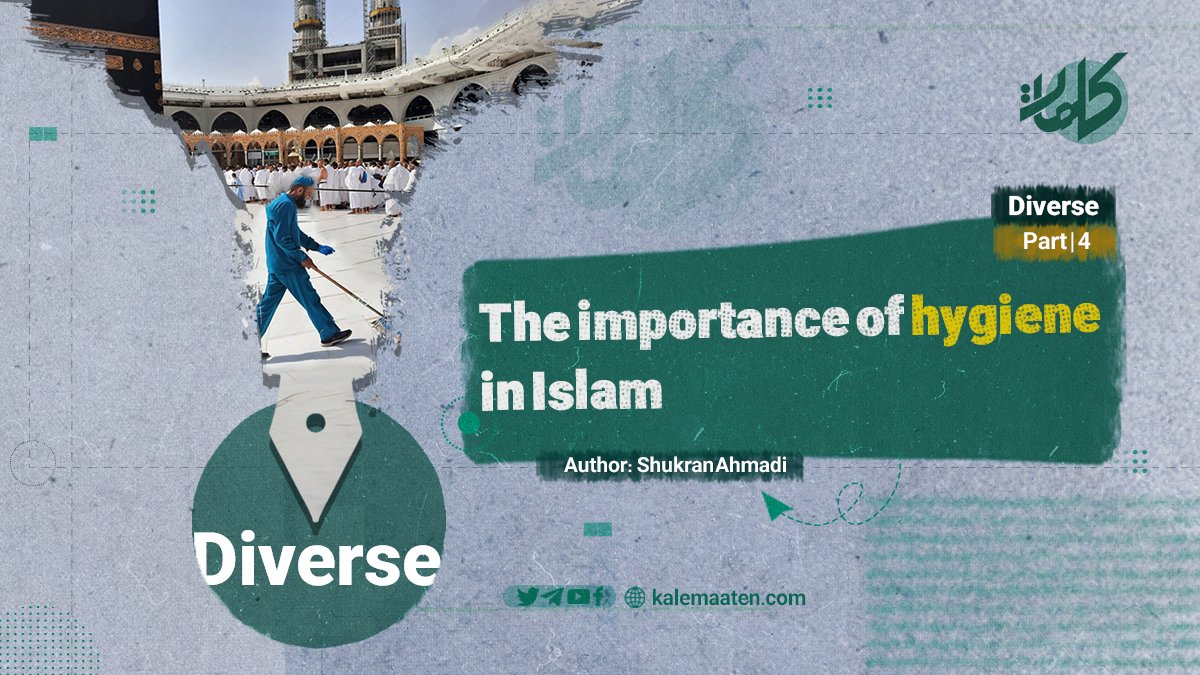
    The Importance of Hygiene in Islam (Part 4)
    Cleanness and Combing Hair
    In many narrations, significant attention is given to the issue of hair, which relates to the beauty and ugliness of a person’s appearance:
    A: The Prophet (peace and blessings of Allah be upon him) used to apply oil to his hair and sometimes comb it, and he ordered others to do the same.
    B: The Prophet, may Allah bless him and grant him peace, said: “Everyone who has hair should respect it; this means keep it free from pus.”
    C: A man with a bare head and a disheveled beard came to the Messenger of Allah, may Allah bless him and grant him peace. He said, “Hasn’t he found oil with which to smooth his hair from this disordered state?” He added: “One of you comes in such a condition; it seems to be evil.”
    Imam al-Ghazali, may Allah have mercy on him, writes: “If pus and vermin (lice) gather in the hair of the head, it is recommended to clean them with water, combing, and rubbing oil, and to cut the unevenness of the hair.” It is stated in a famous narration that: The Prophet, peace and blessings be upon him, never traveled without a comb and a mirror during his journeys and stays.
    Yes, the Messenger of Allah, may Allah bless him and grant him peace, was commissioned by Allah to call people, and one of his duties was to take care of himself, his appearance, and to respect himself so that people would not despise or underestimate him. He should not be a source of aversion to others. Therefore, it is necessary for every inviter to adorn his appearance in such a way that it does not provoke hatred and disgust from others.
    Armpit Hair: Cleanliness of this area is maintained by cutting hair for those who are accustomed to cutting it or by shaving, which should be done at most every forty days.
    Hair Under the Navel: This can be cleaned by shaving or cutting, and it should not be delayed for more than forty days.
    The skin surrounding the navel and the penis of boys should be cut to prevent irritation and the accumulation of germs. Cutting nails is recommended when they are long and unsightly.
    Cleaning the pus on the wrinkles of the wrists and joints of the fingers, as well as pus on the tips of the fingers and around and under the nails, is of such importance in Islam that neglecting it reportedly caused the angel of revelation not to come. Pay attention to the following narration: “The Holy Prophet, may Allah bless him and grant him peace, experienced a delay in revelation when Gabriel descended upon him. Gabriel said: ‘How can I descend upon you when you do not clean the pus from the joints, the tips of the fingers, and around the nails, and your yellow teeth? You do not brush your teeth; order your people to do these things and clean the pus from their nails.’ The pus created by sweat and dust on the body is ordered to be cleaned by taking a bath.”
    Approved (Masnun) Ablutions (Ghusl)
    To enhance and generalize body cleanliness, Islam has prescribed many types of ablutions, which include:

    1. Eid ablution
    2. Friday ablution
    3. Ihram ablution
    4. Ablution of staying in Arafat
    5. Muzdalifah ablution
    6. Ablution to enter Makkah
    7. Ablution upon accepting Islam
    8. Mad ablution when recovering
    Continues…
    admin2

    Related Posts

    The Divine Education Model in the Family of the Prophets (part 67)

    27/01/2026

    The Divine Education Model in the Family of the Prophets (part 66)

    26/01/2026

    Modern Atheism in the Balance of Critique (part 2)

    12/01/2026
    Leave A Reply Cancel Reply

    Follow us on the social media pages
    • Facebook
    • Twitter
    • Instagram
    • Telegram
    • WhatsApp
    Don’t miss

    The Divine Education Model in the Family of the Prophets (part 67)

    The Quran: A Miracle Beyond Time- A Study of Its Miraculous Nature (part 76)

    Satanism (part 33) 

    The Divine Education Model in the Family of the Prophets (part 66)

    About Us:

    The Scientific and Research Office of Kalemaat is an independent office affiliated with Ahl al-Sunnah wa al-Jama‘ah. It works to promote the true values of Islam, achieve the noble goals of the sacred Sharia, resist Western cultural influence, uphold the Word of Allah, and awaken the Muslim community.

    This office is supported by Muslim philanthropists and businessmen, and it also invites all Muslims to fully cooperate and contribute to its mission.

    Famous publications

    The Divine Education Model in the Family of the Prophets (part 67)

    27/01/2026

    The Quran: A Miracle Beyond Time- A Study of Its Miraculous Nature (part 76)

    27/01/2026
    Follow us on social medias
    • Facebook
    • Twitter
    • YouTube
    • Telegram
    • Instagram
    • WhatsApp
    All right reserved by (kalemaat)
    • Home
    • Analysis of the day
    • The greats of the Ummah
    • library

    Type above and press Enter to search. Press Esc to cancel.