Close Menu
    Facebook X (Twitter) Telegram WhatsApp
    • Language
      • دری
      • پښتو
      • العربیة
    • Home
    • Analysis
    • Islam
      • Prophet of Islam (PBUH)
      • Holy Quran
      • Muslim
      • Belief
      • Faith
      • Worships
      • Fiqh
      • Jihad
      • Islamic Perspectives
      • Islamic Economics
      • Islamic Management
      • Islamic Culture
      • Sufism
      • Crimes
      • Prohibitions
      • Sayings of the Scholars
      • Muhajir Tafsir
      • Hadith
    • Religions
      • Judaism
      • Christianity
      • Buddhism
      • Hinduism
      • Zoroastrianism
      • Satanism
      • Confucianism
      • Sikhism
    • Theories
      • Atheism
      • Secularism
      • liberalism
      • Socialism
      • Communism
      • Democracy
      • Federalism
      • Fascism
      • Capitalism
      • Marxism
      • Feminism
      • Nationalism
      • Colonialism
      • Frankfurt School
      • Freemasonry
      • Humanism
    • Fitan
      • Mu’tazila
      • Murji’ah
      • Jahmiyyah
      • The Fitna of the Khawarij
      • The Fitna of the Rawafid
      • The Fitna of Orientalism
      • Ghamdism
      • The Fitna of the Qadianis
      • Qadariyyah
      • Karramiyyah
    • Ummah
      • Sahabah (Companions of the Prophet ﷺ)
        • Hazrat Abu bakr Siddiq (RA)
        • Hazrat Umar al-Faruq (RA)
        • Hazrat Uthman ibn Affan (RA)
        • Hazrat Ali (RA)
        • Hazrat Khalid ibn al-Walid (RA)
        • Hazrat Fayruz al-Daylami (RA)
        • Hazrat Abdullah ibn al-Zubayr (RA)
      • Ummahat al-Mu’minin
      • Islamic scholars
        • Sayed Abul Hasan Nadavi (MGHM)
        • Imam al-Aʿzam Abu Hanifa (RA)
        • Imam al-Bukhari (RA)
        • Imam al-Tirmidhi (RA)
        • Imam al-Ghazali (RA)
        • Shah Waliullah al-Dehlawi (RA)
        • Sayyid Jamal al-Din Afghani
        • Mawlana Jalal al-Din Muhammad Balkhi Rumi (RA)
      • Muslim Rulers
        • Sultan Salahuddin Ayyubi (RH)
        • Umar ibn Abd al-Aziz (RH)
        • Sultan Yusuf ibn Tashfin (RH)
      • Muslim Scientists
    • Refinement&Civilizations
      • Islamic Civilization
      • Eastern and Western Civilizations
      • Traces of History
    • Diverse
      • Ramadan Message
      • Reports
      • Light and Darkness
    • library
    Facebook X (Twitter) Telegram WhatsApp
    kalemaat Englishkalemaat English
    You are at:Home»Belief»An Overview of the Characteristics of Ahl al-Sunnah wa -al-Jama’ah (Part One)
    Belief

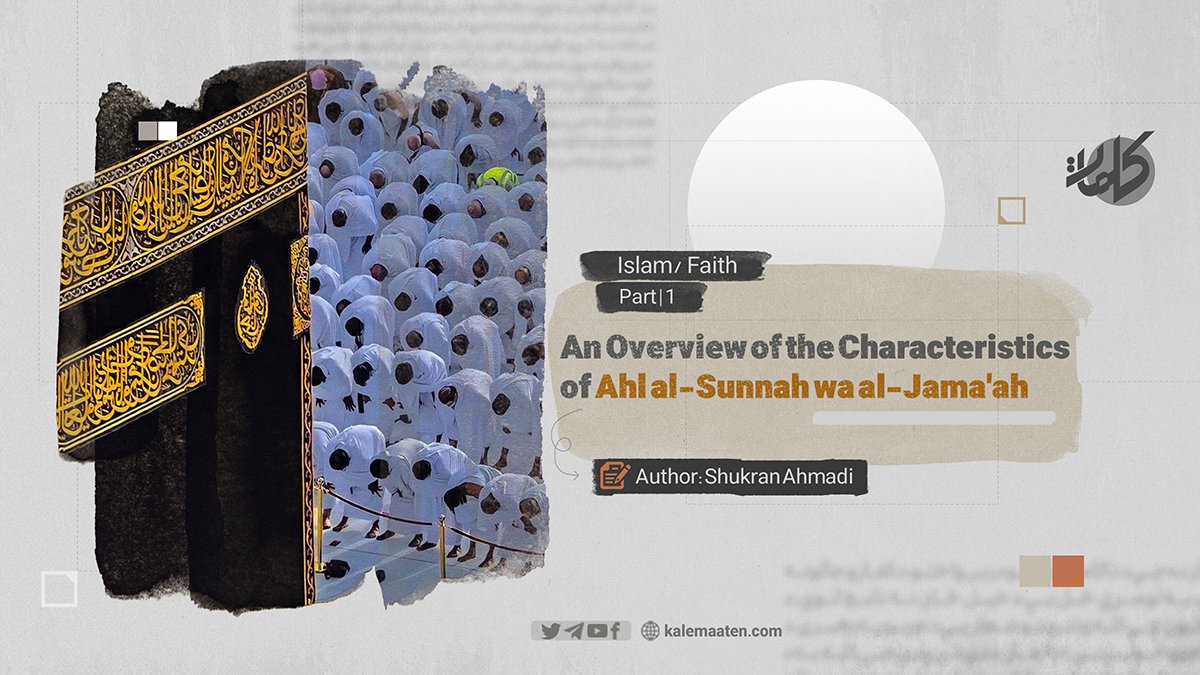
    An Overview of the Characteristics of Ahl al-Sunnah wa -al-Jama’ah (Part One)

    By 08/10/2024Updated:25/01/2025No Comments4 Mins Read
    Share Facebook Twitter Telegram WhatsApp
    Share
    Facebook Twitter Telegram Email WhatsApp
    Author: Shukran Ahmadi
    An Overview of the Characteristics of Ahl al-Sunnah wa -al-Jama’ah (Part One)
    Abstract
    Familiarity with Islamic sects and different beliefs is considered one of the most important sciences in both the past and present. Throughout different ages, many books have been written on the “Science of Differences and Sects.” Writers and authors have pursued various purposes in this regard. Sometimes, they have attempted to prove their own sect as correct and other sects as false; at other times, they have investigated and acknowledged different religions and sects without prejudice. However, the fact remains that everyone considers their own sect to be right and correct. According to the interpretation of the Qur’an: «كُلُّ ِحزْبٍ بِمَا لَدَيْهِمْ فَرِحُونَ» Translation: “Each group is happy with what they have.”
    But Allah knows best which group is on the path of truth and correctness, and which group is on the path of falsehood and error: «قُلْ كُلٌّ يَعْمَلُ عَلَى شَاكِلَتِهِ فَرَبُّكُمْ أَعْلَمُ بِمَنْ هُوَ أَهْدَى سَبِيلًا» Translation: “Say, ‘Everyone works according to his own way, and your Lord knows best whose way is more correct.'”
    In any case, knowledge of sects and familiarity with Islamic beliefs contribute to the understanding and growth of religious and Islamic concepts, and serve as a step towards the unity and coherence of different Islamic sects. Islamic thinkers have recognized this important issue and established the “World Council for the Approximation of Islamic Sects.” For this purpose, we have briefly discussed the sect of “Ahl al-Sunnah wa Jama’ah” and highlighted some of its religious features in this article. It is hoped that it will be well-received by the esteemed readers.
    Keywords: Sunnah, Jama’ah, Ash’ari, Matridi.
    The Literal Meaning of Ahl al-Sunnah wa Jama’ah
    The term “Ahl al-Sunnah wa Jama’ah” consists of three components:
    1. Ahl: Means follower or subject.
    2. Sunnah: In this context, it refers to way, character, nature, custom, method, and Sharia. As stated in the Qur’an in the same sense: «وَلَنْ تَجِدَ لِسُنَّةِ اللَّهِ تَبْدِيلًا» Translation: “And you will not see a change in Allah’s method.” And «سُنَّتَ اللَّهِ الَّتِي قَدْ خَلَتْ فِي عِبَادِهِ» Translation: “This has been the tradition and the usual way of Allah regarding His servants.”
    In terms of religious significance, Sunnah refers to the commands and prohibitions of the Messenger of Allah, may Allah bless him and grant him peace, which have been narrated through his sayings and actions. The Sunnah of the Prophet reflects how he acted.
    3. Jama’ah: This means group or congregation, specifically referring to the group of the Prophet’s companions.
    By examining the term “Ahl al-Sunnah wa Jama’ah,” we gain a clearer understanding: Ahl al-Sunnah wa Jama’ah refers to the group of Muslims who, after the Qur’an, see the words and deeds of the Prophet, peace and blessings of Allah be upon him, as the criteria for Sharia rulings, while also considering the actions and teachings of the four caliphs and other companions as exemplary.
    The contemporary Indian scholar, Allama Sayyed Sulaiman Nadwi, may Allah have mercy on him, defines “Ahl al-Sunnah wa Jama’ah” by stating: “The way of life and practice of the Holy Prophet, may Allah’s prayers and peace be upon him, is called Sunnah. ‘Jama’ah’ literally means group, but in this context, it refers to the Prophet’s Companions, Peace be upon them. A Sunni or Ahl al-Sunnah wa Jama’ah is someone whose beliefs, actions, and issues are grounded in the correct Sunnah of the Messenger of Allah, may Allah bless him and grant him peace, and his Companions.”
    In other words: “Those who, in their beliefs, principles of life, worship, and morals, have chosen the way that the Holy Prophet, may Allah bless him and grant him peace, and his companions followed to reach their destination.”

    Continues…

    Related Posts

     The Status of a Fair Imam

    11/10/2026

    A Sign of Divine Love

    10/10/2026

    The Most Beloved Deed

    10/10/2026
    Leave A Reply Cancel Reply

    Follow us on the social media pages
    • Facebook
    • Twitter
    • Instagram
    • Telegram
    • WhatsApp
    Don’t miss

    Imam al-A‘zam Abu Hanifa (RA): The Role Model (part 33)

     The Status of a Fair Imam

    Imam al-A‘zam Abu Hanifa (RA): The Role Model (part 32)

    A Sign of Divine Love

    About Us:

    The Academic and Research Organization of Kalemaat is an independent Islamic Da'wah organization affiliated with Ahl al-Sunnah wa al-Jama'ah. It is dedicated to promoting the authentic values of Islam, advancing the higher objectives of the Sharia, countering Western cultural influence, upholding the Word of Allah, and contributing to the intellectual and spiritual awakening of the Muslim Ummah.

    The Organization is supported by Muslim philanthropists and businessmen, and it welcomes the cooperation and support of Muslims worldwide in advancing its mission.

    Famous publications

    Imam al-A‘zam Abu Hanifa (RA): The Role Model (part 33)

    11/10/2026

     The Status of a Fair Imam

    11/10/2026
    Follow us on social medias
    • Facebook
    • Twitter
    • YouTube
    • Telegram
    • Instagram
    • WhatsApp
    All right reserved by (kalemaat)
    • Home
    • Analysis of the day
    • The greats of the Ummah
    • library

    Type above and press Enter to search. Press Esc to cancel.