Close Menu
    Facebook X (Twitter) Telegram WhatsApp
    • Language
      • دری
      • پښتو
      • العربیة
    • Home
    • Analysis
    • Islam
      • Prophet of Islam (PBUH)
      • Holy Quran
      • Muslim
      • Belief
      • Faith
      • Worships
      • Fiqh
      • Jihad
      • Islamic Perspectives
      • Islamic Economics
      • Islamic Management
      • Islamic Culture
      • Sufism
      • Crimes
      • Prohibitions
      • Sayings of the Scholars
      • Muhajir Tafsir
      • Hadith
    • Religions
      • Judaism
      • Christianity
      • Buddhism
      • Hinduism
      • Zoroastrianism
      • Satanism
      • Confucianism
      • Sikhism
    • Theories
      • Atheism
      • Secularism
      • liberalism
      • Socialism
      • Communism
      • Democracy
      • Federalism
      • Fascism
      • Capitalism
      • Marxism
      • Feminism
      • Nationalism
      • Colonialism
      • Frankfurt School
      • Freemasonry
      • Humanism
    • Fitan
      • Mu’tazila
      • Murji’ah
      • Jahmiyyah
      • The Fitna of the Khawarij
      • The Fitna of the Rawafid
      • The Fitna of Orientalism
      • Ghamdism
      • The Fitna of the Qadianis
      • Qadariyyah
      • Karramiyyah
    • Ummah
      • Sahabah (Companions of the Prophet ﷺ)
        • Hazrat Abu bakr Siddiq (RA)
        • Hazrat Umar al-Faruq (RA)
        • Hazrat Uthman ibn Affan (RA)
        • Hazrat Ali (RA)
        • Hazrat Khalid ibn al-Walid (RA)
        • Hazrat Fayruz al-Daylami (RA)
        • Hazrat Abdullah ibn al-Zubayr (RA)
      • Ummahat al-Mu’minin
      • Islamic scholars
        • Allamah Sayyid Abul Hasan Ali Nadwi (RH)
        • Imam al-Aʿzam Abu Hanifa (RH)
        • Imam al-Bukhari (RH)
        • Imam al-Tirmidhi (RH)
        • Imam al-Ghazali (RH)
        • Shah Waliullah al-Dehlawi (RH)
        • Sayyid Jamal al-Din Afghani
        • Mawlana Jalal al-Din Muhammad Balkhi Rumi (RH)
      • Muslim Rulers
        • Sultan Salahuddin Ayyubi (RH)
        • Umar ibn Abd al-Aziz (RH)
        • Sultan Yusuf ibn Tashfin (RH)
      • Muslim Scientists
    • Civilizations
      • Islamic Civilization
      • Eastern and Western Civilizations
      • Traces of History
    • Diverse
      • Ramadan Message
      • Reports
      • Light and Darkness
    • library
    Facebook X (Twitter) Telegram WhatsApp Instagram Pinterest YouTube
    kalemaat Englishkalemaat English
    You are at:Home»Diverse»An Analytical View on the Ruling of Face Covering (Part 14)
    Diverse

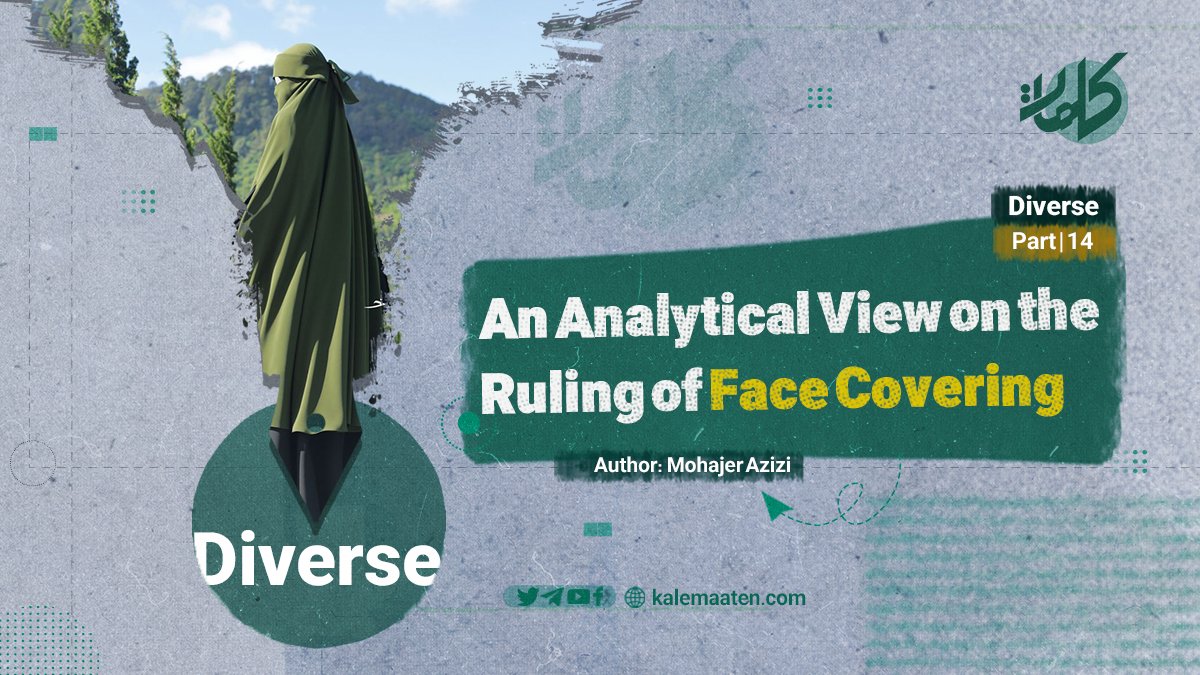
    An Analytical View on the Ruling of Face Covering (Part 14)

    By 02/03/2025No Comments4 Mins Read
    Share Facebook Twitter Telegram WhatsApp
    Share
    Facebook Twitter Telegram Email WhatsApp
    Author: Mohajer Azizi
    An Analytical View on the Ruling of Face Covering (Part 14)
    Covering the Face from the Perspective of Imams and Jurists of the Four Sunni Schools of Thought
    Covering the face is one of the most important issues discussed by Islamic scholars and jurists. In this regard, various jurisprudential interpretations have been presented. In this article, citing library sources and other reliable references, we will consider points of disagreement, as well as the statements and arguments put forward.
    1. Are the Face and Hands Considered Private Parts?
    First, it should be clarified whether the face and hands are considered private parts. Scholars have been divided into two groups:
    – The First Group: Some scholars and jurists believe that the face and hands are private parts, and it is not permissible to reveal them except in front of Muslim women and mahram. This group cites the hadith of the Holy Prophet (PBUH) who said: «المرأة عورة» Translation: “A woman is a complete privacy.”

    – The Second Group: Some scholars believe that a woman’s face and hands are not private; however, due to the fear of sedition and considering the conditions of time and place, they regard it as obligatory to cover them.

    2. The Consensus (Ijma) of Scholars on This Issue
    A. The Opinion of the Four Sunni Schools of Thought: The four Sunni schools of thought and the jurists who follow them agree that the face and hands are not private parts; however, due to the fear of sedition and corruption, they consider it necessary and obligatory to cover them. Allama Mufti Muhammad Shafi’ Usmani, MAPH, says: “Everyone agrees that if looking at the face and hands leads to the fear of sedition, it is not permissible to see them, and it is also forbidden for a woman to reveal them.”
    B. Opinion on the Adornment of the Face and Hands: Scholars also agree that if there is adornment on the face and hands, such as kohl on the eyes or gold and henna on the hands, it is obligatory to cover them. However, if there is no adornment and there is no fear of fitnah, a difference of opinion arises:
    1. One group considers it obligatory to cover the face and hands.
    2. Another group considers it recommended.
    Based on this division, none of the imams and scholars believe that revealing the face is obligatory or preferable. Allamah Mufti Muhammad Shafi’ Usmani also states: “Those who have deemed it permissible to uncover the face and hands have put forward the condition that there is no risk of fitnah; but since the woman’s face is the center of makeup, it is very rare for there to be no risk of fitnah if it is revealed. Therefore, in most cases, uncovering the face and hands is also not permissible for them.”
    Positions of Different Imams:
    Imam Malik, Imam Shafi’i, and Imam Ahmad ibn Hanbal: These imams absolutely do not allow uncovering the face and hands, whether there is a fear of sedition or not. They have considered looking at a young woman a cause of sedition in general and have prohibited it.
    Imam Ahmad (MAPH) considers revealing the face and hands to be forbidden to the extent that their exposure leads to sedition. He believes that if there is a possibility of sedition or desire and closeness to a woman, uncovering the face and hands is prohibited; however, if there is no such possibility, it is permissible. Nevertheless, later Hanafi jurists emphasize the view that in the present era, the risk of sedition is almost always present.
    According to the four imams, the type of hijab for women that involves covering the face and hands in front of men is obligatory due to the fear of sedition and corruption. Consequently, uncovering the face and hands of women is prohibited in most cases, and this ruling has been confirmed in authoritative books of jurists.
    Continues…

    Face Covering Hijab

    Related Posts

    The Divine Education Model in the Family of the Prophets (Part 144)

    19/10/2026

    The Divine Education Model in the Family of the Prophets (Part 143)

    18/10/2026

    The Divine Education Model in the Family of the Prophets (Part 142)

    17/10/2026
    Leave A Reply Cancel Reply

    Follow us on the social media pages
    • Facebook
    • Twitter
    • Instagram
    • Telegram
    • WhatsApp
    Don’t miss

    The Divine Education Model in the Family of the Prophets (Part 144)

    Who Is a Sufi?

    The Responsibility of Faith

    The Divine Education Model in the Family of the Prophets (Part 143)

    About Us:

    The Academic and Research Organization of Kalemaat is an independent Islamic Da'wah organization affiliated with Ahl al-Sunnah wa al-Jama'ah. It is dedicated to promoting the authentic values of Islam, advancing the higher objectives of the Sharia, countering Western cultural influence, upholding the Word of Allah, and contributing to the intellectual and spiritual awakening of the Muslim Ummah.

    The Organization is supported by Muslim philanthropists and businessmen, and it welcomes the cooperation and support of Muslims worldwide in advancing its mission.

    Famous publications

    The Divine Education Model in the Family of the Prophets (Part 144)

    19/10/2026

    Who Is a Sufi?

    19/10/2026
    Follow us on social medias
    • Facebook
    • Twitter
    • YouTube
    • Telegram
    • Instagram
    • WhatsApp
    All right reserved by (kalemaat)
    • Home
    • Analysis of the day
    • The greats of the Ummah
    • library

    Type above and press Enter to search. Press Esc to cancel.
