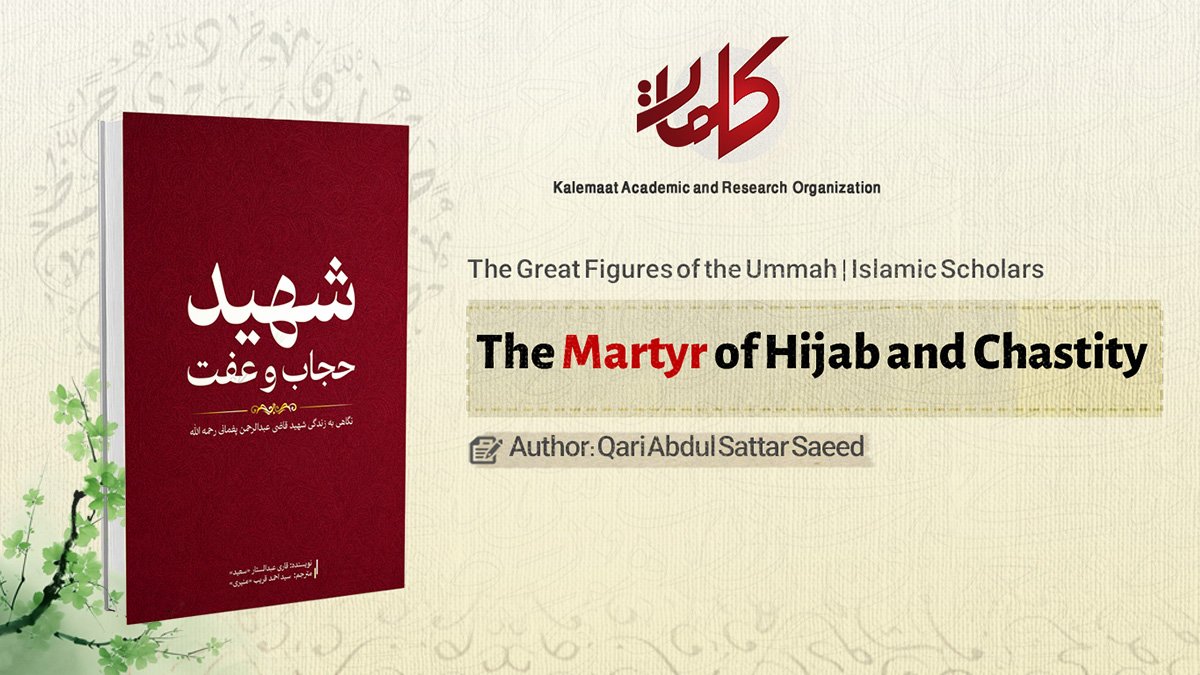
A Glimpse into the Life of the Martyred Qazi Abdul Rahman Paghmani
Zarghun Shahr
At night, the caravan arrived in Zarghun Shahr. The guide—the man whom Taza Gul had sent with the caravan—was dispatched to find Haji Nawruz Khan and arrange a place for them to spend the night. After waiting for about an hour outside the village, Haji Nawruz Khan arrived with several residents of Machalghu and some of his relatives, bringing food and provisions. The companions’ first question concerned Shaykh Muhammad Sadiq and Mawlana Sultan Jan, who had been sent ahead. Haji Nawruz Khan assured them that the two had also reached their destination safely.
He then explained that it would be advisable for them not to enter the village, because the people knew them and their presence might expose the matter. He suggested that they spend the night at the entrance to a qanat near the village. They accepted his suggestion and made that place their overnight resting spot.
They asked Nawruz Khan: “The arrangement was that the first meeting with the Ahmadzai elders would be held in Zarghun Shahr and that, with your cooperation, approximately five hundred influential figures from the area would attend. What has happened to that arrangement?” Haji Nawruz Khan replied that, at present, only three elders—Ridi Gul, Allah Mir, and Esa Khan—were with him. Malik Abdullah Jan, the leader of the Machalghu Ahmadzai, who had been cooperating with him in this undertaking, had gone to Charkh District to attend a condolence gathering and was unavailable. He added that, fearing the plan might be exposed prematurely, he had not invited any more people. He therefore suggested that the main meeting be held in Machalghu instead of Zarghun Shahr.
Qazi Abdul Rahman and his companions spent the night there. From that same location, they also sent a message through Khalifa Mullah Faqir Muhammad Akhund to Muhammad Nur Sahibzada, the son of Faiz Muhammad Sahibzada Mussahi. They informed him that they had left Kabul and that their meeting would be held in the area of “Burgi” in Machalghu, and asked him to attend if possible. The following morning, the caravan set out towards Machalghu by way of Khoshi.
Machalghu
The companions set out from Zargun Shahr towards Paktia by way of Khoshi. After crossing the difficult Ati Pass, they arrived at the first village of Machalghu, known as “Burgi,” on Tuesday, the thirteenth of Rabi al-Awwal, at approximately four o’clock in the afternoon. The inhabitants of this village also belonged to the Ahmadzai tribe, and the village consisted of approximately twenty households.
At first, the villagers were unaware of the purpose of their journey and became somewhat apprehensive. However, after recognising the guests, they welcomed them warmly. When they learned the purpose of the journey, they stated that if the other people of Machalghu supported this movement, they too would stand alongside them.
The climate in this region was very pleasant. Although it was summer, the cold at night compelled them to light a fire. The river that originates in Said Karam, passes through Gardez, and irrigates the lands of Zurmat also has its source in this area. For this reason, part of the region is also known as “Sar-e Chashmaha” (the Source of the Springs). This place was also a meeting point of Logar, Paktia, Mangal, and Zazai. Because of its remoteness, there was little movement or traffic through it. It appears that Haji Nawruz Khan had chosen this location for confidential and secure meetings for precisely this reason.
Initially, the villagers did not know the group’s main purpose for being there. However, when they learned about it, they became apprehensive out of fear of the government. They explained that they were only twenty households and that the government had previously collected their weapons; therefore, they had little capacity to take action. In response, Qazi Abdul Rahman addressed them and clarified that the purpose of this movement was not rebellion or insurrection; rather, its principal motivation and concern was the defence of the values of the Sharia. He expressed this so movingly that many of those present were brought to tears. He emphasised that their sole objective was to exert public pressure on the government so that it would reconsider its regulations and laws and abandon actions contrary to the Sharia.
From the time they had left Kabul until their arrival in Machalghu, the members of the delegation had rested for only two hours, in Zargun Shahr. Thus, they now had an opportunity to rest for a while in this area. During the day, they stayed in the mosque, while at night the local people invited them to their homes for meals. The following day, Haji Nawruz Khan invited elders and influential figures from Machalghu, Koh-Sin, Gharak, and other areas to attend the intended meeting. Messages were also sent to the Ahmadzai elders of Tarokhel and Bazukhel, asking them to gather their chiefs and influential figures and come for discussions. They replied that, because they feared the government, they could not come during the day but would attend at night.
At midnight, a group led by Malik Mastu Khan assembled. They stated that the tribal elder, Malik Ghani, had gone to Logar. The discussion began, but it was clear that fear of the government overshadowed the gathering. Malik Mastu Khan said: “This is a very serious undertaking. Have you secured the support of the government forces in Gardez? Such an action requires military strength, and we ourselves do not have sufficient weapons for war.”
In response, Hazrat Muhammad Sadiq Mujaddidi, speaking on behalf of his companions, explained that their aim was not to start a war. Rather, they wanted to establish a popular force and then jointly call upon the government to abandon the path contrary to the Sharia that it had taken and to stop actions which, in their view, weakened Islam. He added that they were confident that if the government became concerned about the worsening situation, it would abandon its un-Islamic measures. In this way, the desired outcome could be achieved without resorting to war. However, if the government rejected this peaceful proposal, they would then discuss cooperation with the military forces—particularly since, according to him, Brigadier Abdul Ghani Khan, commander of the Zazai military garrison, had already joined them.
The meeting in Machalghu ended without any definite outcome. At this point, a mysterious individual dressed in the clothing of dervishes joined them. He introduced himself as a follower of the Qadiriyya Sufi order and claimed that he would cooperate with them in activities against the government. However, this individual later caused them considerable trouble. In his memoirs (Khaterat-e Muhammad Sadiq Mujaddidi), Muhammad Sadiq Mujaddidi subsequently described him as an accomplice of bandits or a secret government agent and expressed regret over having associated with him. This same individual informed them that the government had learned of their presence in Machalghu and would soon dispatch military forces to arrest them. Consequently, they decided to leave the village and take refuge in the surrounding mountains. They also sent a man named Esa Khan to the Zazai region to discuss the matter with Brigadier Abdul Ghani Khan. Before their departure, at the suggestion of the same mysterious individual, they wrote letters addressed to various tribes of Paktia. He promised to deliver them to their destinations through his own followers. In addition, they sent a letter in Arabic to Pir Sayyid Hasan Qadiri, the leader of the Qadiriyya Sufi order, explaining their objectives and views.
Before setting out for the mountains, they distributed their available cash, amounting to approximately three thousand Afghanis and kept in a small chest in the custody of Muhammad Sadiq Khan, among the companions so that, in the event of an incident, the entire sum would not be lost at once.