

Close Menu
    Facebook X (Twitter) Telegram WhatsApp
    • Language
      • دری
      • پښتو
    • Home
    • Analysis
    • Islam
      • Prophet of Islam (PBUH)
      • Holy Quran
      • Muslim
      • Belief
      • Faith
      • Worships
      • Jurisprudence
      • Jihad
      • Beauty of Islam
      • Islamic Economy
      • Islamic Management
      • Islamic Culture
      • Islamic Sufism
      • Crimes
      • Prohibitions
    • Religions
      • Judaism
      • Christianity
      • Buddhism
      • Hinduism
      • Zoroastrian
      • Satanism
      • Confucius
      • Sikhism
    • Ideas
      • Atheism
      • secularism
      • liberalism
      • Socialism
      • Communism
      • Democracy
      • Federalism
      • Fascism
      • Capitalism
      • Marxism
      • Feminism
      • Nationalism
      • Colonialism
      • Frankfurt School
    • Seduction
      • Mu’tazila
      • Murjea
      • Jahmiyyah Sect
      • Khawarij’s sedition
      • Rawafez sedition
      • Istishraq’s sedition
      • Ghamediyat’s sedition
      • Qadiani’s sedition
      • Qadriyyah Sect
      • Karramiyyah Sect
    • Ummah
      • Companions
        • Hazrat Abubakr Seddiq (MGH)
        • Hazrat Umar Farooq (MGH)
        • Hazrat Usman (MGH)
        • Biography of Hazrat Ali (MGH)
        • Hazrat Khaled bin Waleed (MGH)
        • Hazrat Firooz Dilami (MGH)
        • Hazrat Abdullah Ibn Zubair (MGH)
      • Mothers of the believers
      • Islamic scholars
        • Sayed Abul Hasan Nadavi (MGHM)
        • Grand Imam Abu Hanifah (MGHM)
        • Imam Bukhari (MGHM)
        • Imam Tirmidhi (MGHM)
        • Imam al-Ghazali (MGHM)
        • Shah Waliullah Dehlavi (MGHM)
        • Seyyed Jamaluddin Afghan
        • Maulana Jalaluddin Balkhi Rumi (MGHM)
      • Muslim Governor’s
        • Sultan Salahuddin Ayyubi (MGHM)
        • Omar bin Abdul Aziz (MGHM)
        • Sultan Yusuf bin Tashfin (MGHM)
      • Islamic scientists
    • Civilizations
      • Islamic civilization
      • Eastern & Western civilizations
    • Diverse
      • Ramadan Message
    • library
    Facebook X (Twitter) Telegram WhatsApp
    کلمات انگلیسیکلمات انگلیسی
    You are at:Home»Belief»Resurrection after Death (Part 16)
    Belief

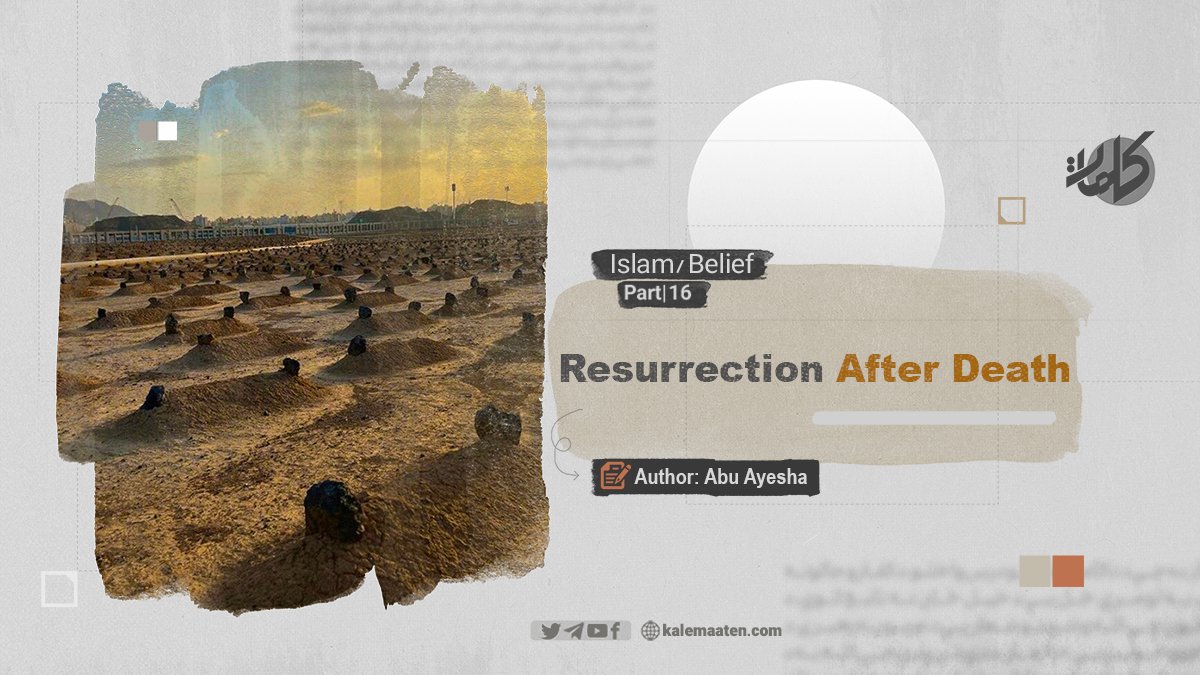
    Resurrection after Death (Part 16)

    admin2By admin202/03/2026No Comments3 Mins Read
    Share Facebook Twitter Telegram WhatsApp
    Share
    Facebook Twitter Telegram Email WhatsApp
    Author: Abu Ayesha
    Resurrection after Death (Part 16)
    Introduction
    After examining the proofs for resurrection after death and concluding that the Hereafter (al-Maʿād) is established both through transmitted evidence (the verses of the Noble Qur’an, the Hadiths of the Prophet (PBUH), the consensus of the Muslim community, and the statements of scholars) and through rational evidence (intellectual arguments and logical proofs), and after clarifying the causes and factors that lead some people to deny resurrection, it is appropriate to ask: What is the ruling regarding those who, despite such clear and manifest proofs, deny resurrection after death and refuse to accept it? In light of the verses of the Noble Qur’an, the Hadiths of the Prophet (PBUH), scholarly consensus, and the opinions of scholars, what judgment is issued concerning such individuals?
    The Issue of Resurrection: A Question That Remained Unresolved for Some
    The matter of resurrection after death has been a point of doctrinal difficulty for many groups since Allah the Exalted sent the Prophets (peace be upon them).
    The Prophets of Allah (peace be upon them) called people to righteous deeds and forbade them from evil actions. They warned them of accountability before Allah the Exalted after resurrection and at the time of reckoning. Allah the Exalted says: “وَأَقْسَمُوا بِاللَّهِ جَهْدَ أَيْمَانِهِمْ لَا يَبْعَثُ اللَّهُ مَنْ يَمُوتُ ۚ بَلَىٰ وَعْدًا عَلَيْهِ حَقًّا وَلَٰكِنَّ أَكْثَرَ النَّاسِ لَا يَعْلَمُونَ” [1] Translation: “And they swore by Allah their strongest oaths that Allah will not resurrect one who dies. Yes indeed, it is a true promise binding upon Him, but most people do not know.”
    Those who deny resurrection consider the revival after death—after the body has decayed and its particles have dispersed—to be exceedingly difficult. They overlook the miracle of the initial creation of life and remain unaware of the true nature of Allah’s power. The issue of resurrection after death is one of the core doctrines of Islam that, in every era and during the mission of every Prophet, has faced numerous opponents and generated significant controversy. [2]
    The denial of resurrection is not a phenomenon unique to the present age. It has existed since ancient times among people who either failed to recognize Allah, did not comprehend His power, greatness, and majesty, or who recognized these realities yet feigned ignorance and deliberately ignored them.
    From the materialist atheists (al-Dahriyyah) who denied the Creator altogether, to the polytheists of Quraysh—concerning whom numerous Qur’anic verses were revealed—the Prophet Muhammad (PBUH) warned extensively in his Hadiths about them and about later deniers who would arise, carrying forward the same claims and fabrications.
    The fundamental problem of the disbelievers of Quraysh, after their idolatry, was their denial of resurrection after death. They believed that there was no life after death and that no evidence existed for the possibility of being brought back again. For this reason, the Noble Qur’an repeatedly responds to their doubts, directing warnings and admonitions toward them. Various forms of threat and warning are mentioned, among the most severe of which is the realization of the punishment of Hellfire—where they will be fed from the tree of Zaqqum, causing their bellies to boil, flames to be poured over their heads, melting them, and exposing them to every form of humiliation, disgrace, and torment, before being left in that state. [3]
    Continues…

    Previous Part

    References:

    [1] The Qur’an, Surah al-Nahl (16:38).

    [2] Fa’iz, Ahmad. Al-Yawm al-Ākhir fī Ẓilāl al-Qur’ān (The Hereafter in the Shade of the Qur’an). 1414 AH / 1994 CE, p. 24.

    [3] Al-Zuhayli, Dr. Wahbah ibn Mustafa. Al-Tafsīr al-Wasīṭ li al-Zuhayli. 1422 AH, Vol. 3, p. 2385.

    Islam Resurrection Resurrection After Death
    admin2

    Related Posts

    Capitalism (part 10)

    02/03/2026

    The Quran: A Miracle Beyond Time- A Study of Its Miraculous Nature (part 98)

    02/03/2026

    The Quran: A Miracle Beyond Time- A Study of Its Miraculous Nature (part 97)

    01/03/2026
    Leave A Reply Cancel Reply

    Follow us on the social media pages
    • Facebook
    • Twitter
    • Instagram
    • Telegram
    • WhatsApp
    Don’t miss

    Resurrection after Death (Part 16)

    Capitalism (part 10)

    The Quran: A Miracle Beyond Time- A Study of Its Miraculous Nature (part 98)

    The Quran: A Miracle Beyond Time- A Study of Its Miraculous Nature (part 97)

    About Us:

    The Scientific and Research Office of Kalemaat is an independent office affiliated with Ahl al-Sunnah wa al-Jama‘ah. It works to promote the true values of Islam, achieve the noble goals of the sacred Sharia, resist Western cultural influence, uphold the Word of Allah, and awaken the Muslim community.

    This office is supported by Muslim philanthropists and businessmen, and it also invites all Muslims to fully cooperate and contribute to its mission.

    Famous publications

    Resurrection after Death (Part 16)

    02/03/2026

    Capitalism (part 10)

    02/03/2026
    Follow us on social medias
    • Facebook
    • Twitter
    • YouTube
    • Telegram
    • Instagram
    • WhatsApp
    All right reserved by (kalemaat)
    • Home
    • Analysis of the day
    • The greats of the Ummah
    • library

    Type above and press Enter to search. Press Esc to cancel.