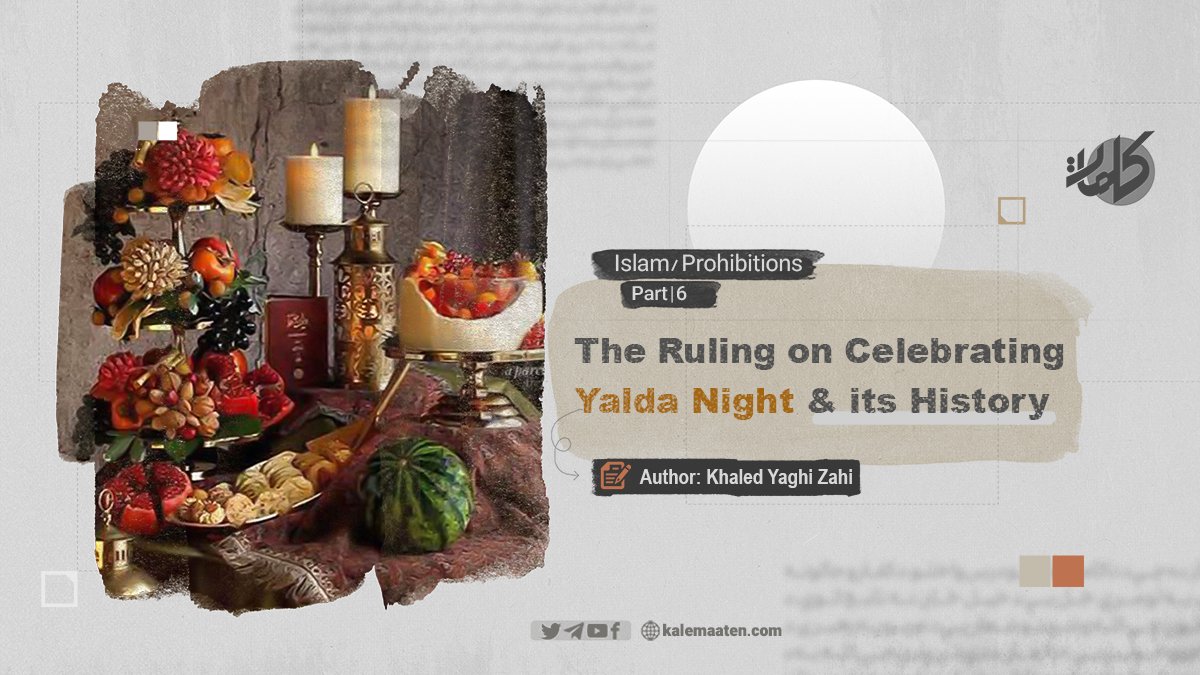
Author: Khaled Yaghi Zahi
The Ruling on Celebrating Yalda Night and its History (Part 6)
Yalda in the Scale of the Shari‘ah (continuation)
The Shari‘ah is the beginning of the path, and the Minhaj refers to the manner of continuing along this path. Therefore, both the beginning of the path and its continuation, with its method and way, are specific and exclusive to each religion. No one can agree with Islam at its beginning and then, in continuing the path, follow European culture, an ancient religion, old customs, or the ancestral ways of their forefathers. These two cannot be combined. A person cannot say: I follow Islam in prayer, fasting, and zakah, but in festivals, celebrations, and ceremonies I follow the religion of my ancestors. Which rational person could even utter such a statement, let alone accept it or submit to it?
When our way and method differ from other religions, and Allah the Exalted has made the “Shir‘ah” and the “Minhaj” of every religion specific to that religion, how can we dare to turn away from the complete Shari‘ah and Minhaj of Islam and turn toward the Minhaj and way of an abrogated religion such as Zoroastrianism, and on the basis of their nullified teachings and legacy celebrate Yalda? One must fear Allah, Who has complete knowledge of all matters and is fully aware of the secrets of the hearts of His servants, and be certain that: إِلَى اللَّهِ مَرْجِعُكُمْ جَمِيعًا فَيُنَبِّئُكُم بِمَا كُنتُمْ فِيهِ تَخْتَلِفُونَ Translation: “To Allah is the return of you all; then He will inform you of that in which you used to differ.” [1]
O Muslims, know that the festival and celebration of every religion are exclusive to that religion. No one has the right to follow the festivals of previous religions, such as the religion of Mithra or the religion of Mehr, and celebrate them, because such an action contradicts the distinct characteristics of each religion and conflicts with the teachings of Islam. Allah the Exalted says: لِكُلِّ أُمَّةٍ جَعَلْنَا مَنْسَكًا هُمْ نَاسِكُوهُ فَلَا يُنَازِعُنَّكَ فِي الْأَمْرِ وَادْعُ إِلَى رَبِّكَ إِنَّكَ لَعَلَى هُدًى مُسْتَقِيمٍ Translation: “For every nation We have appointed a rite which they perform; so, let them not dispute with you over the matter and invite to your Lord. Indeed, you are upon a straight guidance.” [2]
Allah has appointed for every religion a special program and determined within it a specific way and method. Is there any statement clearer than this? Allah states explicitly that the program of every nation belongs to that nation and is exclusive to them.
Therefore, no Muslim can permit himself to follow the rites and ways of other religions and celebrate the ancient festivals of the Zoroastrians and rejoice in them. If people truly perform their acts of worship sincerely for Allah and then establish and celebrate the festivals of those acts of worship, they will be successful in this world and the Hereafter. Allah has forbidden us even from merely inclining toward ancient and abrogated religions. How, then, could it be possible not only to incline toward them but also to celebrate their festivals and resemble them in their customs and traditions? Allah the Exalted says: وَلَا تَرْكَنُوا إِلَى الَّذِينَ ظَلَمُوا فَتَمَسَّكُمُ النَّارُ وَمَا لَكُم مِّن دُونِ اللَّهِ مِنْ أَوْلِيَاءَ ثُمَّ لَا تُنصَرُونَ Translation: “And do not incline toward those who have wronged, lest the Fire touch you; and you will have no protectors other than Allah, then you will not be helped.” [3]
If a small inclination toward the people of wrongdoing causes destruction and falling into the Fire, will not a greater inclination—especially toward the disbelievers, and that too by celebrating their festivals—cause destruction and falling into the Fire?
Therefore, every believer must keep himself away from inclining toward ignorant customs and must not celebrate the false festivals of his ancestors. Would you like to be punished because of such an action?
The Messenger of Allah (PBUH) stated clearly: مَنْ تَشَبَّهَ بِقَوْمٍ فَهُوَ مِنْهُمْ Translation: “Whoever imitates a people is one of them.” [4] The one who celebrates non-Islamic festivals, revives their customs, and follows those who establish such festivals; has he not resembled them? Has he not made himself similar to them in such matters?
Allah has continually forbidden the nations of His Prophets from resembling peoples who were misguided or who incurred wrath, and He prohibited them from imitation of previous nations, severely condemning resemblance in prohibited, trivial, and futile matters. Thus, He said: وَقَالَتِ الْيَهُودُ لَيْسَتِ النَّصَارَى عَلَى شَيْءٍ وَقَالَتِ النَّصَارَى لَيْسَتِ الْيَهُودُ عَلَى شَيْءٍ وَهُمْ يَتْلُونَ الْكِتَابَ كَذَلِكَ قَالَ الَّذِينَ لَا يَعْلَمُونَ مِثْلَ قَوْلِهِمْ فَاللَّهُ يَحْكُمُ بَيْنَهُمْ يَوْمَ الْقِيَامَةِ فِيمَا كَانُوا فِيهِ يَخْتَلِفُونَ Translation: “And the Jews say, ‘The Christians are upon nothing,’ and the Christians say, ‘The Jews are upon nothing,’ while they recite the Scripture. Thus said those who do not know, similar to their saying. Allah will judge between them on the Day of Resurrection concerning that over which they used to differ.” [5]
The evidence in this verse is in the phrase “كَذَلِكَ قَالَ الَّذِينَ لَا يَعْلَمُونَ مِثْلَ قَوْلِهِمْ”. Allah reproached and censured them for the resemblance in this statement. How much more so in resembling others in festivals, celebrations, and customs?
Allah the Exalted has condemned such resemblances in every nation, strongly prevented them, and reproached their people. Elsewhere He says: وَقَالَ الَّذِينَ لَا يَعْلَمُونَ لَوْلَا يُكَلِّمُنَا اللَّهُ أَوْ تَأْتِينَا آيَةٌ كَذَلِكَ قَالَ الَّذِينَ مِنْ قَبْلِهِمْ مِثْلَ قَوْلِهِمْ تَشَابَهَتْ قُلُوبُهُمْ قَدْ بَيَّنَّا الْآيَاتِ لِقَوْمٍ يُوقِنُونَ Translation: “And those who do not know say, ‘Why does Allah not speak to us, or a sign come to us?’ Thus said those before them, similar to their saying. Their hearts resemble one another. We have certainly made the signs clear for a people who are certain.” [6]
To be continued…
References:
- Surah Al-Ma’idah, verse 48.
- Surah Al-Hajj, verse 67.
- Surah Hud, verse 113.
- Al-Sijistani, Abu Dawud Sulayman ibn al-Ash‘ath, Sunan Abi Dawud, volume 4, page 78, Book of Clothing, Chapter: On Wearing Garments of Fame, Hadith number 4033, publisher: Dar al-Kitab al-‘Arabi, Beirut.
- Surah Al-Baqarah, verse 113.
- Surah Al-Baqarah, verse 118.



