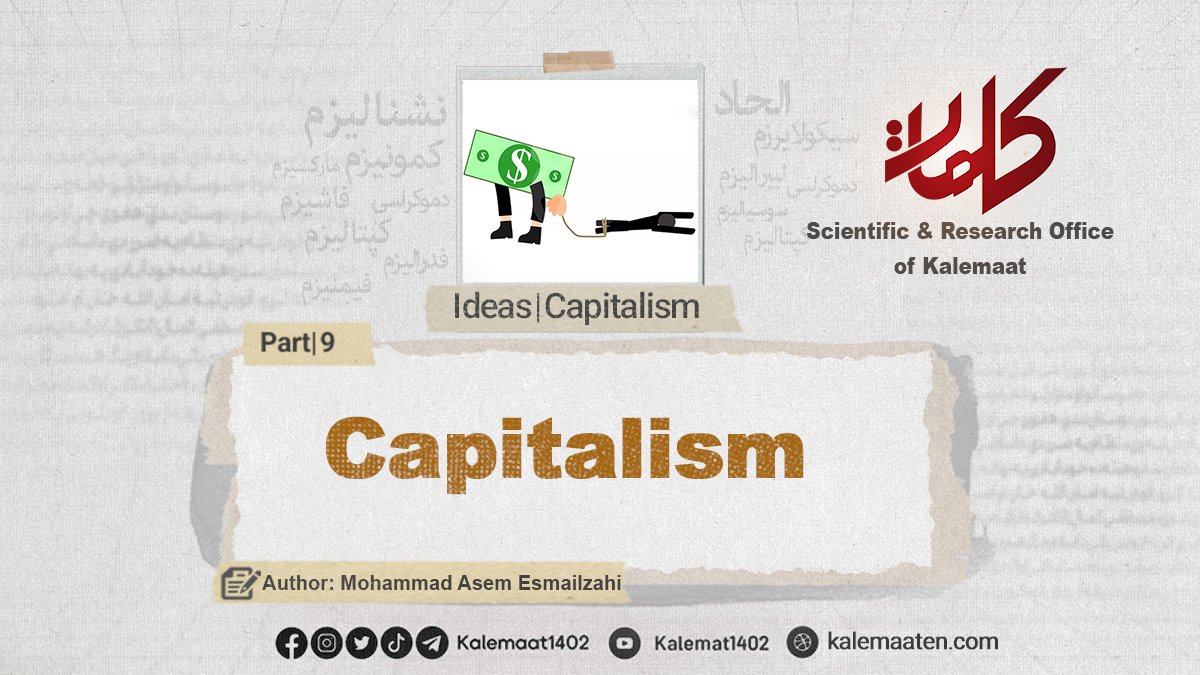
Poverty and Inequality in the Global Economy: Dying the Capitalist Way
The capitalist system is hundreds of years old and has now brought almost all parts of the world under its dominance. Its leading proponents claim that this system is the most powerful productive engine the world has ever known.
They also argue that the capacities of this system to provide living standards for all people on Earth are unparalleled, because, in the words of Bradford DeLong, we are supposedly “moving toward utopia.”
Given the long period of capitalist domination and the constant noise made by its supporters, it is worth pausing to reflect on the validity of the claim of “moving toward utopia.” Let us look at three issues: the level of poverty and inequality in wealthy capitalist countries; the level of poverty and inequality in the world’s poor countries; and the gap between countries at the top and bottom of the capitalist hierarchy. [1]
Some European countries are often cited as places where governance is dominated by the middle class, and where a poor individual can, with a small amount of effort, raise themselves to the average economic level of society. This idea is referred to as equality of opportunity. While the concepts of “middle class” or “equality of opportunity” are not easy to define precisely, one can reasonably expect that in such a society there should not be widespread poverty, and people should enjoy an acceptable level of economic well-being.
However, statistics on poverty and inequality in the distribution of income and wealth do not align with such claims at all. The federal government of the United States has defined a threshold known as the “income poverty line,” under which families are considered poor. This threshold represents the level of income below which a family can barely survive and faces serious difficulties when confronted with financial crises such as illness or work-related injury.
The official poverty line is calculated as three times the minimum estimated cost of a household’s food needs, as determined by the Department of Agriculture. This figure, due to unrealistic assumptions built into its calculation, is far lower than the real cost of living. For example, it assumes that households always purchase food at the lowest available market prices and that they know how to prepare the most nutritious diet possible from the cheapest food items available.
In 2002, this amount was $6.12 per person per day. In that same year, 34.6 million people, or 12.1% of the total population of the United States, were living below the poverty line (among Black Americans, this figure was 24%). In 2001, 35.2% of Black children under the age of six were living in poverty.
These figures fluctuate over time, but even when conditions are considered “good” by defenders of capitalism, the numbers remain high. If a more realistic definition of poverty is adopted, for example, one based on median income, the poverty rate rises to 17% (in 1997), affecting more than 45 million people.[2]
How likely is it that such widespread poverty can be eliminated? Given that this poverty is intertwined with growing inequality in income and wealth, and that such inequality is embedded in all the rules of the capitalist game, the prospects are not encouraging. Income inequality in the United States reached its highest level in 2000 (the highest since the 1920s), with the richest 5% of households earning six times as much as the poorest 20%.
Paul Krugman, an economist who strongly criticized the Bush administration in his columns for The New York Times, estimates that 70% of income growth in the United States during the 1980s went into the pockets of the top 1% of American families.
In terms of wealth, in 1995 in the United States, the richest 1% of households owned 42.2% of all stocks, 55.7% of bonds, 71.4% of non-corporate businesses, and 36.9% of non-residential assets. Taking income inequality into account, this disparity has been increasing over the past 20 years. Such massive and growing inequality makes a mockery of the claim of equal opportunity. Consider one example:
In Pittsburgh, Pennsylvania, there exists the extremely wealthy Hillman family, with assets worth several billions of dollars. One of their homes is a large and magnificent mansion located on Fifth Avenue, one of America’s most affluent streets. About thirty miles east of this mansion lies a poor area of the city, known as the “wooden houses neighborhood.” Poverty and misery are rampant there, and this area has one of the highest child mortality rates.
Income inequality produces many unintended consequences. Research shows that if we compare two countries, or two states, with the same average income, what can be called “social health” is lower in the country or state with greater income inequality. [3]
Experts have observed that the total income share of the poorer half of households in each state. a measure of income inequality, has an inverse relationship with state mortality rates. In addition, this measure has been tested against other social characteristics as well. States with greater income inequality have higher unemployment rates, larger prison populations, a higher percentage of residents receiving financial and food assistance, and a greater share of people suffering from medical problems. The income gap between the rich and the poor predicts social outcomes better than average income does.
Interestingly, states with higher income inequality spend less per person on education. In these states, the number of books per student in schools is lower, overall educational performance is weaker, and a smaller percentage of people graduate from high school.
In states where income inequality is greater, a higher proportion of children are born underweight, and rates of homicide and crime are higher. A larger share of the population is also prevented from working due to disability, and tobacco use is more prevalent in these states. [4]
Large and growing inequality gradually erodes the political power of the lower classes. As a result, social welfare programs, which partially mitigate the harms caused by poverty, decline, while policies that primarily benefit the wealthy take their place. At the same time, the poor, witnessing the widening gap between themselves and the affluent, become increasingly discouraged and hopeless.
Heilbroner, Robert, Capitalism in the Twenty-First Century, p. 168, translator: Shahsa, Ahmad, editor: Abedini, Afagh; year: 1377 h; Scientific and Cultural Publishing Company.
Tobias J. Lanz, Beyond Capitalism and Socialism: A New Reading of Ancient Ideals, p. 544, translators: Sharbati, Vahid; Heidari, Mohaddeseh; year: 1397 h; Donya-ye Eqtesad Publishing.
Hans-Hermann Hoppe, Aristocracy, Monarchy, Democracy: A Story of Moral and Economic Folly and Decay, p. 356, translator: Abdi, Soleiman; year: 1396 h; Donya-ye Eqtesad Publishing.