




Author: Abu Ayesha
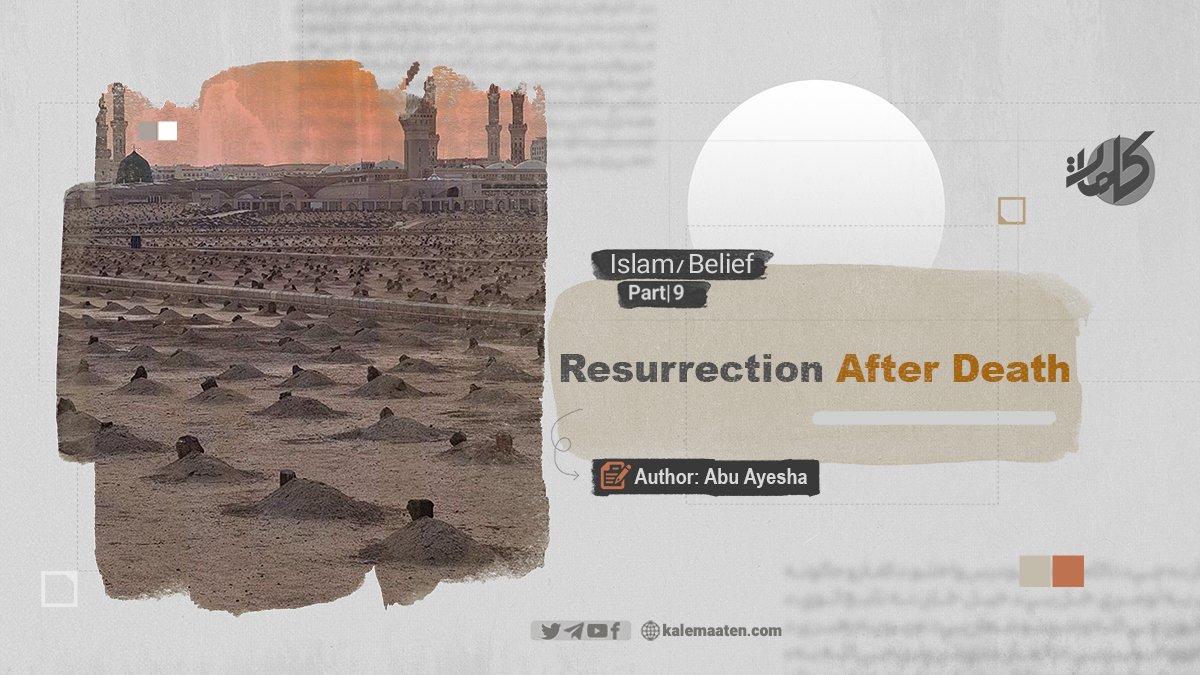
Resurrection After Death (part 9)
Preface
Since the deniers of the Resurrection (Ma‘ād), and those who follow this path, consistently rely on rational arguments and deny this crucial matter through their own reasoning, we deem it necessary—after presenting the Qur’anic proofs, the Prophetic hadiths, and the statements of scholars—to address the rational evidences and arguments that are accepted by every sound mind and about which no one harbors doubt. Through this approach, we aim to arrive at the issue of life after death and thereby make rationalists realize that what we seek to prove is also comprehensible through reason. Thus, if you wish to reach the truth, it is essential to employ reflection and rational thinking and to grasp the sensitivity of this matter.
Sound Reason and Pure Fitrah Recognize the Resurrection
Allah created human beings and endowed them with intellect by which they can distinguish truth from falsehood and good from evil. Since humans possess discernment and the ability to choose freely, divine wisdom necessitates that they be commanded to pursue what is good, beneficial, and true—and be encouraged and motivated to do so—while being prohibited from falsehood and injustice and warned against them. It is evident that encouragement, deterrence, and motivation are tied to recompense and reward; yet these are not fully realized in this world, except rarely and incompletely. Therefore, divine wisdom requires the existence of another abode in the Hereafter where humans receive their full due. Otherwise, divine justice and wisdom would be called into question, and promises and warnings would remain unfulfilled—something from which Allah the Exalted is absolutely free and exalted.[1]
Although the Resurrection is established in religion through revelation, it should not be forgotten that sound reason and pure human nature (fitrah) also affirm it. By reflecting on the order of creation, divine justice, the purposeful nature of existence, and related realities, reason clearly perceives that death is not the end of human existence. Rather, the true abode becomes manifest once one departs this world; there, one receives the recompense for all good and evil deeds. Below, we present some of the most important rational proofs for establishing the Resurrection.
The Proof of Divine Justice
The Resurrection is a necessary consequence of divine justice, and justice is among the attributes of the Lord of the Worlds. Allah the Exalted is just and never treats the righteous and the wicked as equal. Accordingly, Allah has promised to grant every person what they deserve and to wrong no one. However, human life in this world does not allow for the fulfillment of these promises in full, because not everyone receives the complete reward or punishment for their deeds here. Some crimes are so grave that no fitting recompense can be administered in this world; moreover, this world lacks the capacity to deliver complete rewards to people. If there were no other world in which the oppressor is subjected to true justice and the oppressed is granted their due, an objection (God forbid) would arise against the justice of Allah.
To demonstrate the necessity of the Resurrection from the perspective of divine justice, we first cite several Qur’anic verses and then present the rational argument:
Allah the Exalted says: أَمْ نَجْعَلُ الَّذِينَ آمَنُوا وَعَمِلُوا الصَّالِحَاتِ كَالْمُفْسِدِينَ فِي الْأَرْضِ أَمْ نَجْعَلُ الْمُتَّقِينَ كَالْفُجَّارِ Translation: “Shall We treat those who believe and do righteous deeds like the corrupters on the earth? Or shall We treat the God-fearing like the wicked?” [2]
Allah the Exalted also says: وَمَا يَسْتَوِي الْأَعْمَى وَالْبَصِيرُ وَالَّذِينَ آمَنُوا وَعَمِلُوا الصَّالِحَاتِ وَلَا الْمُسِيءُ قَلِيلًا مَا تَتَذَكَّرُونَ إِنَّ السَّاعَةَ لَآتِيَةٌ لَا رَيْبَ فِيهَا وَلَكِنَّ أَكْثَرَ النَّاسِ لَا يُؤْمِنُونَ Translation: “The blind and the seeing are not equal, nor are those who believe and do righteous deeds and the evildoer. Little is it that you take heed. Indeed, the Hour is surely coming—there is no doubt about it—but most people do not believe.”[3]
And He says: أَمْ حَسِبَ الَّذِينَ اجْتَرَحُوا السَّيِّئَاتِ أَنْ نَجْعَلَهُمْ كَالَّذِينَ آمَنُوا وَعَمِلُوا الصَّالِحَاتِ سَوَاءً مَحْيَاهُمْ وَمَمَاتُهُمْ سَاءَ مَا يَحْكُمُونَ وَخَلَقَ اللَّهُ السَّمَاوَاتِ وَالْأَرْضَ بِالْحَقِّ وَلِتُجْزَى كُلُّ نَفْسٍ بِمَا كَسَبَتْ وَهُمْ لَا يُظْلَمُونَ Translation: “Do those who commit evil think that We will make them like those who believe and do righteous deeds—equal in their life and their death? Evil is the judgment they make. Allah created the heavens and the earth in truth, so that every soul may be recompensed for what it has earned, and they will not be wronged.”[4]
Allah the Exalted further says: أَفَنَجْعَلُ الْمُسْلِمِينَ كَالْمُجْرِمِينَ مَا لَكُمْ كَيْفَ تَحْكُمُونَ Translation: “Shall We treat the Muslims like the criminals? What is the matter with you—how do you judge?”[5]
Based on rational and transmitted proofs, it is established that Allah the Exalted is just and never commits injustice, as He says: وَلَا يَظْلِمُ رَبُّكَ أَحَدًا Translation: “Your Lord does not wrong anyone.”[6]
Therefore, if there were no other world, this would contradict divine justice, since this world is not the arena for the full realization of rewards and punishments. Divine justice further requires a clear distinction between the righteous and the wicked, with each receiving the outcome of their deeds. Consequently, Allah the Exalted must resurrect all after death in another world and grant reward or punishment accordingly.[7]
From the Qur’anic perspective, as the cited verses show, the righteous and believing servants of Allah are never equal to criminals and sinners; rather, the former are superior and enjoy higher ranks and better blessings.
This raises an important question: where are these ranks and distinctions realized? In this world, or in another realm? Observing the conditions of this world, it becomes evident that in terms of comfort, prosperity, and enjoyment of divine blessings, disbelievers and immoral individuals are not necessarily worse off than Muslims and believers; often their conditions are equal or even better, and in many aspects they dominate and exploit the people of Islam and faith. Hence, this world is clearly not the place where these Qur’anic promises are fulfilled. Therefore, there must be another world after this one in which Allah’s promises are realized and the true reward of the believers and the real punishment of the wicked are delivered.[8]
Continues…
Previous Part | Next Part
References:
[1]. Al-Dhib, Najat bint Musa, Al-‘Aql: Makanatuhu wa Dalalatuhu al-Shar‘iyyah ‘ala al-Usul al-I‘tiqadiyyah, Riyadh, n.d., p. 48.
[2]. Surah Ṣād: 28.
[3]. Surah Ghafir: 58–59.
[4]. Surah al-Jathiyah: 21–22.
[5]. Surah al-Qalam: 35–36.
[6]. Surah al-Kahf: 49.
[7]. Makki, Dr. Majd, A Comprehensive Collection of Sunni Beliefs, trans. Fayz Muhammad بلوچ, 1394 SH, vol. 2, p. 661.
[8]. Makki, Dr. Majd, A Comprehensive Collection of Sunni Beliefs, trans. Fayz Muhammad, 1394 SH, vol. 2, p. 660.


