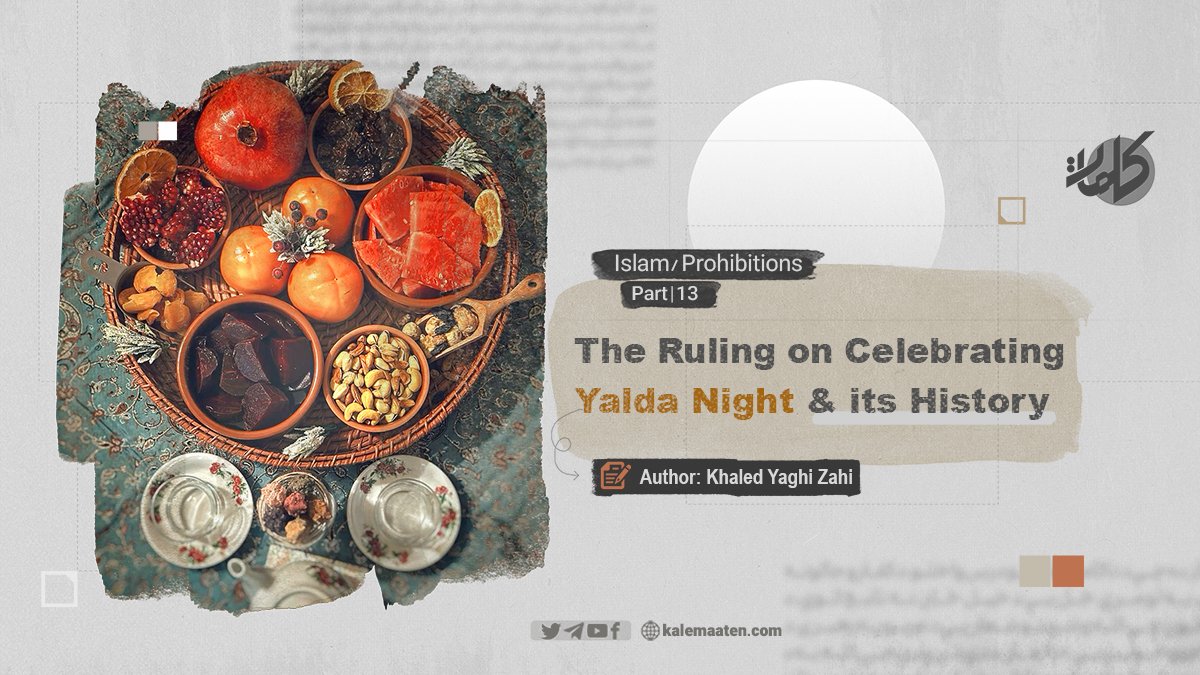
Author: Khaled Yaghi zahi
The Ruling on Celebrating Yalda Night and its History (part 13)
Reason for the prohibition of celebrating Yalda
3- Wasting time in sinful matters and futile activities.
Time is one of the most important matters to which people pay little attention, while Allah says: وَالْعَصْرِ إِنَّ الْإِنسَانَ لَفِي خُسْرٍ إِلَّا الَّذِينَ آمَنُوا وَعَمِلُوا الصَّالِحَاتِ وَتَوَاصَوْا بِالْحَقِّ وَتَوَاصَوْا بِالصَّبْرِ Translation: By the Time. Indeed, mankind is in loss, except for those who believe and do righteous deeds and advise one another to truth and advise one another to patience. [1]
And the Messenger of Allah (PBUH) said: لا تزول قدم ابن آدم يوم القيامة من عند ربه حتى يسئل عن خمس، عن عمره فيم أفناه، وعن شبابه فيم أبلاه، وماله من أين اكتسبه وفيم أنفقه، وماذا عمل فيما علم؟ Translation: The feet of the son of Adam will not move on the Day of Resurrection before his Lord until he is questioned about five things: about his life and how he spent it; about his youth and how he wore it out; about his wealth, how he earned it and how he spent it; and about what he did with the knowledge he had. [2]
Those people who spend their time in such gatherings and celebrations are the farthest from understanding the importance of time. The greatest calamity is that some of them, based on the beliefs of their ancestors, remain awake the entire night as if they were performing night vigil. Refuge is sought with Allah from such manifest misguidance. How is it that they do not stay awake for Allah and for the forgiveness of their sins, nor cry at night nor seek forgiveness, yet they remain awake until morning to revive a pre-Islamic custom? They spend their time in the worst affairs and in opposition to the Shari‘ah of Islam, and if they were to die in that state, they would be resurrected with those same ancestors. Refuge is sought with Allah. The landmarks of religion have disappeared, the Sunnah has become strange, and ignorance and misguidance have reached such levels that people see what is right as wrong and what is wrong as right: إِنَّا لِلَّهِ وَإِنَّا إِلَيْهِ رَاجِعُونَ.
People, in Yalda and similar occasions such as Nowruz and other forbidden celebrations, waste their time in this manner and fall behind in obedience to Allah. How do they spend their time in disobedience to Allah and neglect their obligations? They commit extravagance, mix freely with non-mahram, and gather to uphold false and pre-Islamic beliefs. While the Messenger of Allah (PBUH) said: نعمتان مغبون فيهما كثير من الناس: الصحة والفراغ Translation: There are two blessings concerning which many people are deceived: health and free time. [3]
Instead of using their time and hastening toward the forgiveness of Allah, people waste their time and hasten toward the punishment of Allah. Allah says: وَسَارِعُوا إِلَىٰ مَغْفِرَةٍ مِّن رَّبِّكُمْ وَجَنَّةٍ عَرْضُهَا السَّمَاوَاتُ وَالْأَرْضُ أُعِدَّتْ لِلْمُتَّقِينَ Translation: And hasten to forgiveness from your Lord and a Paradise as wide as the heavens and the earth, prepared for the righteous.) [4]
4- Reviving false creeds and the ignorant customs of ancestors.
Whoever introduces a misguided path for people, calls them to it, or revives it for them, then the sin of all who follow it is upon him as well. The Messenger of Allah (Peace be upon him) said: من سن سنة خير فاتبع عليها فله أجره ومثل أجور من اتبعه غير منقوص من أجورهم شيئا ومن سن سنة شر فاتبع عليها كان عليه وزره ومثل أوزار من اتبعه غير منقوص من أوزارهم شيئا Translation: Whoever introduces a good practice in Islam, and it is followed, he will have its reward and the reward of those who follow it, without their rewards being diminished in the least. And whoever introduces an evil practice in Islam, and it is followed, he will bear its sin and the sin of those who follow it, without their sins being diminished in the least. [5]
5- Backbiting and idle talk.
In such gatherings, without any doubt, backbiting, idle speech, falsehood, and sin are exchanged, and people speak about one another based on incorrect assumptions, while Allah has forbidden backbiting and says: يَا أَيُّهَا الَّذِينَ آمَنُوا اجْتَنِبُوا كَثِيراً مِّنَ الظَّنِّ إِنَّ بَعْضَ الظَّنِّ إِثْمٌ وَلَا تَجَسَّسُوا وَلَا يَغْتَب بَّعْضُكُم بَعْضاً أَيُحِبُّ أَحَدُكُمْ أَن يَأْكُلَ لَحْمَ أَخِيهِ مَيْتاً فَكَرِهْتُمُوهُ وَاتَّقُوا اللَّهَ إِنَّ اللَّهَ تَوَّابٌ رَّحِيمٌ Translation: O you who believe! Avoid much suspicion. Indeed, some suspicion is sin. And do not spy, nor backbite one another. Would one of you like to eat the flesh of his dead brother? You would detest it. And fear Allah; indeed, Allah is Accepting of repentance, Most Merciful. [6]
It is also narrated that the Messenger of Allah (PBUH) once said to Aishah (RA): لَقَدْ قُلْتِ كَلِمَةً لَوْ مُزِجَتْ بِمَاءِ البَحْرِ لَمَزَجَتْهُ Translation: You have uttered a word which, if it were mixed with the water of the sea, would surely contaminate it. [7]
And the Messenger of Allah (PBUH) also said: إِنَّ أَرْبَى الرِّبَا اسْتِطَالَةُ الْمَرْءِ فِي عَرْضِ أَخِيهِ Translation: Indeed, the most grievous form of usury is a person’s transgression against the honor of his brother. [8]
To be continued…
References:
- Surah Al-Asr, Ayah: 1–3.
- Al-Tirmidhi, Muhammad Ibn Isa, Al-Jami‘ Al-Sahih Sunan Al-Tirmidhi, vol. 4, p. 612, Book of the Description of the Day of Resurrection and Softening of Hearts, chapter on the Day of Resurrection, Hadith no. 2416, publisher: Dar Ihya’ Al-Turath Al-‘Arabi – Beirut.
- Ibn Majah, Muhammad Ibn Yazid Al-Qazwini, Sunan Ibn Majah, vol. 2, p. 1396, Book of Asceticism, chapter on Wisdom, Hadith no. 4170, publisher: Dar Al-Fikr – Beirut.
- Surah Aal ‘Imran, Ayah: 133.
- Al-Tirmidhi, Muhammad Ibn Isa, Al-Jami‘ Al-Sahih Sunan Al-Tirmidhi, vol. 5, p. 43, Book of Knowledge, chapter on whoever calls to guidance and is followed or to misguidance, Hadith no. 2675, publisher: Dar Ihya’ Al-Turath Al-‘Arabi – Beirut.
- Surah Al-Hujurat, Ayah: 12.
- Al-Nawawi, the jurist and hadith scholar Muhyi Al-Din, Al-Adhkar Al-Nawawiyyah, vol. 1, p. 336, Clear proofs from the Book, the Sunnah, and the consensus of the Ummah, Hadith no. 893, revised new edition, Dar Al-Fikr for Printing, Publishing, and Distribution.
- Al-Bayhaqi, Abu Bakr Ahmad Ibn Al-Husayn, Shu‘ab Al-Iman, vol. 5, p. 313, the forty-fourth branch of faith, chapter on the prohibition of violating people’s honor and what is required to avoid it, section on reports emphasizing severity against one who takes from the honor of his Muslim brother by insult or otherwise, Hadith no. 6769, first edition 1410 AH, publisher: Dar Al-Kutub Al-‘Ilmiyyah – Beirut.