

Close Menu
    Facebook X (Twitter) Telegram WhatsApp
    • Language
      • دری
      • پښتو
      • العربیة
    • Home
    • Analysis
    • Islam
      • Prophet of Islam (PBUH)
      • Holy Quran
      • Muslim
      • Belief
      • Faith
      • Worships
      • Fiqh
      • Jihad
      • Islamic Perspectives
      • Islamic Economics
      • Islamic Management
      • Islamic Culture
      • Sufism
      • Crimes
      • Prohibitions
      • Sayings of the Scholars
      • Muhajir Tafsir
      • Hadith
    • Religions
      • Judaism
      • Christianity
      • Buddhism
      • Hinduism
      • Zoroastrianism
      • Satanism
      • Confucianism
      • Sikhism
    • Theories
      • Atheism
      • Secularism
      • liberalism
      • Socialism
      • Communism
      • Democracy
      • Federalism
      • Fascism
      • Capitalism
      • Marxism
      • Feminism
      • Nationalism
      • Colonialism
      • Frankfurt School
      • Freemasonry
      • Humanism
    • Fitan
      • Mu’tazila
      • Murji’ah
      • Jahmiyyah
      • The Fitna of the Khawarij
      • The Fitna of the Rawafid
      • The Fitna of Orientalism
      • Ghamdism
      • The Fitna of the Qadianis
      • Qadariyyah
      • Karramiyyah
    • Ummah
      • Sahabah (Companions of the Prophet ﷺ)
        • Hazrat Abu bakr Siddiq (RA)
        • Hazrat Umar al-Faruq (RA)
        • Hazrat Uthman ibn Affan (RA)
        • Hazrat Ali (RA)
        • Hazrat Khalid ibn al-Walid (RA)
        • Hazrat Fayruz al-Daylami (RA)
        • Hazrat Abdullah ibn al-Zubayr (RA)
      • Ummahat al-Mu’minin
      • Islamic scholars
        • Allamah Sayyid Abul Hasan Ali Nadwi (RH)
        • Imam al-Aʿzam Abu Hanifa (RH)
        • Imam al-Bukhari (RH)
        • Imam al-Tirmidhi (RH)
        • Imam al-Ghazali (RH)
        • Shah Waliullah al-Dehlawi (RH)
        • Sayyid Jamal al-Din Afghani
        • Mawlana Jalal al-Din Muhammad Balkhi Rumi (RH)
      • Muslim Rulers
        • Sultan Salahuddin Ayyubi (RH)
        • Umar ibn Abd al-Aziz (RH)
        • Sultan Yusuf ibn Tashfin (RH)
      • Muslim Scientists
    • Civilizations
      • Islamic Civilization
      • Eastern and Western Civilizations
      • Traces of History
    • Diverse
      • Ramadan Message
      • Reports
      • Light and Darkness
    • library
    Facebook X (Twitter) Telegram WhatsApp Instagram Pinterest YouTube
    kalemaat Englishkalemaat English
    You are at:Home»Diverse»The importance of goal and goal setting in life (Part 5)
    Diverse

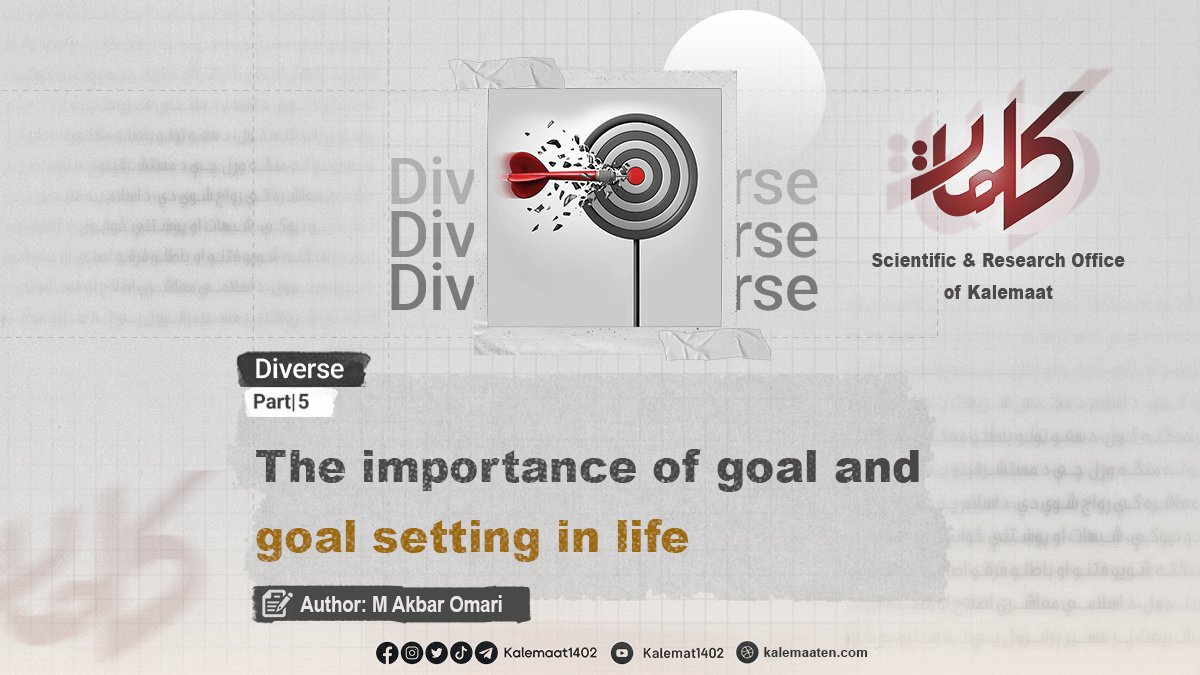
    The importance of goal and goal setting in life (Part 5)

    By 15/10/2025Updated:01/11/2025No Comments3 Mins Read
    Share Facebook Twitter Telegram WhatsApp
    Share
    Facebook Twitter Telegram Email WhatsApp
    Author: M. Akbar Omari
    The importance of goal and goal setting in life (Part 5)
    Perspectives and Views on Goals
    1. Goals in the Qur’an: Purposeful and Aimless
    The Noble Qur’an, as the Book of Guidance, itself pursues a lofty goal and serves as the perfect example of purposefulness. For those seeking the meaning and true purpose of life, the Qur’an invites deep reflection upon its pearls of wisdom about purposeful existence.
    The Qur’an declares that human creation is founded upon a noble objective — humanity was not created without purpose but entrusted with great responsibilities by Allah. The Qur’an differentiates clearly between those who live with purpose and those who live without it.
    For instance, in the verse: (أَفَمَنْ يَمْشِي مُكِبًّا عَلَىٰ وَجْهِهِ أَهْدَىٰ أَمَّنْ يَمْشِي سَوِيًّا عَلَىٰ صِرَاطٍ مُسْتَقِيمٍ) [Al-Mulk: 22] Translation: “Is one who walks with his face downcast more rightly guided, or one who walks upright upon a straight path?”
    According to Ibn Kathir’s commentary, the believer is the one whose path is straight and whose direction in life is clear.
    1. The Prophet’s View on Purpose
    The Messenger of Allah, Prophet Muhammad (peace be upon him), is the greatest example of a purposeful human being for both Muslim and non-Muslim youth. His life began with a noble mission, and he exerted every effort to achieve it.
    While most people value family, homeland, friends, wealth, and personal comfort, the Prophet (peace be upon him) sacrificed all of these for the salvation of humankind and the promotion of purposeful living.
    He also advised people not to live without purpose or merely imitate others, as he said in a Hadith: «لَا تَكُونُوا إِمَّعَةً ؛ تَقُولُونَ : إِنْ أَحْسَنَ النَّاسُ ؛ أَحْسَنَّا، وَإِنْ ظَلَمُوا ؛ ظَلَمْنَا، وَلَكِنْ وَطِّنُوا أَنْفُسَكُمْ ؛ إِنْ أَحْسَنَ النَّاسُ ؛ أَنْ تُحْسِنُوا، وَإِنْ أَسَاءُوا ؛ فَلَا تَظْلِمُوا.» Translation: “Do not be an imitator who says: ‘If people do good, we will do good; and if they do wrong, we will do wrong.’ Rather, prepare yourselves so that if people do good, you also do good, and if they do wrong, you do not commit injustice.”
    The Arabic word ‘إِمَّعَةٌ’ (Imma‘ah) refers to a person who lacks independent thought and merely follows the opinions of others without reflection or conviction.
    1. Scholars’ Sayings on Goals and Goal-Setting
    Reflecting on the words of scholars and great thinkers about the importance of goals and goal-setting can serve as valuable guidance for charting one’s life path and achieving success. Below are several inspirational quotes:
                •          Abdullah ibn Mas‘ud said:“The hardest thing I regret is a day that has passed in which my condition has not improved compared to the previous day.”
                •          Umar ibn al-Khattab said: “A person’s life is a collection of days; every day that passes takes away a part of him.”
                •          Dan Sullivan stated: “If greatness is your goal, today is the only day you have to achieve it.”
                •          Earl Nightingale believed: “Success is the progressive realization of a worthy goal or ideal.”
                •          Michael Korda advised: “If you don’t want to get tired along the way, always aim for bigger and greater goals.”
                •          Zig Ziglar reminded: “A correct goal, once chosen, means you’ve already traveled half the journey.”
                •          RJ Mitte said: “If you set your goals clearly, you can achieve anything. Just keep pushing yourself forward.”
                •          Dan Sullivan also emphasized: “To measure your progress, look at where you started, not at the ideal you aim to reach.”
    Continues…

    Previous Part/ Next Part

    Islam Islamic Civilization

    Related Posts

    The Divine Education Model in the Family of the Prophets (Part 143)

    18/10/2026

    Seeing Allah (SWT)

    18/10/2026

    Kindness to Parents

    18/10/2026
    Leave A Reply Cancel Reply

    Follow us on the social media pages
    • Facebook
    • Twitter
    • Instagram
    • Telegram
    • WhatsApp
    Don’t miss

    The Divine Education Model in the Family of the Prophets (Part 143)

    Seeing Allah (SWT)

    Kindness to Parents

    The Divine Education Model in the Family of the Prophets (Part 142)

    About Us:

    The Academic and Research Organization of Kalemaat is an independent Islamic Da'wah organization affiliated with Ahl al-Sunnah wa al-Jama'ah. It is dedicated to promoting the authentic values of Islam, advancing the higher objectives of the Sharia, countering Western cultural influence, upholding the Word of Allah, and contributing to the intellectual and spiritual awakening of the Muslim Ummah.

    The Organization is supported by Muslim philanthropists and businessmen, and it welcomes the cooperation and support of Muslims worldwide in advancing its mission.

    Famous publications

    The Divine Education Model in the Family of the Prophets (Part 143)

    18/10/2026

    Seeing Allah (SWT)

    18/10/2026
    Follow us on social medias
    • Facebook
    • Twitter
    • YouTube
    • Telegram
    • Instagram
    • WhatsApp
    All right reserved by (kalemaat)
    • Home
    • Analysis of the day
    • The greats of the Ummah
    • library

    Type above and press Enter to search. Press Esc to cancel.