Close Menu
    Facebook X (Twitter) Telegram WhatsApp
    • Language
      • دری
      • پښتو
      • العربیة
    • Home
    • Analysis
    • Islam
      • Prophet of Islam (PBUH)
      • Holy Quran
      • Muslim
      • Belief
      • Faith
      • Worships
      • Fiqh
      • Jihad
      • Islamic Perspectives
      • Islamic Economics
      • Islamic Management
      • Islamic Culture
      • Sufism
      • Crimes
      • Prohibitions
      • Sayings of the Scholars
      • Muhajir Tafsir
      • Hadith
    • Religions
      • Judaism
      • Christianity
      • Buddhism
      • Hinduism
      • Zoroastrianism
      • Satanism
      • Confucianism
      • Sikhism
    • Theories
      • Atheism
      • Secularism
      • liberalism
      • Socialism
      • Communism
      • Democracy
      • Federalism
      • Fascism
      • Capitalism
      • Marxism
      • Feminism
      • Nationalism
      • Colonialism
      • Frankfurt School
      • Freemasonry
      • Humanism
    • Fitan
      • Mu’tazila
      • Murji’ah
      • Jahmiyyah
      • The Fitna of the Khawarij
      • The Fitna of the Rawafid
      • The Fitna of Orientalism
      • Ghamdism
      • The Fitna of the Qadianis
      • Qadariyyah
      • Karramiyyah
    • Ummah
      • Sahabah (Companions of the Prophet ﷺ)
        • Hazrat Abu bakr Siddiq (RA)
        • Hazrat Umar al-Faruq (RA)
        • Hazrat Uthman ibn Affan (RA)
        • Hazrat Ali (RA)
        • Hazrat Khalid ibn al-Walid (RA)
        • Hazrat Fayruz al-Daylami (RA)
        • Hazrat Abdullah ibn al-Zubayr (RA)
      • Ummahat al-Mu’minin
      • Islamic scholars
        • Allamah Sayyid Abul Hasan Ali Nadwi (RH)
        • Imam al-Aʿzam Abu Hanifa (RH)
        • Imam al-Bukhari (RH)
        • Imam al-Tirmidhi (RH)
        • Imam al-Ghazali (RH)
        • Shah Waliullah al-Dehlawi (RH)
        • Sayyid Jamal al-Din Afghani
        • Mawlana Jalal al-Din Muhammad Balkhi Rumi (RH)
      • Muslim Rulers
        • Sultan Salahuddin Ayyubi (RH)
        • Umar ibn Abd al-Aziz (RH)
        • Sultan Yusuf ibn Tashfin (RH)
      • Muslim Scientists
    • Civilizations
      • Islamic Civilization
      • Eastern and Western Civilizations
      • Traces of History
    • Diverse
      • Ramadan Message
      • Reports
      • Light and Darkness
    • library
    Facebook X (Twitter) Telegram WhatsApp Instagram Pinterest YouTube
    kalemaat Englishkalemaat English
    You are at:Home»Analysis of the day»Eastern Oil Is Vital for the Western Economy
    Analysis of the day

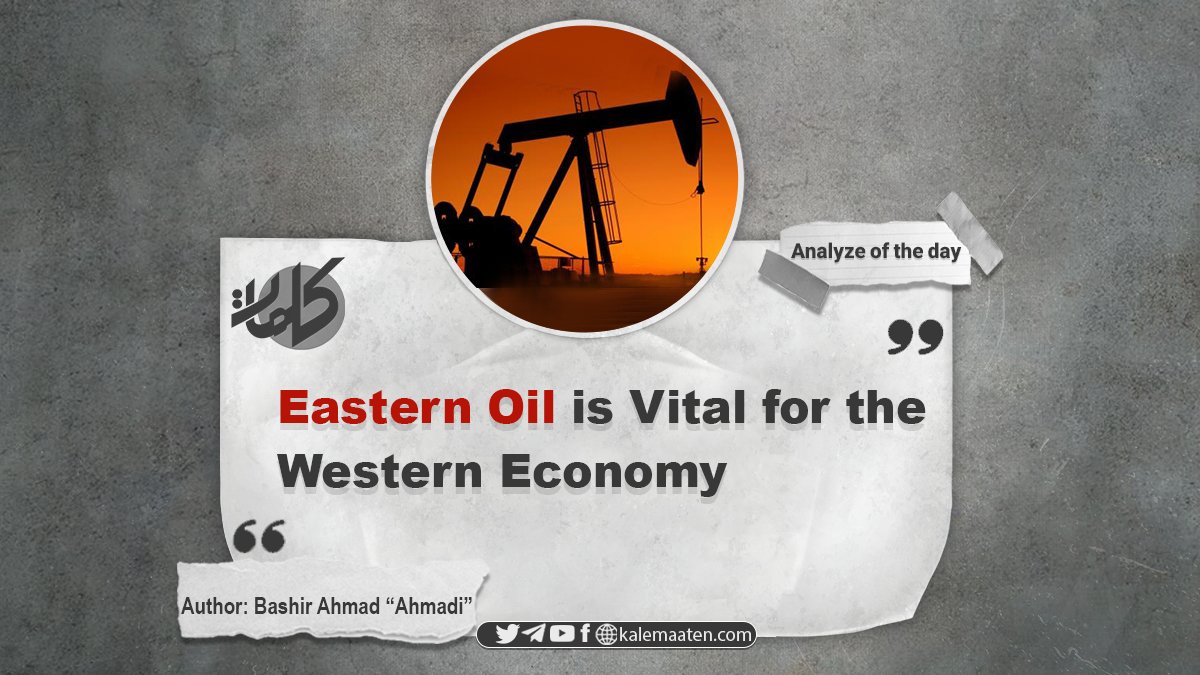
    Eastern Oil Is Vital for the Western Economy

    By 09/07/2025No Comments3 Mins Read
    Share Facebook Twitter Telegram WhatsApp
    Share
    Facebook Twitter Telegram Email WhatsApp
    Author: Bashir Ahmad “Ahmadi”
    Eastern Oil Is Vital for the Western Economy
    Since the dawn of human civilization, ownership and control over natural resources have played a major role in the politics of states and superpowers. The ability to preserve and access natural materials can elevate a power to dominance in the production of goods, technological advancement, and quality of life. Its importance is so significant that nations may resort to power displays and military invasions for it. Without these resources, the costs of developing advanced technologies, maintaining military policies, and strengthening internal and external affairs would become nearly impossible.
    Today, for every developed nation, oil is as vital as blood in the body. It is a central pillar of Western global policy. Although this essential substance was first used about 200 years ago, even with the advancement of the industrial world, oil still remains at the top of the energy demands of the modern world.
    Various sectors—economic, military, transportation, infrastructure, and the industrial world—cannot survive without oil. Therefore, the current complexities in global politics and the wars and insecurities unfolding across different parts of the world are undoubtedly linked to the issue of oil.
    On another note, when we examine advanced industrial countries that consume the most oil, we find that their consumption far exceeds their domestic production. For instance, the United States is among those countries whose annual oil consumption is significantly higher than its production. In recent years, it has even resorted to extracting or producing shale oil—considered one of the lowest quality forms of oil in terms of usability.
    Meanwhile, non-industrialized countries with vast oil resources show an entirely different picture: their oil reserves and production are often many times greater than their consumption. Moreover, the quality of their oil is considered superior. Several Islamic lands—such as Saudi Arabia, the United Arab Emirates, Qatar, Iran, and others—are prominent examples of nations with abundant and high-quality oil resources.
    Because of this, the United States and the colonialist world have invested massive expenses and tools to gain access to these resources—even at the cost of shedding the blood of thousands of innocent people. This is because the foundation of capitalism is profit, and they strive to achieve this goal by any means necessary. Consequently, we witness constant tension and covert operations in regions rich in natural resources. Therefore, the significance of oil in the global economy—particularly for Western colonial companies—is undeniable and inseparable.
    Muslims, despite possessing the largest natural resources, remain among the poorest nations in the world. This is while the oil of their lands powers the machines of the great Western companies and the global disbelieving system—and the products of these companies are then used against Islam and Muslims. A clear example of this is the war in Gaza, where for over nine months now, the defenseless Muslim population has been massacred and their land devastated.

    A Brief Introduction to the History and Ideology of Communism Islamic Civilization Muslim Scholars

    Related Posts

    Imam al-A‘zam Abu Hanifa (RA): The Role Model (part 33)

    11/10/2026

    Imam al-A‘zam Abu Hanifa (RA): The Role Model (part 31)

    08/10/2026

    The Divine Education Model in the Family of the Prophets (Part 139)

    03/10/2026
    Leave A Reply Cancel Reply

    Follow us on the social media pages
    • Facebook
    • Twitter
    • Instagram
    • Telegram
    • WhatsApp
    Don’t miss

    The Status of Knowledge

    Serving One’s Parents

    Imam al-A‘zam Abu Hanifa (RA): The Role Model (part 35)

    The Worst of People

    About Us:

    The Academic and Research Organization of Kalemaat is an independent Islamic Da'wah organization affiliated with Ahl al-Sunnah wa al-Jama'ah. It is dedicated to promoting the authentic values of Islam, advancing the higher objectives of the Sharia, countering Western cultural influence, upholding the Word of Allah, and contributing to the intellectual and spiritual awakening of the Muslim Ummah.

    The Organization is supported by Muslim philanthropists and businessmen, and it welcomes the cooperation and support of Muslims worldwide in advancing its mission.

    Famous publications

    The Status of Knowledge

    15/10/2026

    Serving One’s Parents

    15/10/2026
    Follow us on social medias
    • Facebook
    • Twitter
    • YouTube
    • Telegram
    • Instagram
    • WhatsApp
    All right reserved by (kalemaat)
    • Home
    • Analysis of the day
    • The greats of the Ummah
    • library

    Type above and press Enter to search. Press Esc to cancel.
