Close Menu
    Facebook X (Twitter) Telegram WhatsApp
    • Language
      • دری
      • پښتو
      • العربیة
    • Home
    • Analysis
    • Islam
      • Prophet of Islam (PBUH)
      • Holy Quran
      • Muslim
      • Belief
      • Faith
      • Worships
      • Fiqh
      • Jihad
      • Islamic Perspectives
      • Islamic Economics
      • Islamic Management
      • Islamic Culture
      • Sufism
      • Crimes
      • Prohibitions
      • Sayings of the Scholars
      • Muhajir Tafsir
      • Hadith
    • Religions
      • Judaism
      • Christianity
      • Buddhism
      • Hinduism
      • Zoroastrianism
      • Satanism
      • Confucianism
      • Sikhism
    • Theories
      • Atheism
      • Secularism
      • liberalism
      • Socialism
      • Communism
      • Democracy
      • Federalism
      • Fascism
      • Capitalism
      • Marxism
      • Feminism
      • Nationalism
      • Colonialism
      • Frankfurt School
      • Freemasonry
      • Humanism
    • Fitan
      • Mu’tazila
      • Murji’ah
      • Jahmiyyah
      • The Fitna of the Khawarij
      • The Fitna of the Rawafid
      • The Fitna of Orientalism
      • Ghamdism
      • The Fitna of the Qadianis
      • Qadariyyah
      • Karramiyyah
    • Ummah
      • Sahabah (Companions of the Prophet ﷺ)
        • Hazrat Abu bakr Siddiq (RA)
        • Hazrat Umar al-Faruq (RA)
        • Hazrat Uthman ibn Affan (RA)
        • Hazrat Ali (RA)
        • Hazrat Khalid ibn al-Walid (RA)
        • Hazrat Fayruz al-Daylami (RA)
        • Hazrat Abdullah ibn al-Zubayr (RA)
      • Ummahat al-Mu’minin
      • Islamic scholars
        • Allamah Sayyid Abul Hasan Ali Nadwi (RH)
        • Imam al-Aʿzam Abu Hanifa (RH)
        • Imam al-Bukhari (RH)
        • Imam al-Tirmidhi (RH)
        • Imam al-Ghazali (RH)
        • Shah Waliullah al-Dehlawi (RH)
        • Sayyid Jamal al-Din Afghani
        • Mawlana Jalal al-Din Muhammad Balkhi Rumi (RH)
      • Muslim Rulers
        • Sultan Salahuddin Ayyubi (RH)
        • Umar ibn Abd al-Aziz (RH)
        • Sultan Yusuf ibn Tashfin (RH)
      • Muslim Scientists
    • Civilizations
      • Islamic Civilization
      • Eastern and Western Civilizations
      • Traces of History
    • Diverse
      • Ramadan Message
      • Reports
      • Light and Darkness
    • library
    Facebook X (Twitter) Telegram WhatsApp Instagram Pinterest YouTube
    kalemaat Englishkalemaat English
    You are at:Home»Diverse»The Emergence and Elements of Nationalism (Part Four)
    Diverse

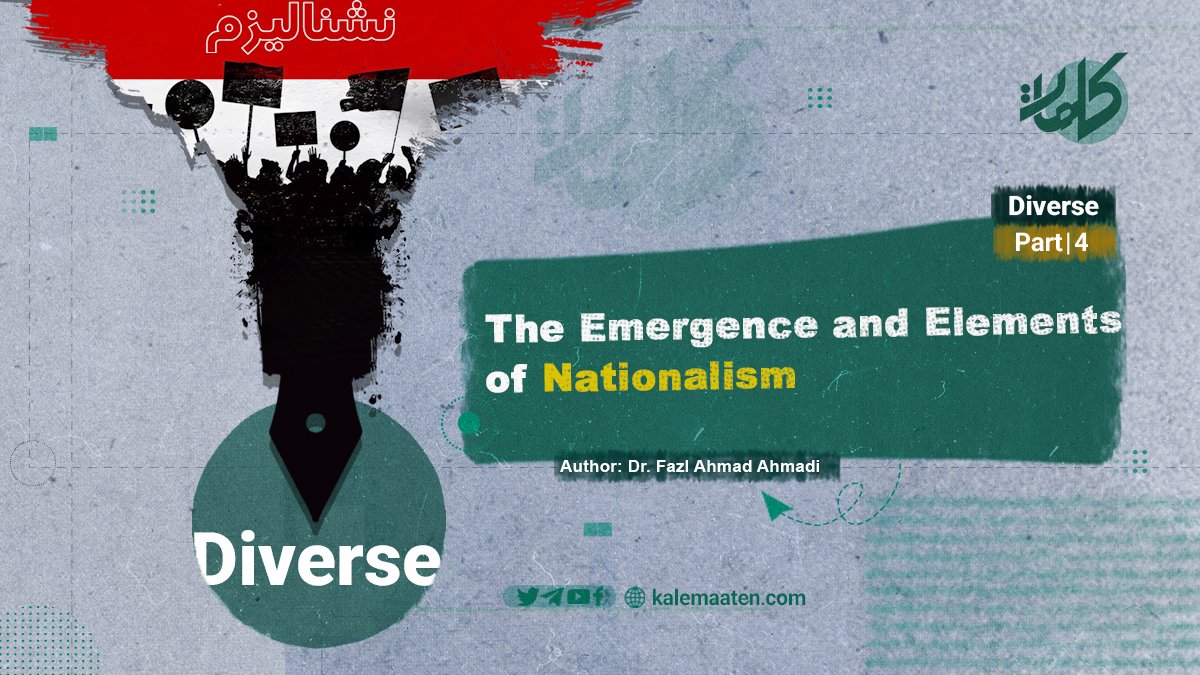
    The Emergence and Elements of Nationalism (Part Four)

    By 11/02/2025No Comments3 Mins Read
    Share Facebook Twitter Telegram WhatsApp
    Share
    Facebook Twitter Telegram Email WhatsApp

    Author: Dr. Fazl Ahmad Ahmadi
    The Emergence and Elements of Nationalism (Part Four)
    Elements of Nationalism
    Historical destiny is one of the key concepts exploited by nationalist ideology, carrying far more emotional weight than the mere notion of the future. Destiny is shaped by history and represents an exceptional and somewhat fatalistic course of events. From the nationalist perspective, there must be a sacred effort to reclaim the golden past, which is now unjustly buried beneath the present. Nationalists hope that the magnificent civilization of the past will shine once more like the sun through the revival of the nation’s true spirit by future generations.  Shahrokh Meskoob writes on this subject: “History has always been a tool in the hands of nationalism, and how it is utilized depends on whether nationalism is progressive or reactionary, aggressive and belligerent, or humane and conciliatory. Intentionally or unintentionally, it reconstructs the past through its ideals and employs it to serve the present.”  Militant nationalism, which boasts about its strengths while exaggerating itself and ignoring others, often remains in conflict with them. It closes its doors to foreign cultures to remain invulnerable within its own fortress. In many instances, scapegoats are created to blame national failures on external forces, inciting mass anger and hatred and mobilizing people under its slogans. In our context, these “scapegoats” have historically included Arabs and colonial powers.
    Attachment to the Nation and Anti-Colonial Struggle
    Another fundamental element of nationalist ideology is devotion to the nation and the belief in taking action against colonialism. In this sense, nationalism represents a collective attachment to defending the defined territorial boundaries and a willingness to sacrifice for the homeland. Love and belonging, in their political form, give the nation a distinctive and abstract identity. From this perspective, the homeland is vital for well-being and physical security, and the exploitation of its resources must be conducted with significant nationalist considerations.
    This aspect of nationalism, which leans toward unification, focuses on monopolizing national policies, preserving national integrity, and continuously enhancing national power. This type of nationalist unity is highly oppressive and anti-libertarian in domestic affairs, demanding that all citizens adhere to established common laws while fostering unquestioning enthusiasm for them. In such a system, all personal freedoms are subordinated to national interests; if the people voice complaints, democracy itself is restricted in the name of national benefit.
    Nationalism in the West vs. the East
    Hans Kohn, in distinguishing between Western voluntary nationalism and Eastern organic nationalism, states: “Nationalism in the West, found in countries such as England, France, and the United States, operates in a rational, optimistic, and pluralistic manner. It develops within a contractual framework aimed at achieving social progress. However, Eastern organic nationalism is an emotional and authoritarian form of nationalism, built on the shoulders of low-ranking aristocrats and certain elites, relying heavily on the instincts and desires of the masses.”
    According to Anthony Smith, while elites in various regions of the world clandestinely reproduced nationalism as a European import, they adapted it to their own cultural and social needs. As a result, nationalism in the Middle East was perceived as a political orientation for social transformation. The main challenge facing nationalists was the creation of new paradigms of unity based on power, solidarity, and self-appreciation. Under the influence of socio-political conditions, nationalism gradually became the dominant ideology and the central axis of political action in the Middle East.
    Continues…

    Related Posts

    The Divine Education Model in the Family of the Prophets (Part 144)

    19/10/2026

    The Divine Education Model in the Family of the Prophets (Part 143)

    18/10/2026

    The Divine Education Model in the Family of the Prophets (Part 142)

    17/10/2026
    Leave A Reply Cancel Reply

    Follow us on the social media pages
    • Facebook
    • Twitter
    • Instagram
    • Telegram
    • WhatsApp
    Don’t miss

    Imam al-A‘zam Abu Hanifa (RA): The Role Model (part 36)

    Loyalty to One’s Teacher

    The Divine Education Model in the Family of the Prophets (Part 144)

    Who Is a Sufi?

    About Us:

    The Academic and Research Organization of Kalemaat is an independent Islamic Da'wah organization affiliated with Ahl al-Sunnah wa al-Jama'ah. It is dedicated to promoting the authentic values of Islam, advancing the higher objectives of the Sharia, countering Western cultural influence, upholding the Word of Allah, and contributing to the intellectual and spiritual awakening of the Muslim Ummah.

    The Organization is supported by Muslim philanthropists and businessmen, and it welcomes the cooperation and support of Muslims worldwide in advancing its mission.

    Famous publications

    Imam al-A‘zam Abu Hanifa (RA): The Role Model (part 36)

    20/10/2026

    Loyalty to One’s Teacher

    20/10/2026
    Follow us on social medias
    • Facebook
    • Twitter
    • YouTube
    • Telegram
    • Instagram
    • WhatsApp
    All right reserved by (kalemaat)
    • Home
    • Analysis of the day
    • The greats of the Ummah
    • library

    Type above and press Enter to search. Press Esc to cancel.
