Close Menu
    Facebook X (Twitter) Telegram WhatsApp
    • Language
      • دری
      • پښتو
      • العربیة
    • Home
    • Analysis
    • Islam
      • Prophet of Islam (PBUH)
      • Holy Quran
      • Muslim
      • Belief
      • Faith
      • Worships
      • Fiqh
      • Jihad
      • Islamic Perspectives
      • Islamic Economics
      • Islamic Management
      • Islamic Culture
      • Sufism
      • Crimes
      • Prohibitions
      • Sayings of the Scholars
      • Muhajir Tafsir
      • Hadith
    • Religions
      • Judaism
      • Christianity
      • Buddhism
      • Hinduism
      • Zoroastrianism
      • Satanism
      • Confucianism
      • Sikhism
    • Theories
      • Atheism
      • Secularism
      • liberalism
      • Socialism
      • Communism
      • Democracy
      • Federalism
      • Fascism
      • Capitalism
      • Marxism
      • Feminism
      • Nationalism
      • Colonialism
      • Frankfurt School
      • Freemasonry
      • Humanism
    • Fitan
      • Mu’tazila
      • Murji’ah
      • Jahmiyyah
      • The Fitna of the Khawarij
      • The Fitna of the Rawafid
      • The Fitna of Orientalism
      • Ghamdism
      • The Fitna of the Qadianis
      • Qadariyyah
      • Karramiyyah
    • Ummah
      • Sahabah (Companions of the Prophet ﷺ)
        • Hazrat Abu bakr Siddiq (RA)
        • Hazrat Umar al-Faruq (RA)
        • Hazrat Uthman ibn Affan (RA)
        • Hazrat Ali (RA)
        • Hazrat Khalid ibn al-Walid (RA)
        • Hazrat Fayruz al-Daylami (RA)
        • Hazrat Abdullah ibn al-Zubayr (RA)
      • Ummahat al-Mu’minin
      • Islamic scholars
        • Allamah Sayyid Abul Hasan Ali Nadwi (RH)
        • Imam al-Aʿzam Abu Hanifa (RH)
        • Imam al-Bukhari (RH)
        • Imam al-Tirmidhi (RH)
        • Imam al-Ghazali (RH)
        • Shah Waliullah al-Dehlawi (RH)
        • Sayyid Jamal al-Din Afghani
        • Mawlana Jalal al-Din Muhammad Balkhi Rumi (RH)
      • Muslim Rulers
        • Sultan Salahuddin Ayyubi (RH)
        • Umar ibn Abd al-Aziz (RH)
        • Sultan Yusuf ibn Tashfin (RH)
      • Muslim Scientists
    • Civilizations
      • Islamic Civilization
      • Eastern and Western Civilizations
      • Traces of History
    • Diverse
      • Ramadan Message
      • Reports
      • Light and Darkness
    • library
    Facebook X (Twitter) Telegram WhatsApp Instagram Pinterest YouTube
    kalemaat Englishkalemaat English
    You are at:Home»Diverse»The Roots and Impacts of Hopelessness and Strategies for Overcoming It (Part Five)
    Diverse

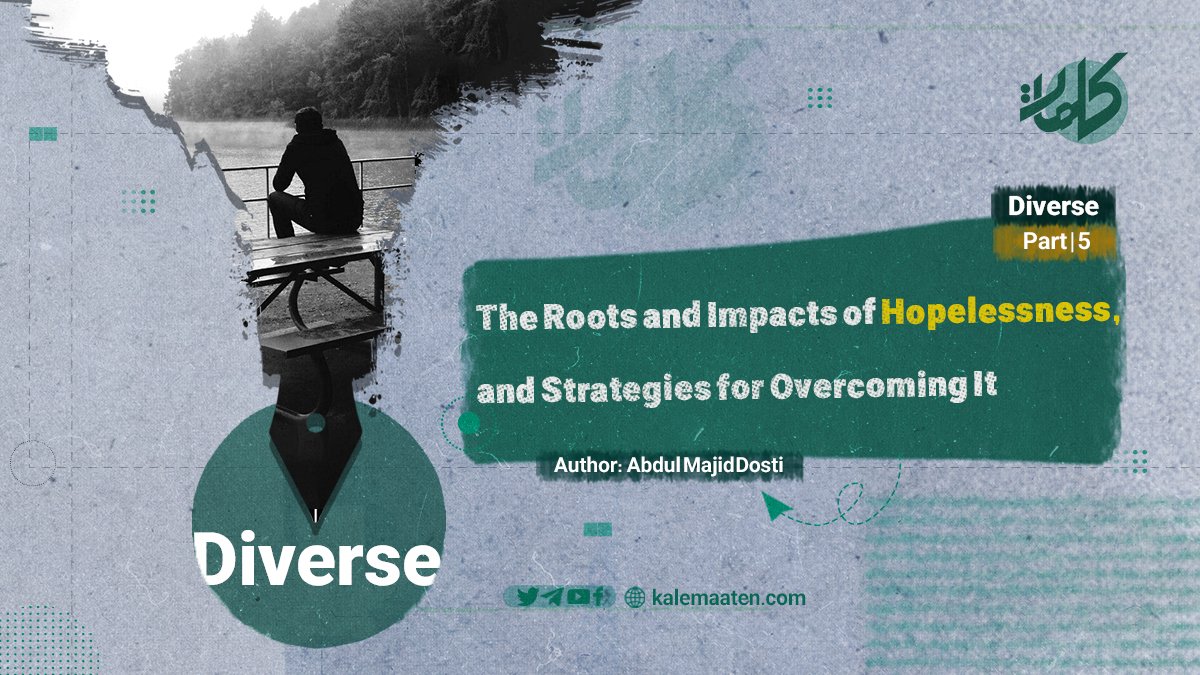
    The Roots and Impacts of Hopelessness and Strategies for Overcoming It (Part Five)

    By 21/12/2024No Comments3 Mins Read
    Share Facebook Twitter Telegram WhatsApp
    Share
    Facebook Twitter Telegram Email WhatsApp
    Author: Abdul Majid Dosti
    The Roots and Impacts of Hopelessness and Strategies for Overcoming It (Part Five)
    One of the significant factors contributing to the overwhelming spread of Hopelessness in individuals, as well as negatively impacting their personal and professional lives, is unemployment. This situation leads to an invasion of negative and hopeless thoughts. Instead of engaging in physical activity or focusing on a tangible job, a person may become mentally preoccupied, spending 24 hours consumed by fantasies. They might envision themselves accomplishing tasks in their imagination but fail to take even a single step or action in reality. This section explores the impact of unemployment in fostering despair:
    4. Unemployment and the Invasion of Negative and Hopeless Thoughts
    With humanity’s unique creation, upright stature, and graceful physique, humans are crowned as the noblest of all creatures. Allah (s.w.t) has appointed humans as stewards and leaders on Earth, empowering them to use tools, discoveries, and inventions to bring vast and profound prosperity to the globe, achieving remarkable advancement and progress.
    In the Holy Quran, numerous verses encourage humans to strive and exert effort in the pursuit of virtues, achievements, rewards, and happiness. The repeated mentions of the term “Fas’aw” (Hurry and strive) underscore and emphasize this very purpose and goal.
    From this inherent nature and Quranic encouragement, it is evident that human beings naturally detest idleness, stagnation, and inactivity. If left unemployed, their bodies can become ill, and their minds may succumb to false, negative, and scattered thoughts.
    For this reason, people—especially men—must avoid leaving empty spaces in their schedules that could lead to aimless wandering or leave them wondering what to do next. Instead, they should always have something to occupy themselves with—even if it means helping family members with household chores and cleanliness. If nothing else, a walk through a green field, a stroll in the park, or a moment by a riverbank can serve as a shield against temptation and prevent the devil from finding an opening to infiltrate their bodies and souls.
    Conversely, if a person succumbs to a lack of planning, remains unemployed, and becomes consumed by negative thoughts and imaginations, their inner self will eventually be dominated by illusions, and their mind will feel overwhelmed. Such a person is bound to fall into depression, which, like a fresh wound, only worsens daily, remaining raw and painful.
    At this point, despair ruthlessly and excessively takes over, blaming the individual for their defeat and failure in the battle against unemployment. Through this vulnerability, despair penetrates deep into their soul, gradually eating away at their physical and emotional well-being like termites, pulling them deeper into a mirage of hopelessness.
    Continues…

    Related Posts

    The Divine Education Model in the Family of the Prophets (Part 144)

    19/10/2026

    The Divine Education Model in the Family of the Prophets (Part 143)

    18/10/2026

    The Divine Education Model in the Family of the Prophets (Part 142)

    17/10/2026
    Leave A Reply Cancel Reply

    Follow us on the social media pages
    • Facebook
    • Twitter
    • Instagram
    • Telegram
    • WhatsApp
    Don’t miss

    The Reality of Repentance

    Increase in Lifespan

    Imam al-A‘zam Abu Hanifa (RA): The Role Model (part 36)

    Loyalty to One’s Teacher

    About Us:

    The Academic and Research Organization of Kalemaat is an independent Islamic Da'wah organization affiliated with Ahl al-Sunnah wa al-Jama'ah. It is dedicated to promoting the authentic values of Islam, advancing the higher objectives of the Sharia, countering Western cultural influence, upholding the Word of Allah, and contributing to the intellectual and spiritual awakening of the Muslim Ummah.

    The Organization is supported by Muslim philanthropists and businessmen, and it welcomes the cooperation and support of Muslims worldwide in advancing its mission.

    Famous publications

    The Reality of Repentance

    21/10/2026

    Increase in Lifespan

    21/10/2026
    Follow us on social medias
    • Facebook
    • Twitter
    • YouTube
    • Telegram
    • Instagram
    • WhatsApp
    All right reserved by (kalemaat)
    • Home
    • Analysis of the day
    • The greats of the Ummah
    • library

    Type above and press Enter to search. Press Esc to cancel.
