Close Menu
    Facebook X (Twitter) Telegram WhatsApp
    • Language
      • دری
      • پښتو
      • العربیة
    • Home
    • Analysis
    • Islam
      • Prophet of Islam (PBUH)
      • Holy Quran
      • Muslim
      • Belief
      • Faith
      • Worships
      • Fiqh
      • Jihad
      • Islamic Perspectives
      • Islamic Economics
      • Islamic Management
      • Islamic Culture
      • Sufism
      • Crimes
      • Prohibitions
      • Sayings of the Scholars
      • Muhajir Tafsir
      • Hadith
    • Religions
      • Judaism
      • Christianity
      • Buddhism
      • Hinduism
      • Zoroastrianism
      • Satanism
      • Confucianism
      • Sikhism
    • Theories
      • Atheism
      • Secularism
      • liberalism
      • Socialism
      • Communism
      • Democracy
      • Federalism
      • Fascism
      • Capitalism
      • Marxism
      • Feminism
      • Nationalism
      • Colonialism
      • Frankfurt School
      • Freemasonry
      • Humanism
    • Fitan
      • Mu’tazila
      • Murji’ah
      • Jahmiyyah
      • The Fitna of the Khawarij
      • The Fitna of the Rawafid
      • The Fitna of Orientalism
      • Ghamdism
      • The Fitna of the Qadianis
      • Qadariyyah
      • Karramiyyah
    • Ummah
      • Sahabah (Companions of the Prophet ﷺ)
        • Hazrat Abu bakr Siddiq (RA)
        • Hazrat Umar al-Faruq (RA)
        • Hazrat Uthman ibn Affan (RA)
        • Hazrat Ali (RA)
        • Hazrat Khalid ibn al-Walid (RA)
        • Hazrat Fayruz al-Daylami (RA)
        • Hazrat Abdullah ibn al-Zubayr (RA)
      • Ummahat al-Mu’minin
      • Islamic scholars
        • Allamah Sayyid Abul Hasan Ali Nadwi (RH)
        • Imam al-Aʿzam Abu Hanifa (RH)
        • Imam al-Bukhari (RH)
        • Imam al-Tirmidhi (RH)
        • Imam al-Ghazali (RH)
        • Shah Waliullah al-Dehlawi (RH)
        • Sayyid Jamal al-Din Afghani
        • Mawlana Jalal al-Din Muhammad Balkhi Rumi (RH)
      • Muslim Rulers
        • Sultan Salahuddin Ayyubi (RH)
        • Umar ibn Abd al-Aziz (RH)
        • Sultan Yusuf ibn Tashfin (RH)
      • Muslim Scientists
    • Civilizations
      • Islamic Civilization
      • Eastern and Western Civilizations
      • Traces of History
    • Diverse
      • Ramadan Message
      • Reports
      • Light and Darkness
    • library
    Facebook X (Twitter) Telegram WhatsApp Instagram Pinterest YouTube
    kalemaat Englishkalemaat English
    You are at:Home»Diverse»The Importance of Hygiene in Islam (Part 4)
    Diverse

    The Importance of Hygiene in Islam (Part 4)

    By 11/11/2024No Comments3 Mins Read
    Share Facebook Twitter Telegram WhatsApp
    Share
    Facebook Twitter Telegram Email WhatsApp
    Author: Shukran Ahmadi
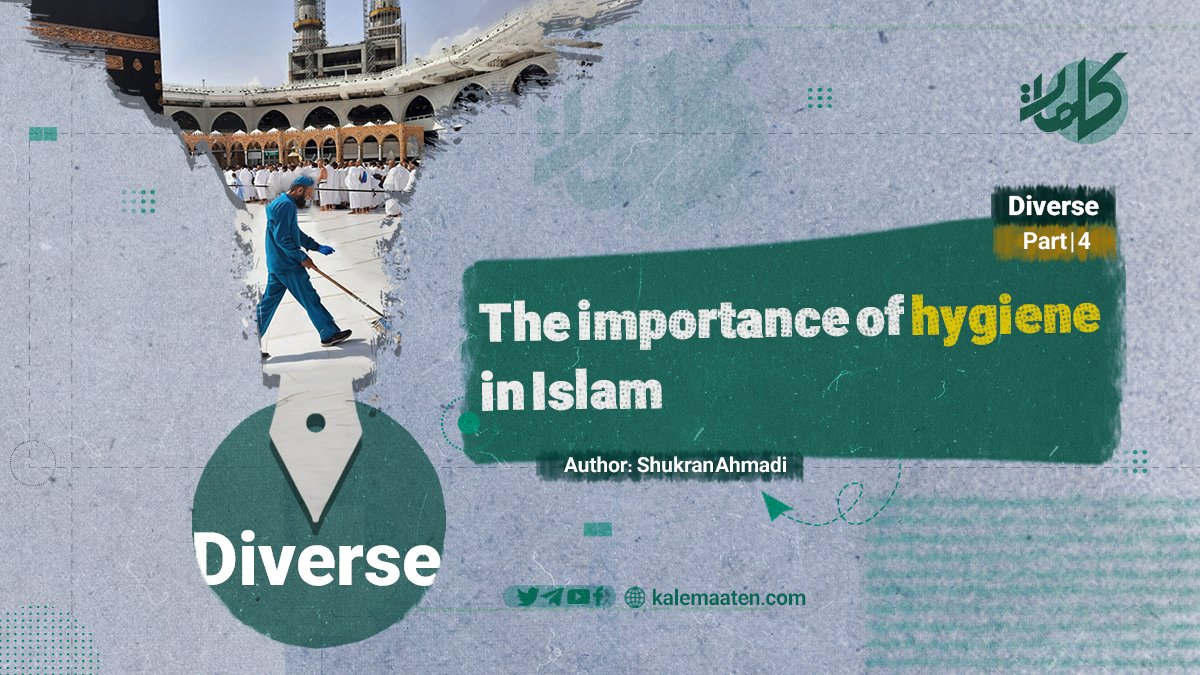
    The Importance of Hygiene in Islam (Part 4)
    Cleanness and Combing Hair
    In many narrations, significant attention is given to the issue of hair, which relates to the beauty and ugliness of a person’s appearance:
    A: The Prophet (peace and blessings of Allah be upon him) used to apply oil to his hair and sometimes comb it, and he ordered others to do the same.
    B: The Prophet, may Allah bless him and grant him peace, said: “Everyone who has hair should respect it; this means keep it free from pus.”
    C: A man with a bare head and a disheveled beard came to the Messenger of Allah, may Allah bless him and grant him peace. He said, “Hasn’t he found oil with which to smooth his hair from this disordered state?” He added: “One of you comes in such a condition; it seems to be evil.”
    Imam al-Ghazali, may Allah have mercy on him, writes: “If pus and vermin (lice) gather in the hair of the head, it is recommended to clean them with water, combing, and rubbing oil, and to cut the unevenness of the hair.” It is stated in a famous narration that: The Prophet, peace and blessings be upon him, never traveled without a comb and a mirror during his journeys and stays.
    Yes, the Messenger of Allah, may Allah bless him and grant him peace, was commissioned by Allah to call people, and one of his duties was to take care of himself, his appearance, and to respect himself so that people would not despise or underestimate him. He should not be a source of aversion to others. Therefore, it is necessary for every inviter to adorn his appearance in such a way that it does not provoke hatred and disgust from others.
    Armpit Hair: Cleanliness of this area is maintained by cutting hair for those who are accustomed to cutting it or by shaving, which should be done at most every forty days.
    Hair Under the Navel: This can be cleaned by shaving or cutting, and it should not be delayed for more than forty days.
    The skin surrounding the navel and the penis of boys should be cut to prevent irritation and the accumulation of germs. Cutting nails is recommended when they are long and unsightly.
    Cleaning the pus on the wrinkles of the wrists and joints of the fingers, as well as pus on the tips of the fingers and around and under the nails, is of such importance in Islam that neglecting it reportedly caused the angel of revelation not to come. Pay attention to the following narration: “The Holy Prophet, may Allah bless him and grant him peace, experienced a delay in revelation when Gabriel descended upon him. Gabriel said: ‘How can I descend upon you when you do not clean the pus from the joints, the tips of the fingers, and around the nails, and your yellow teeth? You do not brush your teeth; order your people to do these things and clean the pus from their nails.’ The pus created by sweat and dust on the body is ordered to be cleaned by taking a bath.”
    Approved (Masnun) Ablutions (Ghusl)
    To enhance and generalize body cleanliness, Islam has prescribed many types of ablutions, which include:

    1. Eid ablution
    2. Friday ablution
    3. Ihram ablution
    4. Ablution of staying in Arafat
    5. Muzdalifah ablution
    6. Ablution to enter Makkah
    7. Ablution upon accepting Islam
    8. Mad ablution when recovering
    Continues…

    Related Posts

    The Divine Education Model in the Family of the Prophets (Part 144)

    19/10/2026

    The Divine Education Model in the Family of the Prophets (Part 143)

    18/10/2026

    The Divine Education Model in the Family of the Prophets (Part 142)

    17/10/2026
    Leave A Reply Cancel Reply

    Follow us on the social media pages
    • Facebook
    • Twitter
    • Instagram
    • Telegram
    • WhatsApp
    Don’t miss

    The Reality of Repentance

    Increase in Lifespan

    Imam al-A‘zam Abu Hanifa (RA): The Role Model (part 36)

    Loyalty to One’s Teacher

    About Us:

    The Academic and Research Organization of Kalemaat is an independent Islamic Da'wah organization affiliated with Ahl al-Sunnah wa al-Jama'ah. It is dedicated to promoting the authentic values of Islam, advancing the higher objectives of the Sharia, countering Western cultural influence, upholding the Word of Allah, and contributing to the intellectual and spiritual awakening of the Muslim Ummah.

    The Organization is supported by Muslim philanthropists and businessmen, and it welcomes the cooperation and support of Muslims worldwide in advancing its mission.

    Famous publications

    The Reality of Repentance

    21/10/2026

    Increase in Lifespan

    21/10/2026
    Follow us on social medias
    • Facebook
    • Twitter
    • YouTube
    • Telegram
    • Instagram
    • WhatsApp
    All right reserved by (kalemaat)
    • Home
    • Analysis of the day
    • The greats of the Ummah
    • library

    Type above and press Enter to search. Press Esc to cancel.