Close Menu
    Facebook X (Twitter) Telegram WhatsApp
    • Language
      • دری
      • پښتو
    • Home
    • Analysis
    • Islam
      • Prophet of Islam (PBUH)
      • Holy Quran
      • Muslim
      • Belief
      • Faith
      • Worships
      • Jurisprudence
      • Jihad
      • Beauty of Islam
      • Islamic Economy
      • Islamic Management
      • Islamic Culture
      • Islamic Sufism
      • Crimes
      • Prohibitions
    • Religions
      • Judaism
      • Christianity
      • Buddhism
      • Hinduism
      • Zoroastrian
      • Satanism
      • Confucius
      • Sikhism
    • Ideas
      • Atheism
      • secularism
      • liberalism
      • Socialism
      • Communism
      • Democracy
      • Federalism
      • Fascism
      • Capitalism
      • Marxism
      • Feminism
      • Nationalism
      • Colonialism
      • Frankfurt School
    • Seduction
      • Mu’tazila
      • Murjea
      • Jahmiyyah Sect
      • Khawarij’s sedition
      • Rawafez sedition
      • Istishraq’s sedition
      • Ghamediyat’s sedition
      • Qadiani’s sedition
      • Qadriyyah Sect
      • Karramiyyah Sect
    • Ummah
      • Companions
        • Hazrat Abubakr Seddiq (MGH)
        • Hazrat Umar Farooq (MGH)
        • Hazrat Usman (MGH)
        • Biography of Hazrat Ali (MGH)
        • Hazrat Khaled bin Waleed (MGH)
        • Hazrat Firooz Dilami (MGH)
        • Hazrat Abdullah Ibn Zubair (MGH)
      • Mothers of the believers
      • Islamic scholars
        • Sayed Abul Hasan Nadavi (MGHM)
        • Grand Imam Abu Hanifah (MGHM)
        • Imam Bukhari (MGHM)
        • Imam Tirmidhi (MGHM)
        • Imam al-Ghazali (MGHM)
        • Shah Waliullah Dehlavi (MGHM)
        • Seyyed Jamaluddin Afghan
        • Maulana Jalaluddin Balkhi Rumi (MGHM)
      • Muslim Governor’s
        • Sultan Salahuddin Ayyubi (MGHM)
        • Omar bin Abdul Aziz (MGHM)
        • Sultan Yusuf bin Tashfin (MGHM)
      • Islamic scientists
    • Civilizations
      • Islamic civilization
      • Eastern & Western civilizations
    • Diverse
      • Ramadan Message
    • library
    Facebook X (Twitter) Telegram WhatsApp
    کلمات انگلیسیکلمات انگلیسی
    You are at:Home»Islam»The Position of Women in Islam (Part 25)
    Islam

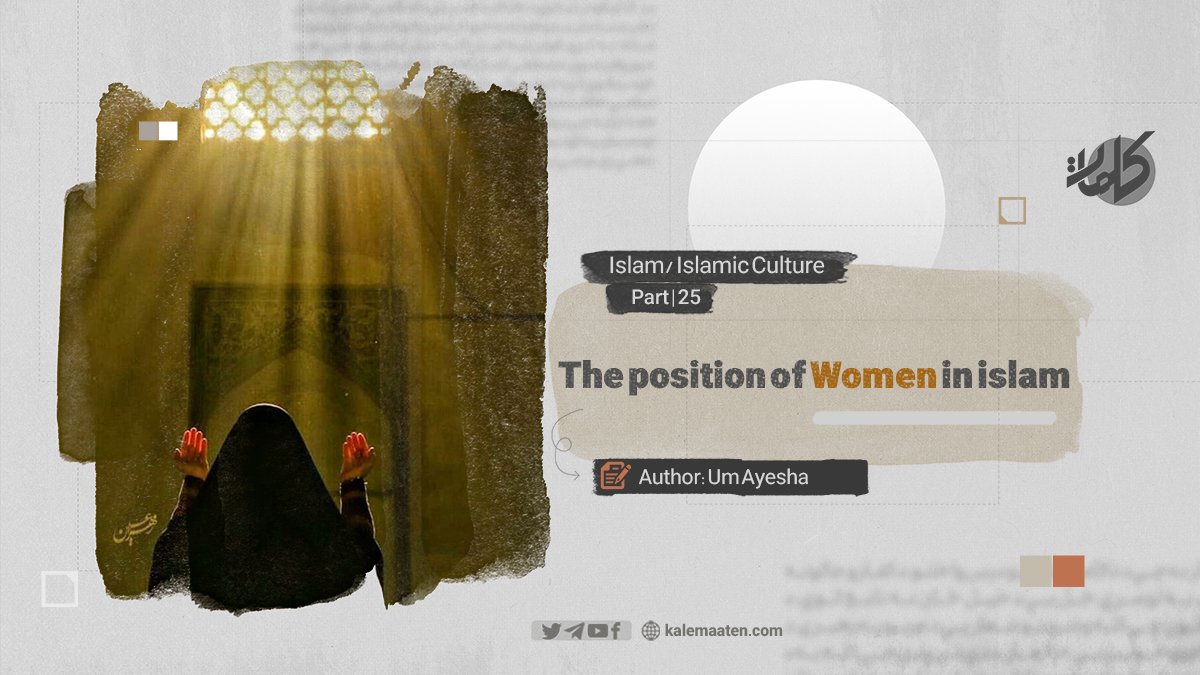
    The Position of Women in Islam (Part 25)

    admin2By admin209/11/2024No Comments3 Mins Read
    Share Facebook Twitter Telegram WhatsApp
    Share
    Facebook Twitter Telegram Email WhatsApp
    Author: Um Ayesha 
    The Position of Women in Islam (Part 25)
    Entry
    In the previous section, we discussed the biographies of some exemplary women during the era of the Prophet, may Allah bless him and grant him peace. In this section, we will continue to explore the cultural role of women and mention a number of women who played a more active role in this field.
    The Cultural Role of Women in the Prophetic Era
    Umm al-Mu’minin Hazrat Hafsa bint Umar, may Allah be pleased with her, was one of the women of high grace and status. She narrated many hadiths, including those from her honorable husband and father. Among the men who narrated from her are her brother Abdullah, her son Hamzah, Harithah bin Wahb, and Matal bin Abi Wada’a. Among the women, the daughter of Abu Ubayd and the wife of her nephew Hamzah bin Abdullah, as well as Umm Mubasher Ansari, narrated hadith from her. Hazrat Hafsa (RA) had the honor of memorizing the first copy of the Holy Quran, and when the third caliph, Hazrat Usman bin Affan (RA), ordered the collection of the Holy Quran and its copies for the third time, he sought her help and reviewed it.
    Zainab, daughter of Muawiyah, is another notable figure. Some have said that she narrated hadith from the Holy Prophet, may Allah bless him and grant him peace, from her husband Ibn Mas’ud and Hazrat Umar. Her son, Abu Ubaydah bin Abdullah bin Mas’ud, and her brother’s son, Umar bin Harith Ibn Abi Dharr, narrated from her.
    In the Prophetic era, mosques served as centers of public education where women could attend scientific meetings. At the beginning of Islam, women not only had the right to education and knowledge, but they also had the right to teach and spread knowledge among others. Some women served as teachers and professors in various fields of Islamic sciences, especially in the science of hadith, achieving the status of professors and competing with great muhaddith scholars and memorizers. They were exemplary figures of trustworthiness and justice, to the extent that many hadith scholars and critics bestowed upon them a level of trust that was not easily earned—even among male scholars.
    Imam Zahabi, in his book “Mizan al-Aitdal fi Naqd Al-Rejal,” which critiques hadith narrators and assesses their honesty and scholarly status, writes about women narrators of hadith: “I do not know of any women hadith narrators who have been accused and abandoned in this regard.”
    The daughters of the Holy Prophet, may Allah bless him and grant him peace, and his wives, during his lifetime and after his death, were authorities in religious and jurisprudential matters. The home of each of them was like a madrassa, where students gathered for knowledge and hadith, learning the rules of Sharia, reasoning, and various kinds of knowledge. The elders of the Sahaba often sought guidance from the wives of the Holy Prophet, may Allah bless him and grant him peace, on many precise and important issues. Thus, women served as vital sources of knowledge and were accepted and approved by both religion and society during the time of the Prophet (peace be upon him) and the early days of Islam.

    Continues…
    admin2

    Related Posts

    The Quran: A Miracle Beyond Time- A Study of Its Miraculous Nature (part 74)

    24/01/2026

    The Quran: A Miracle Beyond Time- A Study of Its Miraculous Nature (part 73)

    22/01/2026

    Resurrection After Death (part 9)

    22/01/2026
    Leave A Reply Cancel Reply

    Follow us on the social media pages
    • Facebook
    • Twitter
    • Instagram
    • Telegram
    • WhatsApp
    Don’t miss

    Freemasonry (part 22)

    The Quran: A Miracle Beyond Time- A Study of Its Miraculous Nature (part 74)

    Freemasonry (part 21)

    The Quran: A Miracle Beyond Time- A Study of Its Miraculous Nature (part 73)

    About Us:

    The Scientific and Research Office of Kalemaat is an independent office affiliated with Ahl al-Sunnah wa al-Jama‘ah. It works to promote the true values of Islam, achieve the noble goals of the sacred Sharia, resist Western cultural influence, uphold the Word of Allah, and awaken the Muslim community.

    This office is supported by Muslim philanthropists and businessmen, and it also invites all Muslims to fully cooperate and contribute to its mission.

    Famous publications

    Freemasonry (part 22)

    25/01/2026

    The Quran: A Miracle Beyond Time- A Study of Its Miraculous Nature (part 74)

    24/01/2026
    Follow us on social medias
    • Facebook
    • Twitter
    • YouTube
    • Telegram
    • Instagram
    • WhatsApp
    All right reserved by (kalemaat)
    • Home
    • Analysis of the day
    • The greats of the Ummah
    • library

    Type above and press Enter to search. Press Esc to cancel.