Close Menu
    Facebook X (Twitter) Telegram WhatsApp
    • Language
      • دری
      • پښتو
    • Home
    • Analysis
    • Islam
      • Prophet of Islam (PBUH)
      • Holy Quran
      • Muslim
      • Belief
      • Faith
      • Worships
      • Jurisprudence
      • Jihad
      • Beauty of Islam
      • Islamic Economy
      • Islamic Management
      • Islamic Culture
      • Islamic Sufism
      • Crimes
      • Prohibitions
    • Religions
      • Judaism
      • Christianity
      • Buddhism
      • Hinduism
      • Zoroastrian
      • Satanism
      • Confucius
      • Sikhism
    • Ideas
      • Atheism
      • secularism
      • liberalism
      • Socialism
      • Communism
      • Democracy
      • Federalism
      • Fascism
      • Capitalism
      • Marxism
      • Feminism
      • Nationalism
      • Colonialism
      • Frankfurt School
    • Seduction
      • Mu’tazila
      • Murjea
      • Jahmiyyah Sect
      • Khawarij’s sedition
      • Rawafez sedition
      • Istishraq’s sedition
      • Ghamediyat’s sedition
      • Qadiani’s sedition
      • Qadriyyah Sect
      • Karramiyyah Sect
    • Ummah
      • Companions
        • Hazrat Abubakr Seddiq (MGH)
        • Hazrat Umar Farooq (MGH)
        • Hazrat Usman (MGH)
        • Biography of Hazrat Ali (MGH)
        • Hazrat Khaled bin Waleed (MGH)
        • Hazrat Firooz Dilami (MGH)
        • Hazrat Abdullah Ibn Zubair (MGH)
      • Mothers of the believers
      • Islamic scholars
        • Sayed Abul Hasan Nadavi (MGHM)
        • Grand Imam Abu Hanifah (MGHM)
        • Imam Bukhari (MGHM)
        • Imam Tirmidhi (MGHM)
        • Imam al-Ghazali (MGHM)
        • Shah Waliullah Dehlavi (MGHM)
        • Seyyed Jamaluddin Afghan
        • Maulana Jalaluddin Balkhi Rumi (MGHM)
      • Muslim Governor’s
        • Sultan Salahuddin Ayyubi (MGHM)
        • Omar bin Abdul Aziz (MGHM)
        • Sultan Yusuf bin Tashfin (MGHM)
      • Islamic scientists
    • Civilizations
      • Islamic civilization
      • Eastern & Western civilizations
    • Diverse
      • Ramadan Message
    • library
    Facebook X (Twitter) Telegram WhatsApp
    کلمات انگلیسیکلمات انگلیسی
    You are at:Home»Islam»The Position of Women in Islam (Part 22)
    Islam

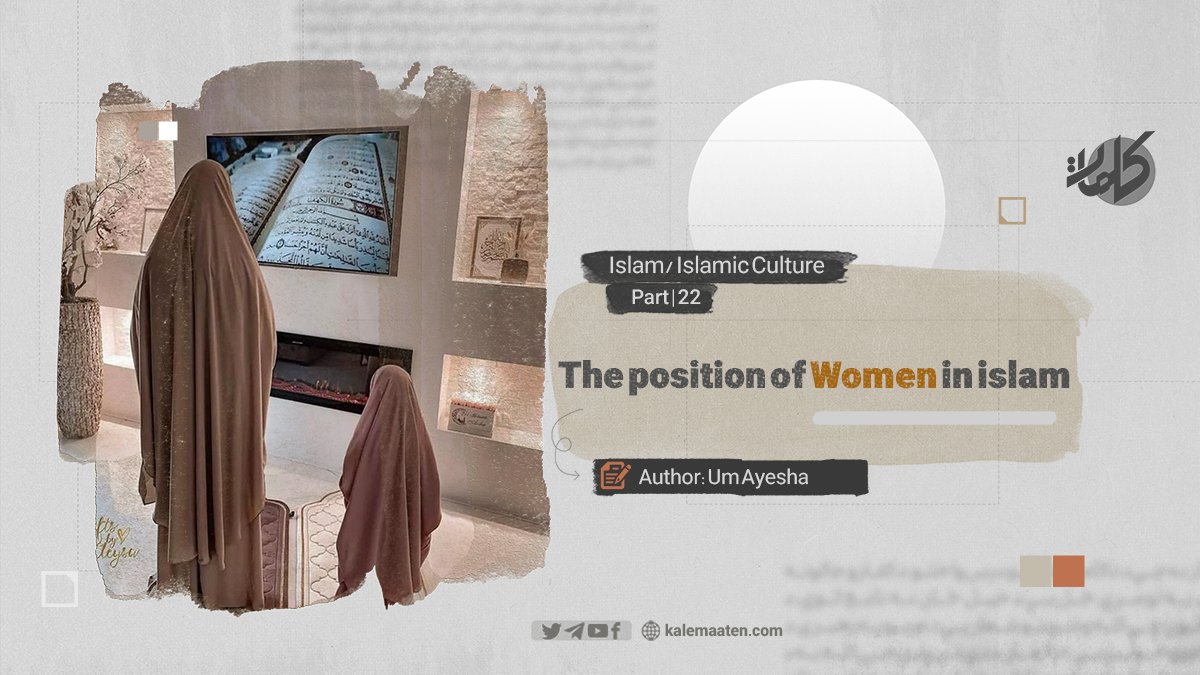
    The Position of Women in Islam (Part 22)

    admin2By admin231/10/2024No Comments3 Mins Read
    Share Facebook Twitter Telegram WhatsApp
    Share
    Facebook Twitter Telegram Email WhatsApp
    Author: Um Ayesha
    The Position of Women in Islam (Part 22)
    Introduction: It should not be forgotten that throughout all stages of life, women have moved alongside men and played significant and constructive roles in Islamic history. This section of the article examines the economic and cultural roles of women during the Prophet’s era.
    Economic Role of Women
    Some may assume that in early Islam, women did not participate in economic activities beyond household duties. However, a closer look at various texts regarding the Prophet’s biography and historical records reveals the fallacy of this perception. Reports indicate the diverse activities of women during the Prophetic era. They handled a substantial portion of the workforce, skills, and production. Each Muslim woman, based on her capabilities and expertise, worked to strengthen the Prophet’s governance. Their support for the Prophet Muhammad, peace be upon him, and the Muslim community occurred in various ways, both direct and indirect.
    Muslim women, aware of the economic challenges facing the Prophet’s nascent government, contributed by donating their wealth and jewelry when necessary. They did so to alleviate the Prophet, peace be upon him, from financial hardships. Such acts of sacrifice existed even before the establishment of the Prophet’s government. A prominent example of this is the contribution of Lady Khadijah, may Allah be pleased with her, who spent all her wealth for the sake of the Islamic mission.
    During the Battle of Tabuk (in the 9th year of Hijrah), due to the large number of fighters, the critical nature of the battle with Rome, the long distance to the battlefield, and the Prophet’s lack of resources to equip the entire army, some Muslim women offered their jewelry to assist him. A hadith narrates that the Prophet, peace be upon him, spread out a cloth filled with bracelets, armlets, anklets, necklaces, and rings donated by women to support the Islamic army.
    Another example of women’s contributions to the Prophet’s government and resolution of his economic difficulties is the action of Ramla bint Harith Khazraji, may Allah be pleased with her. Owning a large house in a prime location (close to the Prophet’s Mosque and central), she made it available to the Prophet, peace be upon him, for the advancement of the goals of the Islamic state. This house, frequently mentioned in historical sources, served as a guest house for the Prophet’s government, a temporary holding place for captives, and a site where the Prophet, peace be upon him, met with various delegations. Representatives from different tribes would meet and receive a warm welcome from the Prophet there. One report mentions a woman who cooked a weekly meal for the poor Companions known as the “People of the Bench.” Umm Sulaym, may Allah be pleased with her, also provided food for the People of the Bench. Given the poverty of some Muslims, especially the People of the Bench, who were pious Companions, such efforts helped address the Muslim community’s economic crisis and strengthen the Prophet’s government.
    In addition to economic activities at home—such as rug weaving, basket making, crafting decorative items, sewing, grinding, and more, which most women engaged in—women of the Prophetic era also played a significant role in their family economies, considered the smallest social unit. Islam did not place obstacles in the way of women’s economic activities. Women, observing social order, engaged in various professions and contributed effectively to the economy of Islamic society within their capacities.

    Continues…
    admin2

    Related Posts

    The Quran: A Miracle Beyond Time- A Study of Its Miraculous Nature (part 74)

    24/01/2026

    The Quran: A Miracle Beyond Time- A Study of Its Miraculous Nature (part 73)

    22/01/2026

    Resurrection After Death (part 9)

    22/01/2026
    Leave A Reply Cancel Reply

    Follow us on the social media pages
    • Facebook
    • Twitter
    • Instagram
    • Telegram
    • WhatsApp
    Don’t miss

    Freemasonry (part 22)

    The Quran: A Miracle Beyond Time- A Study of Its Miraculous Nature (part 74)

    Freemasonry (part 21)

    The Quran: A Miracle Beyond Time- A Study of Its Miraculous Nature (part 73)

    About Us:

    The Scientific and Research Office of Kalemaat is an independent office affiliated with Ahl al-Sunnah wa al-Jama‘ah. It works to promote the true values of Islam, achieve the noble goals of the sacred Sharia, resist Western cultural influence, uphold the Word of Allah, and awaken the Muslim community.

    This office is supported by Muslim philanthropists and businessmen, and it also invites all Muslims to fully cooperate and contribute to its mission.

    Famous publications

    Freemasonry (part 22)

    25/01/2026

    The Quran: A Miracle Beyond Time- A Study of Its Miraculous Nature (part 74)

    24/01/2026
    Follow us on social medias
    • Facebook
    • Twitter
    • YouTube
    • Telegram
    • Instagram
    • WhatsApp
    All right reserved by (kalemaat)
    • Home
    • Analysis of the day
    • The greats of the Ummah
    • library

    Type above and press Enter to search. Press Esc to cancel.