Close Menu
    Facebook X (Twitter) Telegram WhatsApp
    • Language
      • دری
      • پښتو
      • العربیة
    • Home
    • Analysis
    • Islam
      • Prophet of Islam (PBUH)
      • Holy Quran
      • Muslim
      • Belief
      • Faith
      • Worships
      • Fiqh
      • Jihad
      • Islamic Perspectives
      • Islamic Economics
      • Islamic Management
      • Islamic Culture
      • Sufism
      • Crimes
      • Prohibitions
      • Sayings of the Scholars
      • Muhajir Tafsir
      • Hadith
    • Religions
      • Judaism
      • Christianity
      • Buddhism
      • Hinduism
      • Zoroastrianism
      • Satanism
      • Confucianism
      • Sikhism
    • Theories
      • Atheism
      • Secularism
      • liberalism
      • Socialism
      • Communism
      • Democracy
      • Federalism
      • Fascism
      • Capitalism
      • Marxism
      • Feminism
      • Nationalism
      • Colonialism
      • Frankfurt School
      • Freemasonry
      • Humanism
    • Fitan
      • Mu’tazila
      • Murji’ah
      • Jahmiyyah
      • The Fitna of the Khawarij
      • The Fitna of the Rawafid
      • The Fitna of Orientalism
      • Ghamdism
      • The Fitna of the Qadianis
      • Qadariyyah
      • Karramiyyah
    • Ummah
      • Sahabah (Companions of the Prophet ﷺ)
        • Hazrat Abu bakr Siddiq (RA)
        • Hazrat Umar al-Faruq (RA)
        • Hazrat Uthman ibn Affan (RA)
        • Hazrat Ali (RA)
        • Hazrat Khalid ibn al-Walid (RA)
        • Hazrat Fayruz al-Daylami (RA)
        • Hazrat Abdullah ibn al-Zubayr (RA)
      • Ummahat al-Mu’minin
      • Islamic scholars
        • Allamah Sayyid Abul Hasan Ali Nadwi (RH)
        • Imam al-Aʿzam Abu Hanifa (RH)
        • Imam al-Bukhari (RH)
        • Imam al-Tirmidhi (RH)
        • Imam al-Ghazali (RH)
        • Shah Waliullah al-Dehlawi (RH)
        • Sayyid Jamal al-Din Afghani
        • Mawlana Jalal al-Din Muhammad Balkhi Rumi (RH)
      • Muslim Rulers
        • Sultan Salahuddin Ayyubi (RH)
        • Umar ibn Abd al-Aziz (RH)
        • Sultan Yusuf ibn Tashfin (RH)
      • Muslim Scientists
    • Civilizations
      • Islamic Civilization
      • Eastern and Western Civilizations
      • Traces of History
    • Diverse
      • Ramadan Message
      • Reports
      • Light and Darkness
    • library
    Facebook X (Twitter) Telegram WhatsApp Instagram Pinterest YouTube
    kalemaat Englishkalemaat English
    You are at:Home»Diverse»An Analytical View on the Ruling on Face Covering (Part Two)
    Diverse

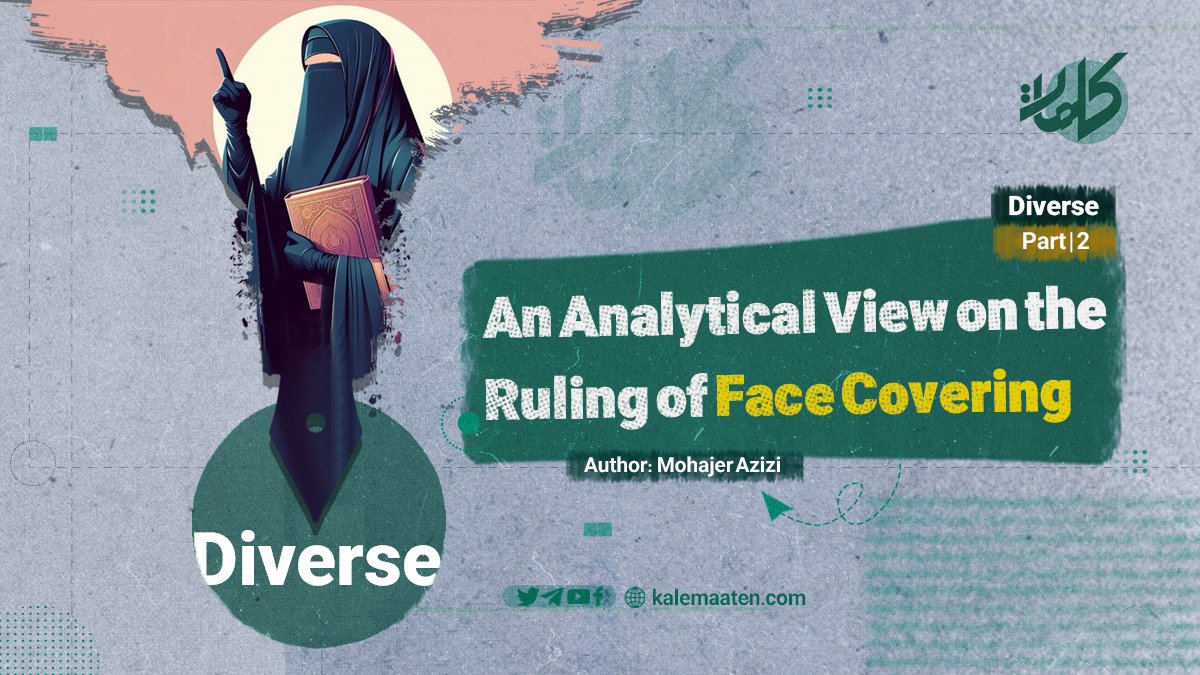
    An Analytical View on the Ruling on Face Covering (Part Two)

    By 19/09/2024No Comments3 Mins Read
    Share Facebook Twitter Telegram WhatsApp
    Share
    Facebook Twitter Telegram Email WhatsApp
    Author: Mohajer Azizi
    An Analytical View on the Ruling on Face Covering (Part Two)
    Definition of Hijab
    In its literal sense, the word “hijab” means to hinder, to cover, and to prevent. Thus, any phenomenon that acts as a barrier between two things, whether it be a wall, a tent, or similar structures, can be referred to as a hijab. In Persian dictionaries, various meanings are attributed to hijab, which include terms such as “veil,” “burqa,” and “chador,” all of which describe coverings that women wear from head to toe.
    In a more specific or technical sense, hijab refers to the special covering for women that they do to protect themselves from the gaze of non-mahram individuals (those who are not closely related to them).
    Definition of Jilbab
    Jilbab in the Literal Sense: According to Ibn Manzoor, “Jilbab is a comprehensive and wider covering than khimar, which a woman uses to cover her head and chest.” Some have stated, “Jilbab is a wide garment distinct from the chador that women wear.”
    Jilbab in the Technical Sense: Al-Nawawi, may Allah have mercy on him, remarked, “Some say: ‘Jilbab is a garment that a woman wears over her clothes,’ and this definition is correct.”
    Ibn Hazm, may Allah have mercy on him, defined jilbab as follows: “In the Arabic language, as the Prophet, may Allah’s prayers and peace be upon him, addressed us, it is a garment that covers the whole body.”
    According to Mukhtar, jilbab is a covering that a woman wears over her clothes, covering her whole body, clothes, and face except for her eyes.
    Definition of Burqa (Headscarf)
    Literally, “burqa” refers to a veil that women use to cover their faces. Ibn Manzoor states in his dictionary, “Burqa is a covering that has two holes for the eyes.”
    In technical terms, burqa is a type of traditional covering used to conceal the face.
    Investigating the root of the word “burqa,” we find it is originally derived from Turkish, specifically from “buruk” (būrk), which means hat. “Burk” and “duvaq” were used in ancient Turkish garments to cover the head or face. However, in Khorasan, the present-day women’s chador, particularly the half-chador or covering that goes from the head to the chest, is referred to as “pardah.”
    Definition of Niqab
    In literal terms, niqab refers to a woman’s veil that covers her face and also indicates a mask worn in the shape of an animal’s face. The term “niqab” is derived from its design, which includes two holes through which women can see.
    In technical terms, niqab is a type of veil that a woman secures above her nose, covering her face while leaving only her eyes visible.
    Definition of Khemar
    In literal terms, “khemar” means to cover and hide. In a specific context, it refers to what Muslim women use to cover their heads. As the Lord of the worlds has stated: «وَلْيَضْرِبْنَ بِخُمُرِهِنَّ عَلَى جُيُوبِهِنّ»

    Continues…

    Related Posts

    The Divine Education Model in the Family of the Prophets (Part 144)

    19/10/2026

    The Divine Education Model in the Family of the Prophets (Part 143)

    18/10/2026

    The Divine Education Model in the Family of the Prophets (Part 142)

    17/10/2026
    Leave A Reply Cancel Reply

    Follow us on the social media pages
    • Facebook
    • Twitter
    • Instagram
    • Telegram
    • WhatsApp
    Don’t miss

    Imam al-A‘zam Abu Hanifa (RA): The Role Model (part 37)

    The Reality of Repentance

    Increase in Lifespan

    Imam al-A‘zam Abu Hanifa (RA): The Role Model (part 36)

    About Us:

    The Academic and Research Organization of Kalemaat is an independent Islamic Da'wah organization affiliated with Ahl al-Sunnah wa al-Jama'ah. It is dedicated to promoting the authentic values of Islam, advancing the higher objectives of the Sharia, countering Western cultural influence, upholding the Word of Allah, and contributing to the intellectual and spiritual awakening of the Muslim Ummah.

    The Organization is supported by Muslim philanthropists and businessmen, and it welcomes the cooperation and support of Muslims worldwide in advancing its mission.

    Famous publications

    Imam al-A‘zam Abu Hanifa (RA): The Role Model (part 37)

    21/10/2026

    The Reality of Repentance

    21/10/2026
    Follow us on social medias
    • Facebook
    • Twitter
    • YouTube
    • Telegram
    • Instagram
    • WhatsApp
    All right reserved by (kalemaat)
    • Home
    • Analysis of the day
    • The greats of the Ummah
    • library

    Type above and press Enter to search. Press Esc to cancel.