

Close Menu
    Facebook X (Twitter) Telegram WhatsApp
    • Language
      • دری
      • پښتو
    • Home
    • Analysis
    • Islam
      • Prophet of Islam (PBUH)
      • Holy Quran
      • Muslim
      • Belief
      • Faith
      • Worships
      • Jurisprudence
      • Jihad
      • Beauty of Islam
      • Islamic Economy
      • Islamic Management
      • Islamic Culture
      • Islamic Sufism
      • Crimes
      • Prohibitions
    • Religions
      • Judaism
      • Christianity
      • Buddhism
      • Hinduism
      • Zoroastrian
      • Satanism
      • Confucius
      • Sikhism
    • Ideas
      • Atheism
      • secularism
      • liberalism
      • Socialism
      • Communism
      • Democracy
      • Federalism
      • Fascism
      • Capitalism
      • Marxism
      • Feminism
      • Nationalism
      • Colonialism
      • Frankfurt School
    • Seduction
      • Mu’tazila
      • Murjea
      • Jahmiyyah Sect
      • Khawarij’s sedition
      • Rawafez sedition
      • Istishraq’s sedition
      • Ghamediyat’s sedition
      • Qadiani’s sedition
      • Qadriyyah Sect
      • Karramiyyah Sect
    • Ummah
      • Companions
        • Hazrat Abubakr Seddiq (MGH)
        • Hazrat Umar Farooq (MGH)
        • Hazrat Usman (MGH)
        • Biography of Hazrat Ali (MGH)
        • Hazrat Khaled bin Waleed (MGH)
        • Hazrat Firooz Dilami (MGH)
        • Hazrat Abdullah Ibn Zubair (MGH)
      • Mothers of the believers
      • Islamic scholars
        • Sayed Abul Hasan Nadavi (MGHM)
        • Grand Imam Abu Hanifah (MGHM)
        • Imam Bukhari (MGHM)
        • Imam Tirmidhi (MGHM)
        • Imam al-Ghazali (MGHM)
        • Shah Waliullah Dehlavi (MGHM)
        • Seyyed Jamaluddin Afghan
        • Maulana Jalaluddin Balkhi Rumi (MGHM)
      • Muslim Governor’s
        • Sultan Salahuddin Ayyubi (MGHM)
        • Omar bin Abdul Aziz (MGHM)
        • Sultan Yusuf bin Tashfin (MGHM)
      • Islamic scientists
    • Civilizations
      • Islamic civilization
      • Eastern & Western civilizations
    • Diverse
      • Ramadan Message
    • library
    Facebook X (Twitter) Telegram WhatsApp
    کلمات انگلیسیکلمات انگلیسی
    You are at:Home»Democracy»Islam and Democracy (Part 22)
    Democracy

    Islam and Democracy (Part 22)

    admin2By admin203/09/2024No Comments2 Mins Read
    Share Facebook Twitter Telegram WhatsApp
    Share
    Facebook Twitter Telegram Email WhatsApp
    Author: M. Farahi Tujegi
    Islam and Democracy (Part 22)
    Sovereignty in Democracy from the Perspective of Western Thinkers
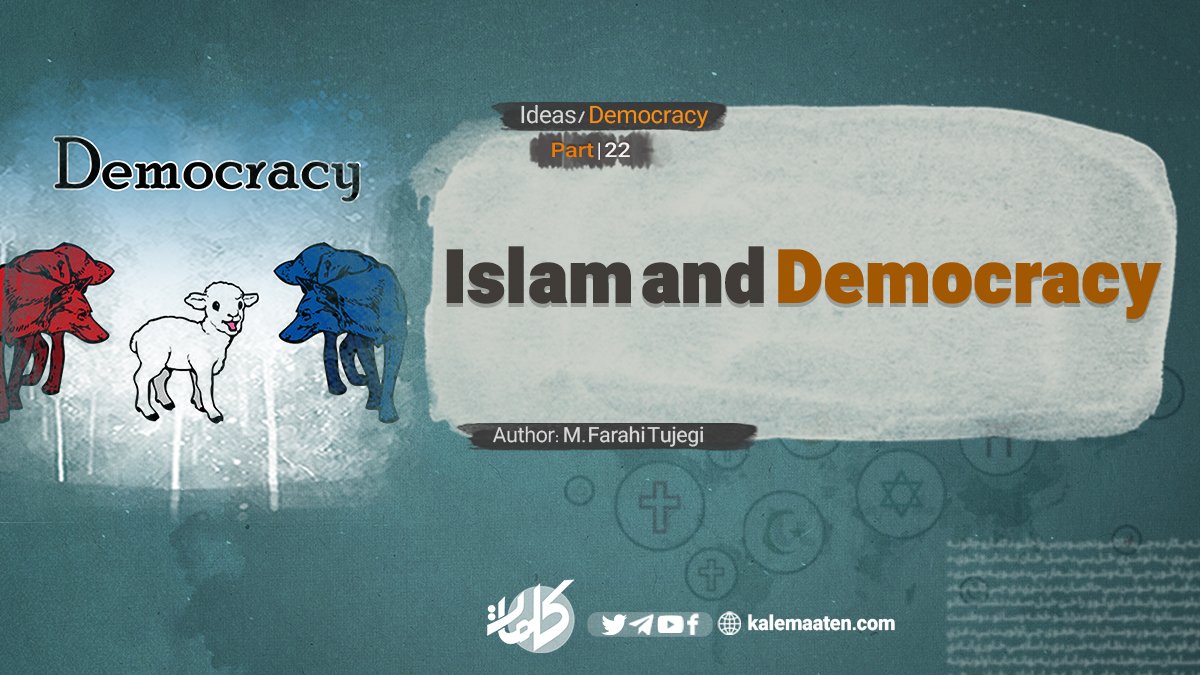
    In previous notes, the issue of minority rule over the majority was discussed; however, this research will focus on the concept of minority rule according to Western thinkers. It appears that this issue was not, and is not, unknown to them.
    Western thinkers have observed the nature of minority rule and have criticized it, as well as democracy as a whole. Jean-Jacques Rousseau, for instance, remarked: “If we consider the precise meaning of democracy, we will realize that true democracy has never existed and never will; it is incompatible with the natural system where many people hold and exercise sovereignty while a few are subjected to rule.”
    American thinker Michael Oakeshott stated: “The truth is that not all people govern; instead, a minority always holds and exercises sovereignty.”
    Critics of democracy have been, and continue to be, well aware of this point. Italian thinker Gaetano Mosca (1858-1941) said: “Classifying governments into specific forms such as monarchy, aristocracy, and democracy is a futile exercise; because there is only one type of government, and that is the rule of the minority.” Another Italian thinker, Vilfredo Pareto (1848-1923), divided society into two classes: the elite and the non-elite. The elite themselves are further divided into two groups: those who rule and those who do not. The ruling elite are further split into an internal group that executes power—now typically party leaders—and an external group that holds power and sovereignty.
    On the other hand, Roberto Michels (1876-1936) proposed the “Iron Law of Oligarchy,” which states that without organization, there is no hope for the success of any party or movement; this organization is merely another term for oligarchy or minority rule. Both Mosca and Michels reject the idea that “the larger the population, the more rulers there will be.” Mosca argues that as the population increases, the number of members of the ruling class actually decreases. Michels also stated: “The larger the party, the more its activities and affairs are entrusted to a narrower circle of leaders and officials.”


    Continues…
    admin2

    Related Posts

    Freemasonry (part 22)

    25/01/2026

    Freemasonry (part 21)

    24/01/2026

    Freemasonry (part 20)

    21/01/2026
    Leave A Reply Cancel Reply

    Follow us on the social media pages
    • Facebook
    • Twitter
    • Instagram
    • Telegram
    • WhatsApp
    Don’t miss

    The Divine Education Model in the Family of the Prophets (part 67)

    The Quran: A Miracle Beyond Time- A Study of Its Miraculous Nature (part 76)

    Satanism (part 33) 

    The Divine Education Model in the Family of the Prophets (part 66)

    About Us:

    The Scientific and Research Office of Kalemaat is an independent office affiliated with Ahl al-Sunnah wa al-Jama‘ah. It works to promote the true values of Islam, achieve the noble goals of the sacred Sharia, resist Western cultural influence, uphold the Word of Allah, and awaken the Muslim community.

    This office is supported by Muslim philanthropists and businessmen, and it also invites all Muslims to fully cooperate and contribute to its mission.

    Famous publications

    The Divine Education Model in the Family of the Prophets (part 67)

    27/01/2026

    The Quran: A Miracle Beyond Time- A Study of Its Miraculous Nature (part 76)

    27/01/2026
    Follow us on social medias
    • Facebook
    • Twitter
    • YouTube
    • Telegram
    • Instagram
    • WhatsApp
    All right reserved by (kalemaat)
    • Home
    • Analysis of the day
    • The greats of the Ummah
    • library

    Type above and press Enter to search. Press Esc to cancel.